Creating a children’s book is a team effort. While the author shapes the story with words, the illustrator breathes life into those words through visuals. But without strong communication and planning, even the most talented teams can struggle. Successful author–illustrator collaboration is about more than just dividing tasks—it’s about building a true creative partnership.
In this article, we’ll explore 10 professional tips to help authors and illustrators work together seamlessly. Whether you’re new to working with a children’s book illustrator or experienced in publishing, these communication tips for authors and illustrators will strengthen your author–illustrator partnership and make your project a success.
Before diving into sketches or edits, authors and illustrators must align on the book’s vision. Discuss the story’s tone, target age group, and key emotional moments.
Pro Tip: Create a mood board with sample illustrations, colors, and design inspirations. This helps set expectations and avoids later misunderstandings. You can also see how each visual stage develops from rough sketches to polished illustrations in this behind-the-scenes example of a picture book’s creative process.
Authors are experts in storytelling, while illustrators specialize in visual communication. Problems often arise when one side oversteps.
Pro Tip: Trust your partner’s expertise. As an author, avoid micromanaging artistic details. As an illustrator, respect the author’s voice and narrative intent.
Clear communication is the backbone of effective author–illustrator collaboration. Misunderstandings about deadlines, revisions, or page layouts can slow the process.
Pro Tip: Use collaborative tools like Google Drive, Trello, or Slack to keep feedback organized. Always summarize agreements in writing to prevent confusion.
Children’s book illustration is not a quick process—it can take months from concept to final artwork. Unrealistic expectations often frustrate both sides.
Pro Tip: Break the project into milestones: storyboarding, rough sketches, color tests, and final artwork. This keeps progress measurable and manageable.
A strong author–illustrator partnership thrives on constructive feedback. However, feedback should be clear, specific, and respectful.
Pro Tip: Instead of saying “I don’t like this,” explain what feels off. For example: “This expression seems too sad for the playful tone we want.” It also helps to recognize what visual mistakes to avoid when illustrating for children, which you can learn about in this guide on improving illustration quality.
Illustrators need space to explore ideas, but they also require direction to stay aligned with the manuscript. Striking this balance is key to working with a children’s book illustrator effectively.
Pro Tip: Share guidelines but allow flexibility. You might suggest “a cozy bedtime atmosphere,” but let the illustrator decide how best to capture it.
Conflicts often arise later if usage rights aren’t clarified upfront. Authors need to know how they can use illustrations for publishing, marketing, or merchandising.
Pro Tip: Draft a clear contract that outlines copyright ownership, usage rights, and royalties. This protects both author and illustrator.
Illustrations evolve through drafts and revisions. Rushing feedback or requesting endless changes can strain the collaboration.
Pro Tip: Agree on a set number of revision rounds. Provide feedback on time so illustrators can meet deadlines without added stress.
Publishing a book is a big achievement. Taking time to acknowledge the effort and celebrate milestones strengthens the creative bond.
Pro Tip: Share each other’s work on social media, credit your collaborator publicly, and include their name prominently in the book. Recognition fuels motivation.
Ultimately, the goal of an author illustrator collaboration is to delight young readers. Every decision—from color palette to word choice—should serve the audience first.
Pro Tip: Ask, “Will this make the story more engaging for children?” If the answer is yes, you’re on the right track.
A smooth author–illustrator partnership doesn’t happen by accident—it’s built on respect, communication, and shared goals. By following these 10 pro tips, you’ll create a collaborative environment where both words and art shine.
For authors, remember: working with a children’s book illustrator is not about control but about teamwork. For illustrators, know that your art enhances the author’s vision. Together, you can create books that captivate young readers and leave lasting memories.
At The Rainbow Stories, we bring authors and illustrators together to craft magical picture books. Through professional project management and creative guidance, we make collaboration seamless, enjoyable, and truly rewarding.
Illustrating a children’s book is exciting, but it’s also full of challenges. Even talented artists can stumble into avoidable pitfalls when creating a picture book. From inconsistent characters to poorly planned layouts, these picture book illustration mistakes can distract young readers and weaken the story’s impact.
In this guide, we’ll highlight 11 common children’s book art errors and provide practical advice on how to avoid illustration mistakes. Whether you’re a new illustrator looking for beginner illustrator tips or an author collaborating with an artist, these insights will help ensure your book is polished, engaging, and ready for young audiences.
One of the biggest picture book illustration mistakes is inconsistency. Characters may look different from one page to another if proportions, hairstyles, or facial features change unintentionally.
How to avoid it: Create a character sheet with references for every angle and expression. This keeps the design uniform throughout the story.
Some beginners focus on individual spreads without considering how pages flow together. This can break the storytelling rhythm.
How to avoid it: Plan the book’s visual flow with storyboards. Ask yourself: can the story be followed visually even without reading the text?
Cramming too many details or objects onto a page can overwhelm young readers.
How to avoid it: Use clean, balanced compositions. Highlight only what matters for the scene while leaving space for text and white areas that give eyes a rest.
One frequent children’s book art error is forgetting to leave room for the text. Placing words over busy backgrounds makes them hard to read.
How to avoid it: Design illustrations with text blocks in mind. Work with the book designer early to ensure fonts are clear and child-friendly.
Children rely on facial cues to understand emotions. Flat or unclear expressions make characters unrelatable.
How to avoid it: Exaggerate emotions slightly. Practice drawing your characters with different moods—happy, sad, scared, excited—to build emotional variety.
Especially for beginners, maintaining consistent anatomy can be difficult. For example, characters’ hands or legs may change size from one page to another.
How to avoid it: Use reference photos and practice figure drawing. Keep a proportion guide handy while working on the book.
Some illustrators focus only on characters and neglect the environment. This makes the world feel empty.
How to avoid it: Develop background sketches early. Even simple props—trees, furniture, or classroom elements—can create context that enriches the story.
Colors set the tone of the story. Using random palettes without thought can clash with the book’s mood.
How to avoid it: Create color studies before finalizing. For example, warm tones work well in playful stories, while cooler tones suit calm or bedtime tales.
With digital tools, it’s tempting to add too many filters, gradients, or textures. This often distracts from the main narrative.
How to avoid it: Focus on clarity and simplicity. Effects should enhance the art, not overpower it. Less is usually more.
A critical yet overlooked mistake is unintentionally drawing stereotypes or inaccurate cultural details.
How to avoid it: Research thoroughly before illustrating. Be mindful of cultural attire, symbols, and traditions, ensuring they’re accurate and respectful.
Many illustrators, especially beginners, skip the final review process. This leaves unnoticed errors that appear in print.
How to avoid it: Share your work with editors, art directors, or experienced illustrators. Fresh eyes can catch details you’ve missed.
Illustrating a children’s book is more than just drawing pretty pictures—it’s about storytelling, consistency, and emotional impact. By avoiding these common children’s book art errors, you’ll create a book that engages readers and supports the author’s vision.
Remember, most picture book illustration mistakes happen when illustrators rush or skip planning steps. If you’re new, keep these beginner illustrator tips in mind: create character sheets, plan storyboards, and test colors before finalizing your art.
And if you’re looking for expert guidance, at The Rainbow Stories we specialize in children’s book illustration services, helping authors and illustrators navigate every step of the picture book art workflow. With professional checkpoints and unlimited revisions, we ensure your story shines on every page.
The magic of a children’s story often lives not just in words but in the pictures that bring those words to life. A well-crafted picture book illustration process is what transforms a simple manuscript into an immersive experience for young readers. Yet, many authors underestimate how detailed and structured this journey can be.
In this guide, we’ll explore the stages of children’s book illustration, walking you through nine essential steps and offering real-world checkpoints to ensure your project stays on track. Whether you’re an author planning your first book or curious about how to illustrate a picture book, this roadmap will help you understand the entire picture book art workflow.
Every successful picture book begins with a clear concept. At this stage, the illustrator aligns visual themes with the author’s manuscript. Rough storyboards or thumbnails are created to map how the story will flow across pages.
Checkpoint: Does the storyboard align with the story’s tone and emotions? If yes, you’re ready to move forward.
Character Design are the heartbeat of any children’s book. During this stage, illustrators sketch multiple versions of the main character, experimenting with expressions, clothing, and posture until they find the right fit.
Checkpoint: Do the characters look relatable and appealing to your target age group? Remember, children connect with visuals before they fully grasp the words.
Beyond characters, the world they live in matters. From cozy bedrooms to magical forests, the illustrator designs environments that support the narrative. Mood boards and reference sketches help establish color schemes and textures.
Checkpoint: Does the setting add depth to the story without distracting from the characters? A good environment feels like part of the story itself.
Also Read:How to Turn Your Baby’s Milestones into a Personalized Storybook
In this stage, the focus shifts to balancing text and illustrations. Good layout ensures children can follow the story visually even without reading. Spreads are designed to keep the narrative flowing smoothly.
Checkpoint: Can a young reader understand the plot just by looking at the sequence of pictures? If the answer is yes, the composition is strong.
Now the illustrator prepares rough sketches of every spread. These drafts allow the author and illustrator to collaborate closely, addressing pacing, scale, and consistency before committing to final art.
Checkpoint: Are all sketches consistent in style and do they maintain story rhythm across the book?
Colors evoke emotions. At this stage, illustrators experiment with palettes to see what resonates with the mood of the book. They also decide on a final medium—digital, watercolor, or mixed media.
Checkpoint: Does the chosen palette enhance the story’s tone? For example, bright colors might suit a playful adventure, while muted shades fit a reflective theme.
This is where the illustrations truly come to life. The illustrator polishes details, refines characters, and builds complete spreads with textures, backgrounds, and supporting visuals.
Checkpoint: Does the final artwork remain faithful to the approved sketches and color studies? This stage should feel like the manuscript is finally breathing.
Illustration alone isn’t enough; text placement plays a vital role. The illustrator works with a designer or publisher to ensure that fonts and text positioning are readable without overshadowing the art.
Checkpoint: Is the text clear, child-friendly, and well-placed? If it complements the art without causing clutter, you’re set.
Before printing, the book undergoes a thorough review. Adjustments are made based on author and editor feedback. Technical aspects like file formats, bleed, and print resolution are also finalized.
Checkpoint: Does the book meet publishing standards and look polished across all spreads? If yes, it’s press-ready.
The picture book illustration process is a structured journey with nine unique stages. From concept to pre-press, each step builds on the last, ensuring that both words and visuals align perfectly. Real-world checkpoints along the way help prevent costly mistakes and keep the project moving smoothly.
For authors wondering how to illustrate a picture book, this workflow offers clarity and structure. And if you want your story to leap off the page, The Rainbow Stories can bring your vision to life. Our team understands every stage of children’s book illustration and helps you turn your story into a beautifully illustrated masterpiece.
From the moment your baby is born, each little moment becomes a story worth remembering. A personalized storybook captures these milestones by weaving your child’s name and memories into a narrative designed just for them. This heartfelt keepsake transforms milestones like first smiles, steps, or words into magical chapters with personality and emotion. It’s not just a book, but a cherished memento filled with intentional love and storytelling. A perfect way to celebrate and preserve those earliest moments—one page at a time.
Turning each milestone into a story requires planning, photos, and meaningful details. With a personalized storybook, you can feature the child’s name in every scene, making it extra special. Using customized story books for kids that allow for photos and personal data, you build something truly unique.
These customized children’s books with pictures add vivid color and emotion, especially when you include the baby’s image. The result is not just a storybook with a child’s name, but a lasting tribute to growth and love.
Begin by selecting key moments: birth date, first smile, first word, family visits, and holidays. A list of 30 baby milestones offers structure and inspiration. Each milestone becomes a short page in your narrative, ensuring your personalized storybook captures real memory paths. Using templates or apps helps streamline page creation with prompts and reminders.
Include at least one photo per milestone to make it one of the best personalized story books with photos. Use candid snapshots or professional pictures. Add personal details like birth weight, time, favorite lullaby, or amusing reactions. These touches turn the book into a memory-rich storybook with a child’s name woven into each scene. Services and apps like BabyPage and The Short Years support photo integration .
Use your baby’s name throughout to make the narrative feel intimate. Keep text short, rhythmic, and age‑appropriate: “Little Sam took his first steps toward Mama.” Such personalization supports early literacy and confidence. Research shows personalized children’s books boost emotional engagement and literacy development. This also fits within your requirement for personalized books for kids and reinforces the child’s identity in the story.
Use design platforms like Canva, Mixbook, or Book Creator to assemble your pages. These tools make it easy to blend text, customized children’s books with pictures, themed backgrounds, and fonts. Adding interactive features like lift‑the‑flap, textured elements, or seek‑and‑find activities increases engagement . Whether digital or printed, the layout ensures the story flows as a cohesive personalized storybook.
Decide whether to print at home or use professional printing services. DIY binding gives flexibility, while ready‑made services provide polished finishes. Using apps like The Short Years can auto-generate pages and deliver completed books without extra work. The result is among the best personalized story books with photos, combining quality with sentimental value.
Begin with a dedication page: “For our little explorer, [Name]…” Choose your favorite colors, fonts, and decorative borders to match your theme. Include messages from parents, siblings, or grandparents. These personal elements give your storybook with a child’s name greater meaning and emotional resonance.
Continue adding pages whenever new milestones happen. Apps with reminders help keep the book current. Sharing completed books at birthdays or milestone celebrations turns it into a keepsake treasure. As the child grows, reading their own story fosters imagination and confidence a benefit of customized story books for kids that reflect real life.
Reading a personalized storybook creates a powerful emotional bond between child and story. Seeing your name in print reinforces identity and belonging. Studies show children reading personalized books smile, laugh more, and learn new words faster than with generic books. These customized children’s books with pictures support early literacy by making reading active and relatable.
Crafting a personalized storybook from your baby’s milestones with The Rainbow Stories transforms everyday events into something magical. Combining narrative, photos, and personal data makes it a one-of-a-kind treasure for a lifetime. With customized story books for kids from The Rainbow Stories, you build early literacy and emotional connection in a playful, engaging format. In short, your child will grow up not just reading a story, but seeing their own name and milestones as part of it a personalized keepsake full of love, identity, and memory.
Custom Name Books offer babies a beautiful way to see their own name and identity reflected in story, creating early connection to reading. As infants begin recognizing their name around 6–18 months, seeing it in print helps them begin understanding “this is me.” These personalized books capitalize on early name-awareness, embedding identity in learning. When a child appears as the story’s hero, reading becomes deeply personal—and engaging. The result? Increased attention, emotional connection, and memory. From simple shared reading to identity formation, personalized name stories offer powerful benefits that traditional books for kids can’t match.
Custom Name Books reinforce name recognition during the critical window between 6–18 months, helping infants connect sound, print, and self. Research shows that customized stories—where characters mirror the child’s name and traits—help them begin to see “this is me.” These books bridge the gap between self and story, giving a sense of ownership over narrative and identity.
Studies reveal higher word acquisition and retention when children read kids personalized books that include their name. In one controlled study, preschoolers remembered more vocabulary embedded in personalized sections compared to non-personalized segments. Comprehension and memory improve when reading feels personally relevant.
This strengthens early literacy and gives stories emotional weight tied to identity.
In custom children’s book formats, babies depicted as protagonists experience stories as more relatable and emotionally accessible. Seeing their name in contexts like kindness, family, or exploration boosts self-esteem and belonging. Personalized stories create a safe, reflective space for self-discovery, helping even infants feel valued and included.
When babies encounter books with a child’s name, they tend to pay closer attention and display stronger interest. Repeated sight of their name strengthens letter-sound awareness and phonics familiarity. This heightened focus supports language milestones and helps reading evolve from passive listening to interactive discovery.
Such early literacy benefits have lasting impact.
Many kids personalized books offer customization of skin tone, family context, or cultural details. This inclusive approach helps children feel reflected and important. Seeing their background represented reinforces identity in a broad social context and normalizes diversity from early childhood. Families celebrate books that truly represent their own stories.
Reading a storybook with a custom name greatly enriches bonding and emotional connection. Studies report infants and caregivers smile and laugh more during shared reading of personalized books mirroring each other’s joy. When parents point to the baby’s name or custom image, infants often respond with coos, eye contact, and positive engagement.
These named books frequently become cherished rituals—bedtime favorites or snuggly read‑aloud—anchoring meaningful routines and long-lasting attachment. Such positive, interactive reading experiences foster both connection and early literacy, laying emotional groundwork that lasts.
Look for well-reviewed providers offering flexible storylines, rich visual customization, and full name integration. The Rainbow Stories leads in quality and emotional design. Durable formats like board books with thick pages—ensure longevity through toddler years. Reading reviews or previewing story samples helps assess emotional impact and identity relevance before purchasing.
Look for well-reviewed providers offering flexible storylines, rich visual customization, and full name integration. Brands like Wonderbly and Librio lead in quality and emotional design. Durable formats—like board books with thick pages—ensure longevity through toddler years. Reading reviews or previewing story samples helps assess emotional impact and identity relevance before purchasing.
These customized books are perfect for baby showers, naming ceremonies, or a child’s first birthday. They stand out amid generic presents by showing that someone put real thought into the gift. Seeing a child’s name and even personal details already printed inside sends a powerful message: you believed their story mattered from day one.
Beyond being charming keepsakes, these books can foster early engagement with reading, encourage self‑esteem, and become cherished memories throughout childhood. For new parents or milestone celebrations, gifting a personalized book is both meaningful and memorable.
Observational research found children reading kids personalized books with parents exhibited more smiles, laughter, and vocal participation than when reading generic books.
Parents across online communities often remark that their child becomes noticeably more excited to hear stories featuring their name and likeness, turning those books into beloved family staples.
Custom Name Books from The Rainbow Stories serve not only as stories but as identity-building tools helping babies recognize their name, image, and a sense of belonging within the narrative. These custom children’s book experiences support early literacy, emotional development, and bonding in ways conventional books cannot. From name recognition to inclusive representation, personalized storytelling fosters identity and joy. Consider giving a custom kids book tailored to your child today—a meaningful choice that resonates with their emerging self.
Custom name books are personalized storybooks that feature a baby’s name throughout the story. They can include illustrations of the child, family members, or favorite objects. By making the child the central character, these books create a sense of familiarity and engagement, making reading a fun and meaningful experience.
Seeing their own name repeatedly helps babies recognize and remember it, reinforcing a sense of self and personal identity from an early age. It also helps them associate their name with their unique personality, surroundings, and experiences, which can boost self-awareness and confidence as they grow.
These books are most effective from around 6 months to 3 years, when babies begin recognizing letters, names, and familiar words. Introducing them early can help establish positive reading habits and create strong cognitive connections between the child’s identity and the written word.
Yes, personalized books encourage early reading habits, enhance vocabulary, and improve name recognition, which supports overall language development. Hearing their name in context helps children understand word meaning, pronunciation, and sentence structure, laying a strong foundation for future literacy.
While all books support cognitive and language growth, custom name books offer an extra personal connection. They help babies relate directly to the story, making the learning experience more memorable. This personal connection encourages interaction, attention, and emotional engagement, which are key for building identity awareness and self-confidence.
A custom baby book is more than a bedtime story — it’s a meaningful keepsake that places your child right at the heart of the narrative. When toddlers see their name and likeness on every page, reading becomes an engaging and personal adventure.
These personalized stories spark curiosity, boost early literacy, and turn reading time into a cherished ritual. Each book captures milestones, builds confidence, and celebrates individuality. Loved for their emotional and educational value, baby books with names also support vocabulary development and recognition. Thoughtfully crafted and beautifully illustrated, they often become treasured family heirlooms that strengthen the bond between parent and child.
A custom baby book with your child’s name holds attention in ways generic books simply can’t. Research shows that children smile, laugh, and respond more when reading personalized stories. Because they recognize themselves in the story, they become emotionally invested — which encourages more frequent reading.
This early engagement helps with vocabulary growth, attention span, and helps children see themselves as natural readers from the start.
Personalized stories have been shown to improve word acquisition and memory. When children read a custom book that includes their name and picture, they remember story details more clearly and stay focused longer.
This makes personalized books one of the most enjoyable and effective early learning tools for toddlers.
In a personalized baby book, children step into the story as the main character. Seeing themselves as the hero builds self-esteem and makes emotional themes — such as friendship, courage, or kindness — feel more relatable.
By identifying with their character, children naturally develop empathy, confidence, and self-awareness while having fun.
Reading a baby book with a name together turns story time into quality family time. Parents and children share laughter, eye contact, and conversations that bring the story to life.
Many families make these books part of their daily routines — during bedtime, nap time, or quiet moments — creating consistency, warmth, and stronger emotional connections.
A custom baby book invites children to imagine themselves in magical settings — exploring space, going on adventures, or meeting friendly characters.
When kids see themselves as the hero, their imagination expands. Many personalized stories encourage children to answer questions, predict what happens next, and think creatively during reading time.
Unlike regular children’s books, a personalized baby book grows with the family. Parents often revisit it as their child gets older, reminiscing about early traits and memories.
These keepsakes become family treasures — saved as reminders of childhood milestones or passed down to siblings and future generations.
Modern personalized storybooks often allow customization options like skin tone, hair color, and family structure, helping every child see themselves represented.
When children recognize their identity in a story, it strengthens their sense of belonging and encourages inclusivity from an early age.
A custom baby book featuring your child’s name and photo makes a thoughtful gift for:
Baby showers
Birth announcements
Naming ceremonies
First birthdays
Sibling gifts
Because the story is made just for them, it stands out as a unique, meaningful, and lasting present that parents and grandparents treasure.
Finding the right personalized baby book is simple. The Rainbow Stories offers fully customizable storybooks that let you add your child’s name, appearance, and personal details.
Choose from durable formats like hardcover or board books and include a dedication or message to make it truly special. Every order is made with care to ensure long-lasting quality and emotional impact.
Parents often share how personalized books make storytime unforgettable:
“Seeing our child’s name in print made storytime so special.”
“The quality and personalization make it a keepsake we’ll cherish forever.”
These stories inspire joy, strengthen family bonds, and make reading a truly magical experience.
A custom baby book with a name turns reading into a joyful, personal experience that supports learning, emotional growth, and family connection.
Parents call these books “priceless keepsakes” because they blend creativity, bonding, and education in one thoughtful gift. Whether you’re celebrating a new baby, a milestone, or simply want to give something special a personalized baby storybook from The Rainbow Stories is a gift that lasts a lifetime.
A custom baby book with a name is more than just a story. It’s a personalized keepsake that makes new parents feel seen and celebrated. When a baby sees their own name woven into the pages, the book becomes uniquely theirs sparking curiosity and connection from the very first read.
As a gift, it blends emotion, purpose, and long-term value, standing out far beyond ordinary children’s books. Thoughtfully designed, these keepsakes bring warmth and meaning to any baby shower or first birthday celebration.
Giving a personalized baby book offers both emotional and developmental rewards. Research shows that customized stories help with:
Parents often notice that babies respond with more smiles, laughter, and attention when their name appears in the story — making reading a joyful bonding moment.
A custom baby memory book allows parents to include details like:
Brands such as Wonderbly and I See Me! specialize in stories where the child “stars” in their own adventure. This creates a strong sense of ownership and builds a positive connection to reading from an early age.
Personalized baby story books go beyond cute pictures they’re interactive, educational, and timeless. They double as nursery décor while supporting early literacy.
A custom baby book with a name stands out as a thoughtful and unique baby shower gift, often listed among top keepsake ideas for new parents.
When choosing a custom baby book, focus on:
Quality books become family heirlooms that children revisit for years.
Studies confirm that personalized books improve language learning and engagement in infants and toddlers. Children remember words better when they appear in stories that feature their own name.
Parents on Reddit frequently praise brands like Wonderbly and Hooray Heroes, calling their products:
“Super cute stories … great quality”
“A keepsake … worth every penny.”
A custom baby book with a name is perfect for:
These books make each child feel seen and loved turning ordinary moments into cherished memories.
A personalized baby story book encourages daily reading habits with:
Over time, it becomes a bedtime favorite that supports literacy, bonding, and emotional connection.
Before you buy, consider these tips:
Parents often share that their personalized baby book becomes part of their family routine — read during cuddle time, bedtime, or milestone reflections.
One parent said a Hooray Heroes book was “worth it” because of its lasting emotional value. Another called it a “grounding keepsake” during the chaos of newborn life.
Also Read:How to Choose the Perfect Baby Picture Book for Early Learning
Unlike generic books, a custom baby book with a name captures personal memories, family details, and early traits that might otherwise fade.
As children grow, revisiting their own named story brings back nostalgia and connection turning it into a family treasure that can be passed down for generations.
A custom baby book with a name combines personalization, learning, and sentimental value in one thoughtful gift. It helps parents bond with their child while supporting early development and literacy.
If you’re searching for a meaningful keepsake, explore The Rainbow Stories a trusted brand creating personalized baby books and custom baby story books that parents cherish for years.
Introducing young children to joyful reading begins with the right selection of story books for toddlers. When vibrant visuals, simple text, and playful themes come together, toddlers become eager participants rather than passive listeners. These titles turn reading into an interactive, delightful experience that encourages learning and bonding effortlessly. By choosing books that suit little hands and short attention spans, parents and caregivers set the foundation for a lifelong love of stories.
Toddlers flourish with story books for toddlers that feature catchy rhymes, bright illustrations, and short, repetitive lines. These formats hold attention, build confidence, and make vocabulary come alive. Simple stories encourage participation, turning reading into a fun ritual that supports early literacy and emotional connection with caregivers.
Look for sturdy board books with durable pages that can handle drool and frequent page-turning. Choose stories with rhythmic text, repetition, and a predictable flow to keep little ones engaged. Books featuring animal characters, gentle humor, and familiar everyday settings make it easier for toddlers to enjoy and follow along with the story.
Also Read:The Best Picture Books for 5‑Year‑Olds That Spark Imagination
Each title brings its own charm: rhythmic structure helps toddlers anticipate phrases, while animal characters make stories relatable. The colorful visuals in these story books spark curiosity, and repetition encourages vocal interaction.
Books like Don’t Let the Pigeon and The Pout‑Pout Fish feel almost animated in tone, making them animated story books for toddlers that capture attention. The interactive nature of lift‑flap or touch‑and‑feel books further enhances engagement with books for toddlers.
Make read-aloud time interactive by using animated voices, inviting your toddler to repeat refrains, or making playful animal sounds. Encourage hands-on fun by letting them flip flaps or touch textured pages, which helps bring the story to life.
To keep things fresh, rotate books often and add a personalized storybook now and then—seeing their own name or picture in the story adds an extra layer of excitement for little readers.
These toddler favorites help build important early skills like vocabulary, listening comprehension, and phonemic awareness. Simple yet engaging stories strengthen attention spans while also supporting social-emotional growth through humor, empathy, and prediction. When included in daily routines, these books for 2 to 4 year olds turn reading into a comforting and stimulating habit.
Choose one title from the Top 10 list each day and make it part of a consistent read-aloud routine. As you go through the pages, pause to ask open-ended questions like “What animal do you see?” or “What happens next?” To keep the experience engaging, follow up with a related activity—such as drawing the character, acting out a scene, or mimicking sounds—to extend the fun beyond the book.
Choosing the right story books for toddlers can make reading both fun and easy, transforming it into interactive play. The Top 10 picks from classic animal stories to rhythmic rhymes and lively characters are perfect for winning over toddlers and supporting early learning. At The Rainbow Stories, these titles include animal story books for toddlers, animated story books for toddlers, and even personalized story books for toddlers to make reading even more engaging.
Imaginative play is the cornerstone of early learning, and picture books offer a gateway into that vibrant world. Picture books nurture kids’ imaginations through a powerful blend of vivid illustration and thoughtful storytelling, introducing visual art and language at once. For five-year-olds, inviting picture books meet them exactly where their creative curiosity thrives encouraging emotional insight, narrative thinking, and fantasy-based exploration.
That’s why the best picture books at this age do more than entertain they become tools for cognitive and social growth, helping children experiment, analyze, and dream as they flip each page.
At age five, children flourish with best picture books that stretch their minds to dream, imagine, question, and innovate. High-quality picture books engage young readers by pairing vibrant illustration with simple narrative structures, which supports early language development and story comprehension.
These stories also provide rich emotional and social learning—seeing characters express feelings helps children develop empathy and self-awareness. Interactive reading routines where adults discuss visuals, ask open ended questions, and encourage narrative play feed kids imaginations and foster positive identities as readers. The best children’s picture books for kindergarten combine sensory appeal and cognitive challenge to build a lasting love of reading.
Also Read:Why Personalized Books for Kids Make Reading Magical and Memorable
Look for illustrations that extend beyond literal scenes and invite questions and play. Choose books with loose or open‑ended plots so children can invent their own endings. Seek themes of fantasy, whimsy, or nature that spark curiosity. Those good picture books naturally elevate imaginative thinking.
Here are standout titles recognized for fueling creativity:
Each of these titles ranks among the best children’s picture books and invites children to imagine, explore, and wonder through story.
Also Read:Unique and Adorable Personalized Books for Twins
Harold and the Purple Crayon teaches that a blank page plus a crayon equals limitless possibility. It’s a simple yet profound example of how picture books can open creative worlds.
Where the Wild Things Are blends fantasy and emotional depth, nurturing both empathy and curiosity about unseen worlds.
The wordless beginning and journey of Beekle let young minds project feeling and narrative. Adults and children fill the gaps together, making it a standout among popular picture books.
The surreal settings in An Atlas of Imaginary Places encourage kids to dream past reality—perfect for pushing boundaries.
In The Snail and the Whale, vivid rhythm and sweeping ocean vistas spark questions and wonder, engaging even reluctant readers with vivid color and story pacing.
Invite children to imagine what happens next in a story or create alternate endings together. These are not just good picture books—they are springboards for conversation.
After reading, encourage drawing or pretend‑play based on scenes—this links best picture books for kids with hands‑on creativity.
Rotate a few popular picture books each week to keep novelty fresh and ideas flowing.
Choose one imaginative title per week from the best children’s picture books list above. Spend a few minutes noticing illustrations and asking open‑ended questions like “What do you think comes next?”
Let reading lead into drawing, building, or make‑believe play tied to the book’s themes. This habit turns reading into an imaginative ritual for kindergarteners.
Picture books are more than charming tales they’re powerful tools for developing imagination, language, and emotional insight in young children. At The Rainbow Stories, we believe that when five-year-olds engage with thoughtfully illustrated stories, they begin to construct meaning, visualize fantastical worlds, and expand kids’ imaginations in ways that support creativity and critical thinking.
The best picture books not only entertain but also foster vocabulary growth, narrative understanding, and empathy by combining vivid visuals with meaningful text. Shared reading experiences spark curiosity and dialogue, enabling children to make predictions, explore emotions, and solve story-based challenges.
Moreover, wordless or visually driven books empower kids to invent their own stories, enhancing agency and alternative-thinking capability. In short, the best children’s picture books from The Rainbow Stories are essential resources—not just picture books, but creative invitations to play, explore, and imagine which leave lasting impacts well beyond the page.
When you’re searching for the perfect gift to celebrate two little ones arriving at once, personalized books for twins offer a magical and memorable way to bring their names, faces, and personalities into a story. These twin baby book keepsakes help reinforce their bond from day one.
Personalized books for twins are ideal because they let each child feel seen and part of the same adventure. A baby book for twins that features both names, birthdays, and shared details becomes a treasured souvenir of childhood. As children’s books for twins go, these stand out far more than generic stories making personalized twin gifts unforgettable in every way.
Also Read:Children’s Books Guide: From Baby Books to Toddler Favorites
Each of these personalized books for twins serves as both a delightful read and a bespoke twin bond builder.
Also Read:Why Personalized Books for Kids Make Reading Magical and Memorable
When choosing among the best twin books, consider personalization options: names, birth date, city, and likeness. Durable format is key—board book or hard cover works best for toddlers. Themes like friendship, sharing, and adventure will resonate with little readers. A gift message or dedication page can elevate the baby book for twins into a cherished keepsake for years to come.
Seeing their names together throughout a story gives twins a shared identity and deepens their bond. These personalized twin gifts support early literacy and emotional connection. A customized baby book for twins gives both children equal spotlight—encouraging teamwork, togetherness, and shared joy in reading.
Reading pair‑centric stories helps twins enjoy joint story time, developing both literacy and mutual recognition. As twin baby book keepsakes, personalized books grow into timeless reminders of their early years. These make wonderful gifts for baby showers, birthdays, christenings, or holidays—celebrating their special connection.
| Book Title | Personalization Features | Format | Best For |
| Hello World! Twins | Names on every page, birth details | Board Book | Infants/toddlers |
| Adventures of Jayce & Riley | Names, looks, and 15 adventures | Poetic storybook | Early readers |
| Letterfest Twins Story | Names, family facts, story scene-setting | Hardcover/Softcover | Keepsake & storytime |
These all qualify among best twin books and excellent children’s books for twins, each offering unique ways for twins to see themselves reflected in a narrative.
Personalized books for twins create lasting memories by combining both children into a tailor-made story they can enjoy together. At The Rainbow Stories, we design twin baby books that offer more than just reading—they nurture identity, confidence, and boundless joy in sibling connection. From board books designed for infants to vibrant storybooks celebrating their partnership, these children’s books for twins shine as some of the best twin books available. As thoughtful personalized twin gifts, they are perfect for marking milestones or simply celebrating the special bond twins share.
Imagine your child’s eyes widening the moment they open a book and find their name, hometown, or favorite trait woven into the plot. That’s the enchantment of Personalized Books for Kids—stories crafted just for them, turning reading into an immersive adventure. These personalized story books for kids don’t just entertain—they build confidence, spark curiosity, and strengthen emotional connection. Praised among the best personalized books for kids, they weave identity and storytelling into one unforgettable experience. Whether for toddlers or early readers, these customized tales become cherished keepsakes and foster a lifelong love for books.
Personalized Books for Kids engage children far more deeply than generic titles. Research shows kids smile, laugh, and engage more during readings of customized stories compared to standard ones. This heightened attention creates stronger memory retention and deeper emotional resonance. When children become protagonists in their own personalized story books for kids, they feel seen and recognized—not just by the story, but by the adult reading it. This connection drives motivation and boosts narrative recall in future readings.
Also Read:How to Choose the Perfect Baby Picture Book for Early Learning
Children learn new words more efficiently when the words appear in contexts personalized to their lives. A study showed children recalled vocabulary better from personalized sections than generic ones. Personalized Books for Kids support early literacy habits because they’re both emotionally relevant and repeatedly engaging. Even pediatricians now recommend storytelling to encourage language exposure in early childhood. These personalized stories help children build a richer vocabulary and stronger narrative comprehension over time.
When children read an adventure starring themselves, they internalize confidence and empathy. Research indicates that personalized narratives lead to greater social-emotional growth, particularly for under‑represented children who may seldom see themselves in mainstream media. Personalized story books for kids let them see positive representations of themselves solving problems and acting kindly, reinforcing a healthy self-image and encouraging collaboration with others during related play or discussion.
Certain personalized story books for kids go beyond just name insertion—they incorporate satellite imagery, hometown landmarks, or constellations shaped like the child’s name, as in The Incredible Intergalactic Journey Home by Wonderbly. This blend of quiet tech and storytelling makes reading feel magical. Wonderbly alone has sold millions of these personalized picture books worldwide, demonstrating both emotional impact and market appeal. The result? Reading experiences that feel as magical as modern digital games—yet grounded in printed pages.
Also Read:Children’s Books Guide: From Baby Books to Toddler Favorites
Among the best personalized books for kids are Wonderbly’s The Little Boy Or Girl Who Lost Their Name and The Incredible Intergalactic Journey Home, deeply customizable and immersive. Librio titles like Welcome to School benefit memory and attention across demographic groups—especially in diverse classrooms. Storybug and MrTales offer story-rich personalized children book designs that include educational themes like counting and empathy building.
Reading a personalized story book often leads to imaginative play—kids reenact scenes, act out solutions, or invent alternate endings. This seamless extension of story into playtime fosters creativity and cognitive flexibility. Children feel personally connected to the character, making role-play intuitive and immersive. Parents report their children request rereading often, memorizing lines, and enthusiastically playing story-based games. This reinforcement extends learning beyond print into daily life.
To make Personalized Books for Kids even more impactful, read aloud and pause to ask open-ended questions like “What would you do next?” or “How does your character feel right now?” Encourage children to draw new pages, continue the story, or even create props based on scenes. These guided follow-up activities nurture narrative thinking, empathy, and creative writing—amplifying the book’s magical impact through shared, active engagement.
Librio’s studies in collaboration with the University of Bern showed children who read personalized books demonstrated stronger story recall and focus compared to peers who read generic versions. Natalia Kucirkova’s work summarized in Scientific American revealed higher smiles, laughter, and verbal interaction during personalized readings, along with better word learning rates. MrTales reports personalized children’s books help children internalize positive self-images and narrative skills earlier, especially through carefully embedded “I” statements.
Personalized Books for Kids transform reading from routine to remarkable, blending emotional connection, literacy, and memorable storytelling into one unique experience. At The Rainbow Stories, we create some of the best personalized books for kids—where the child is the hero, the plot reflects their identity, and the narrative stays meaningful over time. Whether you’re gifting personalized story books for toddlers, preschoolers, or early elementary readers, you’re giving more than a book—you’re offering magic, learning, and love. Why wait? Choose or create a personalized story with The Rainbow Stories today and turn everyday reading into an unforgettable adventure.
Choosing the right baby picture book for early learning sets the foundation for language, bonding, and cognitive growth from the very beginning. High-quality board books or sensory-rich infant picture books support emergent literacy, as repeated exposure to illustrations and words promotes vocabulary development and narrative understanding.
Shared reading experiences—even just a few minutes daily build attention, exposure to rich language, and meaningful caregiver interaction. Whether you pair classic titles with interactive baby books or a personalized photo book for a baby’s first year, early book choices profoundly shape curiosity, emotional connection, and lifelong reading enjoyment.
A well-chosen baby picture book offers far more than simple amusement—it cultivates emergent literacy, early vocabulary growth, and visual recognition skills. Studies show that reading aloud to infants strengthens neural pathways in language and memory centers, enhancing vocabulary exposure and cognitive readiness.
When caregivers engage interactively through simple prompts, pointing, or questions during storytime—it further stimulates speech development, focus, and reasoning abilities. By combining picture-rich books with caregiver dialogue, parents create a powerful early learning environment that lays the groundwork for language skills and emotional connection from the earliest months.For more on book types and stages, check out our Children’s Books Guide: From Baby Books to Toddler Favorites.
Choose sturdy baby picture book formats such as board or cloth books that resist tearing or chewing. Interactive baby books—those with textures, movable parts, or flaps—encourage toddlers to actively explore, supporting fine motor development and object permanence (turn0search27, turn0search14).
Look for bold, high-contrast designs and easily recognizable images. Infants prefer simple shapes and patterns, and these visual cues support tracking, attention, and early visual processing (turn0search31).
Interactive formats—like lift-the-flap, touch-and-feel, and pop-up books—engage infants through play. These interactive baby books stimulate senses, curiosity, and physical interaction. Research indicates such shared book-reading promotes language development, narrative comprehension, and early cognitive skills (turn0search1, turn0search3).
Books that introduce colors, shapes, animals, and everyday routines support early vocabulary. Simple picture books help babies map words to visuals and build comprehension through repetitive naming. This strategy encourages early childhood reading routines and builds emergent literacy foundations (turn0search26, turn0search2).
Select books that depict diversity in appearance, family structure, and culture. These promote emotional recognition and empathy from an early age. Including mirrors or familiar faces, such as in photo books for babies or custom baby books with pictures, helps infants associate names with recognition and attachment.Learn more about why personalization matters in our guide on Personalized vs. Traditional Baby Books.
Establish a reading ritual—like before bed or after playtime—with a baby picture book and caregiver interaction. Pause to ask simple prompts: “What’s this?” or “How does this feel?” Joint reading helps babies learn naming, listening, and engagement skills (turn0search4, turn0search18). Even five minutes a day builds vocabulary exposure—babies exposed to reading hear over 1.4 million words by age five (turn0news21).
Interactive baby books invite toddlers to tap, flap, or repeat simple phrases—turning storytime into active play. Parents can scaffold early learning by naming objects, pointing to images, and inviting imitation. This shared interaction builds conversational turn-taking and vocabulary, key ingredients of early childhood education success (turn0search8, turn0search13). For more about how interactive storytelling supports development, read The Science Behind Imaginative Play and Personalized Storytelling.
The best baby picture book blends durability, sensory engagement, rhythmic language, and personalization. Pairing classic infant board books with a custom baby book with pictures or baby first year photo book gives familiarity, identity reinforcement, and emotional resonance. Interactive features turn reading into shared play, strengthening cognitive, emotional, and linguistic development through early childhood.
Selecting the right baby picture book isn’t just about stories—it’s a gateway to foundational brain growth, emotional bonding, and early literacy. Shared reading—even just a few minutes daily stimulates language centers, strengthens vocabulary, and fosters parent-child connection during the first critical years of development.
When you choose interactive formats or incorporate a personalized photo book for a baby’s first year, those visuals reinforce identity, recognition, and memory. In combining sensory appeal, thoughtful narration, and photo-based familiarity, these books support emergent literacy, cognitive growth, and bonding.Start building a purposeful, joyful early reading habit today with The Rainbow Stories where every page sparks learning, bonding, and lifelong love for books.
Imagine starting your child’s day with a bright, sturdy board book and watching them absorb every word and picture. These early children’s books lay the foundation for language, imagination, and emotional growth. Reading aloud fosters bonding and helps babies recognize sounds, words, and visual patterns—all critical elements of emergent literacy.
It also supports later cognitive skills like reasoning, sequencing, and decision-making. Whether you’re choosing infant classics or fresh children’s picture books, thoughtful selection personalizes the reading journey and sets the stage for lifelong reading enjoyment and learning.
Children’s books is a broad category covering formats from board books to early chapter books, while children’s picture books typically target ages 3–8 with rich illustrations and concise narrative (turn0search0) though standard length can reach around 1000 words depending on plot complexity (turn0search6). Picture books closely integrate text and art to tell stories visually (turn0search10). Understanding this difference helps caregivers choose educational books for children matched to their stage.
You can also check our guide on why imaginative personalized books make the best gifts for kids
For babies (0–18 months), simple and sturdy titles like Goodnight Moon or Pat the Bunny serve best. These books for young children often feature sensory elements—textures, flaps, or high‑contrast visuals—to engage early attention (turn0search11; turn0search17). Titles such as Brown Bear, Brown Bear, What Do You See? remain timeless favorites in books for young readers due to rhythmic language and vivid animal art (turn0search27).
Interactive board books like Usborne’s That’s Not My… series, with touch‑and‑feel textures, help infants explore cause‑and‑effect and sensory recognition (turn0search28). Books like Pat the Bunny pioneered tactile reading—children pat fur, peek through flaps, or sniff built‑in scents—creating immersive experiences in early childhood reading (turn0search30). These titles support calm engagement and bonding during shared story sessions.
Between about 12 and 24 months, toddlers begin mastering new words, object names, and sentence structures—marking a pivotal shift in early childhood reading. At this stage, caregivers should introduce simple children’s picture books or narrative board books that use repetition, familiar routines, and rhymes to reinforce vocabulary and anchor emerging plot comprehension.
Such books help toddlers anticipate story flow and boost recognition through repeated reading, which facilitates deeper understanding and memory retention. Familiar themes paired with interactive dialogue give toddlers the confidence to explore stories and build narrative curiosity.
By ages two to three, toddlers delight in rhyme-rich, character-driven children’s books like Sandra Boynton’s Moo, Baa, La La La! and similar playful titles. These books for young readers use repetition and rhythm to strengthen phonological awareness, vocabulary, and memory retention.
Research shows that rhythmic patterns in picture books help toddlers anticipate story structure, making reading predictable and engaging. Classroom favorites like Brown Bear, Brown Bear… support this development through simple, colorful illustrations paired with repetitive text—helping children learn to recognize patterns and build confidence in early reading skills.
Children’s picture books like Hervé Tullet’s Press Here and Ed Emberley’s Go Away, Big Green Monster! deliver interactive prompts—touch, shake, turn—that invite children’s participation (turn0news22). These educational books for children combine storytelling with play, fostering engagement and cognitive interactions. Interactive elements promote anticipation, fine motor skills, and shared laughter—key to bonding and developmental growth.
Look for durable format and sensory appeal for infants—board books with bold visuals, simple words, and tactile features. For toddlers, choose short children’s picture books with narrative arcs, relatable themes, and gentle humor. Classic and modern titles alike offer educational content while keeping young readers captivated and eager to read again.
Establishing daily storytime—even from the newborn stage—strengthens early childhood reading habits and parent-child connection. Use expressive voice, animated faces, and interactive naming to hold attention. Asking simple questions or encouraging pointing at images helps turn passive listening into active learning.
When considering Best children’s books to gift, look for titles that match a child’s age and developmental needs. For infants: interactive board books like Pat the Bunny and Where’s Spot?. For toddlers: engaging children’s picture books with rhyme and repetition. Gifting these shows thoughtfulness and supports lasting reading enjoyment—answering “What is the greatest gift to a child?” with meaningful storytelling.
Well-chosen children’s books support vocabulary growth, narrative understanding, and emotional awareness. Repeated reading builds memory and introduces social concepts like friendship and empathy. Role‑playing favorite stories helps children internalize themes and practice emotion recognition in a playful context.To understand this better, read about the science behind imaginative play and personalized storytelling.
Studies show that infants respond more to high-contrast visuals and interactive textures, fueling sensory development (turn0search11). Reddit threads and parent reviews frequently praise favorites like Brown Bear, Brown Bear… and Indestructibles as engaging classics that stand the test of toddler wear and tear (turn0search5). The Washington Post highlights how children’s picture books combine art and text into rich cognitive experiences for young readers (turn0news25). Picture books are not just stories—they are tools of learning and artistic appreciation.
Establishing a reading routine with high-quality children’s books from infancy builds lasting advantages. Shared reading—starting with simple board books—enhances language acquisition, emotional bonding, and cognitive development by exposing young children to rich vocabulary, structure, and interaction.
Parents naturally scaffold these early literacy experiences through eye contact, expressive narration, and reciprocal exchanges. As toddlers progress to children’s picture books—with engaging illustrations and simple stories—they deepen attention, comprehension, and emergent literacy skills.
From sensory board books to playful picture books, The Rainbow Stories offers thoughtful selections that nurture curiosity and confidence. These books earn their place among the best children’s books to gift and become foundational tools for learning and joy. To dive deeper, explore the benefits of personalized kid books.
Typography can transform any digital artwork from simple to striking. Whether you’re creating quotes, posters, or branding designs, Procreate fonts offer a versatile way to add stunning text to your compositions. The Procreate app makes it easy to combine hand-drawn elements with stylish lettering, helping artists of all levels add polish and personality to their creations.
In this blog, you’ll learn how to use fonts in Procreate, install your own custom fonts, discover the best fonts for Procreate lettering, and explore both free and premium font options. If you’re ready to take your digital art to the next level, keep reading.
Procreate fonts help transform artwork with stylish typography.
Easy to install (.TTF/.OTF) via iPad’s Files app → “Open in Procreate.”
Best practices: pair fonts wisely, use hierarchy, adjust spacing, mix with brushwork.
Free fonts: Montserrat, Playfair Display, Pacifico, Raleway, Lobster.
Premium picks: Northwell, Amalfi Coast, Brittany Signature, Humble Script, Stay Classy.
Blend fonts with hand lettering for unique designs.
Project ideas: quote posters, social media graphics, greeting cards, branding, labels.
Incorporating Procreate fonts into your designs is a powerful way to elevate your artwork. Fonts can create a mood, deliver a message, and enhance the overall impact of your piece.
For digital artists, using typography is especially helpful when creating quote art, social media graphics, or branding mockups. Combining clean fonts with your hand-drawn work adds balance and versatility. Plus, with so many modern Procreate fonts available, you’re never limited in style. If you want to experiment further, try using free Procreate watercolor brushes for a textured, hand-painted touch.
If you’re wondering how to use fonts in Procreate, it’s easier than you might think. First, make sure your font file is either in .TTF or .OTF format—both are fully supported in the Procreate app.
To install:
From here, you can adjust font files using tools like size, spacing, alignment, and opacity perfect for customizing your layout. Beginners can also check out these 30 Procreate tips to speed up their workflow.
Adding text is simple, but making it look amazing requires thought. When working with Procreate fonts, here are a few design tips:
These tricks are essential for turning simple text into attention-grabbing design elements.
There’s no need to break the bank—there are plenty of high-quality Free Procreate Fonts available online. Great sources include:
Here are five free Procreate fonts to try:
While free fonts are great, premium options offer more character, unique glyphs, and licensing benefits. Sites like Design Bundles, Creative Market, and Envato Elements offer thousands of options tailored for Procreate users.
Top picks for modern Procreate fonts:
If you’re a fan of brush lettering, don’t think fonts are off-limits. You can blend custom fonts Procreate with your own hand-drawn typography for a unique, personalized result.
Try this technique:
This method is popular among artists creating quote art, Instagram content, and logo mockups. It gives your design structure without sacrificing that handmade touch.
Need inspiration? Try these typography-focused projects using your favorite Procreate fonts:
If you’re still exploring tools, check out the difference between Procreate and Fresco or dive into a Procreate vs Illustrator comparison. You may also like this Procreate vs Adobe Fresco vs Illustrator detailed breakdown to see which app best fits your style.
Adding stunning text to your art has never been easier. With the right Procreate fonts, you can elevate your projects from simple sketches to polished, professional designs. Whether you’re working with free Procreate fonts or building a library of premium options, exploring typography opens up a world of creative possibilities.
At The Rainbow Stories, we believe creativity thrives when you experiment—so take time to play around, combine fonts with hand lettering, and don’t be afraid to mix styles. The Procreate app gives you the tools—now it’s up to you to let your text do the talking.
If you’re diving into watercolor painting in Procreate, you’ll quickly realize the importance of having the right brushes. While Procreate offers incredible flexibility, finding quality Free Procreate Watercolor Brushes can elevate your work without spending a dime.
Whether you’re a seasoned illustrator or just exploring digital watercolor, the right brush pack can replicate the softness, flow, and texture of real paint.
In this guide, we’ve compiled the best iPad watercolor brushes available for free in 2025. These sets are ideal for artists who want realistic Procreate watercolor brushes that support fluid blending, layered washes, and expressive strokes all within your digital workspace.
Using watercolor brushes in Procreate allows artists to enjoy the fluidity and beauty of traditional watercolors with the flexibility of digital tools. Free Procreate watercolor brushes offer an accessible way to explore the medium without the mess, cost, or limitations of physical paint.
With Procreate intuitive features like pressure sensitivity, soft blending, and customizable brush texture—you can recreate realistic washes, gradients, and bleeds that closely mimic watercolor on paper.
These brushes are especially useful for layering colors, building transparent effects, and experimenting freely thanks to unlimited undos. Whether you’re sketching, painting detailed scenes, or creating stylized illustrations, digital watercolor technique becomes easy to master.
For artists who love watercolor but want a more efficient, mobile, and editable workflow, Procreate’s digital watercolor tools are the perfect solution. They bring the charm of traditional art into a streamlined, modern format—ideal for both beginners and professionals alike.
For a better idea of how Procreate compares with other tools, check out our guides on Procreate vs Illustrator vs Adobe Fresco, Procreate vs Illustrator, and Procreate vs Adobe Fresco.
Before you download, it’s important to know what makes a brush set great. The best watercolor texture brushes Procreate artists prefer usually include:
All the sets listed below check these boxes and are highly recommended for every digital artist.
This free set is one of the most downloaded Free Procreate Watercolor Brushes in 2025. AquaReal includes flat brushes, wet edges, and bleed effects that replicate real watercolor behaviors. Perfect for landscapes and moody, expressive works, it’s a favorite among nature and concept artists.
A great choice for beginners, this pack includes soft round brushes with excellent pressure sensitivity. Ideal for florals and portraits, it features subtle gradients and transparent layers for smooth digital watercolor effects.
Sadie Lew is known for creating realistic Procreate watercolor brushes, and this free sample offers a great starting point. It includes wet-on-wet textures, detail brushes, and splatter effects. A versatile mini pack ideal for various watercolor techniques.
If you’re experimenting with style, this set gives you a taste of many digital watercolor tools. With textured edge brushes, bleeds, and grainy shading, Uproot’s pack is great for mixed-media work and adding dimension.
This beautifully crafted sampler features textured and expressive tools that mimic the feel of traditional painting. Artists looking for vibrant and bold iPad watercolor brushes will appreciate the richness and depth this brush pack provides.
Installing your new brushes is simple:
Pro tip: Rename or favorite brushes for quicker access during projects.
Looking for the best free Procreate watercolor brushes for painting, lettering, and digital illustration? Here is a curated list of 50 high-quality, free watercolor brushes you can download from trusted platforms like Brush Galaxy, Gumroad, Creative Market, DesignCuts, and independent artists.
Each brush is chosen for its realistic textures, soft blending, pressure sensitivity, and natural watercolor flow.
You can find these types of free Procreate watercolor brushes on:
Brush Galaxy (large free watercolor collections)
Gumroad (artist-made free packs)
Creative Market – Free Goods (weekly free brushes)
DesignCuts Freebies
Procreate Community Forums
Independent artists’ websites
100% free to use
Beginner-friendly
Include texture, lettering, splatter, detail, and background brushes
Support pressure sensitivity for Apple Pencil
Great for painting, journaling, and digital illustration
The best websites to download free Procreate watercolor brushes are:
Some of the top-rated free Procreate watercolor brush packs for beginners include:
Streaky Watercolor Pack by Brush Galaxy – Easy-to-use strokes perfect for beginners.
Free Watercolor Essentials by Creative Market – Simple brushes with soft blending.
Beginner Watercolor Set by Gumroad Artists – “Pay-what-you-want” packs ideal for practice.
Basic Watercolor Brush Kit by DesignCuts Freebies – Natural flow brushes great for learning.
Jingsketch Free Watercolor Samples – Lightweight brushes that help beginners control textures.
FrescoFlow Soft Wash Pack – Free soft-wash brushes designed for simple watercolor effects.
These packs are simple, beginner-friendly, and work smoothly with all recent versions of Procreate.
Download the brush file (.brush or .brushset) from the website to your iPad.
Open the Files app and locate the downloaded brush.
Tap the file once — Procreate will open automatically and import it.
Open Procreate → Brush Library.
Scroll to the top where a new folder with your imported brushes appears.
Start using your watercolor brushes in any canvas.
Yes. Several free Procreate watercolor brushes fully support Apple Pencil pressure sensitivity. Popular options include:
Brush Galaxy Free Watercolor Pack – Offers pressure-responsive strokes for light and heavy washes.
Gumroad Beginner Watercolor Sets – Many creators include pressure-sensitive brushes for shading and blending.
Jingsketch Free Watercolor Samples – Designed with natural pressure control for soft-to-bold effects.
Creative Market Free Goods (Watercolor Brushes) – Weekly freebies often include pressure-sensitive watercolor brushes.
These brushes work smoothly on all recent versions of Procreate and respond naturally to pressure, tilt, and stroke speed.
Some of the best free Procreate watercolor brushes for calligraphy and lettering include:
Watercolor Lettering Brush by Brush Galaxy – Smooth pressure-sensitive strokes perfect for modern calligraphy.
Gumroad Watercolor Lettering Pack – Free “pay-what-you-want” brushes designed for script lettering.
Creative Market Free Watercolor Calligraphy Brush – Weekly freebie ideal for bold and textured lettering.
Jingsketch Lettering Watercolor Sample – Natural watercolor bleed with excellent line control.
FrescoFlow Watercolor Script Brush – Great for soft, flowy strokes and handwritten styles.
These brushes provide pressure sensitivity, smooth ink flow, and realistic watercolor textures—ideal for beginners and lettering artists.
You can find free animated watercolor brushes for Procreate on a few digital art platforms where creators share motion-enabled brush packs:
Gumroad – Many artists offer free or “pay-what-you-want” animated watercolor brushes.
Brush Galaxy – Includes motion-based watercolor brush sets created for Procreate’s animation features.
Creative Market (Free Goods) – Occasionally releases animated or dynamic watercolor brush samples.
DesignCuts Freebies – Sometimes features animated texture brushes suitable for frame-by-frame effects.
Procreate Community Forums – Artists often share free animated watercolor brushes and custom stroke files.
These resources work well for animated lettering, looping watercolor effects, and frame-by-frame motion art inside Procreate.
Want to get the most out of your new Free Procreate Watercolor Brushes? Here are a few quick tips:
Also, don’t forget that clipping masks and alpha lock can help control how and where your paint appears essential for non destructive editing.For more brush ideas, check out our guide on 10 free Procreate Brushes. And if you’re just starting out, don’t miss our tips on choosing the right Canvas Size on Procreate.
In 2025, there’s no shortage of powerful, high-quality Free Procreate Watercolor Brushes. Whether you’re creating portraits, landscapes, or abstract textures, these brush packs can help you achieve stunning digital watercolor effects that rival traditional techniques.
From grainy edges to fluid washes, these tools allow artists to explore new depths of creativity. At The Rainbow Stories, we share the best Procreate resources to make your creative journey easier. Try out the packs mentioned above and find the perfect match for your workflow. With the right Procreate tools and a little practice, you’ll master watercolor painting in Procreate and push your art to new heights—without spending a single cent.
The top free Procreate watercolor brushes in 2025 include soft wash brushes, grain texture brushes, splatter effects, bloom brushes, lettering watercolor pens, and wet-on-wet style brushes available on Brush Galaxy, Gumroad, Creative Market, and DesignCuts.
You can download high-quality free watercolor brushes from Brush Galaxy, Gumroad creators, Creative Market’s Free Goods, DesignCuts Freebies, and the Procreate Community Forum.
Yes, most free watercolor brushes released in 2025 are compatible with Procreate version 5.2+ and work smoothly on older iPads, as long as the Procreate app is updated.
Many free watercolor brushes in 2025 include full pressure sensitivity for stroke weight, opacity, and texture changes, making them perfect for realistic watercolor painting and lettering.
Yes. Many artists in 2025 use free watercolor brushes for professional illustrations, lettering, storybook art, and concept work. These brushes offer realistic textures, natural blending, and high-resolution strokes.
Whether you’re a hobbyist, a student, or someone shifting from traditional drawing to digital art, mastering Procreate can feel overwhelming at first. But with the right guidance and some practice, it becomes a powerful and intuitive creative tool.
This list of Procreate tips is curated specifically for beginners, packed with shortcuts, features, and workflows that will make your learning curve smoother. If you’ve ever wondered, “How long does it take to get good at Procreate?”The answer is: not long, assuming you start with the appropriate base.
Set the right canvas size (300 DPI for print, 72–150 for digital).
Use gestures and shortcuts (undo, redo, Quick Menu, QuickShape).
Master brushes and layers (smudge, Alpha Lock, Clipping Mask, Blend Modes).
Try advanced tools (Reference Window, Animation Assist, Symmetry Guides).
Save palettes, back up files, and keep projects light for smooth performance.
Getting started with digital art can feel intimidating, but these Procreate tips will help you become confident faster. By learning features like the color picker, clipping masks, and gesture controls, you’ll be working like a pro in no time. Still deciding which app to commit to? Read our full breakdown: Procreate vs Illustrator vs Adobe Fresco. And if you’re still wondering “How long does it take to get good at Procreate?”, the answer depends on how consistently you practice. But with this list in your toolkit, you’re already ahead of the curve. At The Rainbow Stories, we share easy guides and practical resources to help artists and beginners improve faster and enjoy their creative journey.
When starting a new art project in Procreate, one of the first questions you’ll ask is: How Big Should I Set My Canvas on Procreate? Whether you’re drawing for fun, designing characters, or preparing for print, setting the right canvas size is crucial. It affects your image quality, file size, and how many layers you can use.
Choosing the wrong dimensions can limit your workflow or result in poor printing results. In this guide, we’ll help you determine the best canvas size and DPI settings for your specific needs, so your Procreate projects are both beautiful and efficient.
How big should a Procreate canvas be? That depends on what you are working on. For social media posts, use a canvas of 2048x2048px. For illustrations, use a canvas of 4000x5000px at 300 DPI. For prints, use 300 DPI. Always derive the optimal canvas from your end goal—be it web, print, or mobile. Also, whenever possible, use the optimal balance of quality and performance.
Before asking How Big Should I Set My Canvas on Procreate?, It’s crucial to know what the size of the canvas represents. In digital art, canvas size refers to the width and height of your artwork, usually measured in pixels.
Procreate also considers dots per inch (DPI), which determines how dense the pixels are especially important for printing. A larger canvas size allows more detail and higher resolution, but it can reduce your maximum number of layers depending on your iPad’s RAM.For a comparison of apps related to Illustration, check out our detailed blog on Procreate vs Adobe Fresco.
So, what is a good canvas size for Procreate? The answer depends on your project. For social media posts, a square canvas of 2048×2048 pixels at 150 DPI works great. For more detailed artwork, you might want to go with 3000×3000 pixels.
The Best Procreate canvas size for illustration is typically 4000×5000 pixels at 300 DPI. This size offers enough resolution for both digital viewing and high-quality prints. If you’re creating art for mobile backgrounds or web, 1080×1920 pixels can be sufficient.For more comparisons, you can read our blog about Procreate vs Illustrator.
Remember: higher pixel dimensions offer better quality but fewer layers.
When creating a logo vector in Procreate, choosing the right canvas size is essential for clean lines and future scalability.
The best template size is 4000 × 4000 pixels at 300 DPI with an RGB color profile. This large square canvas gives you enough detail to draw sharp shapes, smooth curves, and precise typography.
Using a high-resolution canvas ensures your logo stays crisp when exported to vector formats like SVG or PDF through Illustrator. Always design on a bigger canvas—because scaling down is easy, but scaling up reduces quality.
Pro tip: Keep your logo centered, use separate layers for shapes and text, design in black and white first, and avoid raster effects—this ensures smooth vector conversion and guarantees your logo works in any context.
One of the most overlooked settings is DPI. For printing, 300 DPI is the industry standard, offering crisp, clear prints with no pixelation. When preparing art for digital screens, you can reduce DPI to 72 or 150, as screens don’t require as much pixel density.
If you’re wondering about the Procreate best canvas size and DPI combination for printing, a good example is 8.5 x 11 inches at 300 DPI, which equals 2550×3300 pixels. Always decide on your final output (print or screen) before selecting your canvas settings.
If your goal is to print your art, your canvas should match standard print sizes. For example:
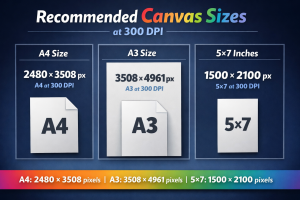
These dimensions ensure your artwork retains its quality when printed.For the greatest results, always save your file as a PNG or TIFF. Also, remember that printing on canvas, paper, or merchandise demands a higher resolution than digital-only artwork.
When working on characters, you need flexibility for details—like facial expressions, costume designs, and body poses. The Procreate canvas size for character design should be large enough to zoom in and add fine lines without distortion.
A common choice is 3000 x 4000 pixels at 300 DPI. This provides enough space to work comfortably while maintaining high resolution. You can later crop or resize for different uses such as turnarounds, close-ups, or final illustrations.For exploring tools, don’t miss our guide to free Procreate brushes.
Your iPad model plays a big role in how large your canvas can be. Procreate adjusts your canvas size, resolution, and available layers based on your device’s RAM.
For example, the iPad Pro allows more layers at larger sizes than the standard iPad or iPad Mini. Procreate will alert you if your settings exceed the layer limit, so balance canvas size and layer needs wisely. Always test your settings before starting a complex piece to avoid hitting performance walls.
If you’re still asking, How Big Should I Set My Canvas on Procreate?, here’s a good rule: match your canvas to your project goals. For print, go big with 300 DPI. For digital, reduce size and DPI to keep file sizes manageable.
To avoid performance issues:
Also, save canvas templates for repeated use. This speeds up your workflow and ensures consistency in your artwork.
There’s no single answer to How Big Should I Set My Canvas on Procreate? The best settings depend on what you’re creating, how detailed it is, and where it will be used. For illustrators, the best Procreate canvas size for illustration is one that balances detail and performance. For character artists, go big enough to zoom in without losing clarity.
At The Rainbow Stories, we recommend always starting with your end goal print, web, or mobile and building your canvas accordingly. That way, you’ll avoid having to scale, crop, or recreate your work later. Procreate is powerful, but choosing the right canvas size ensures you get the most out of it.If you’re still unsure which app suits you best, check out Illustrator vs Adobe Fresco vs Procreate for deeper insights.
Procreate has become one of the most powerful and versatile apps for digital artists, offering endless possibilities to create stunning illustrations, paintings, and designs. While the app comes with a variety of default brushes, many artists look for more variety to bring their creativity to life. That’s where free Procreate brushes come in handy. These brushes not only expand your toolkit but also allow you to experiment with new textures, effects, and styles without spending extra money. Whether you’re a beginner or an experienced professional, the right brush set can completely transform your digital art journey.
Procreate is a top app for digital artists, but default brushes can feel limiting. Free Procreate brushes—like watercolor, texture, ink, and glitter expand your toolkit, unlock new styles, and transform your artwork. Easy to install and perfect for beginners or pros.
Every great piece of digital art starts with the right tools. While Procreate comes with an impressive set of default brushes, artists often crave more variety. Custom brush sets allow creators to experiment with different effects and techniques. By exploring new options like watercolor brushes for Procreate or free texture brushes for Procreate, you can bring fresh life into your artwork. This is why downloading extra brushes for Procreate has become a must for every creative.
You can even compare across platforms with guides like Procreate vs illustrator vs adobe fresco if you’re deciding which app offers the best brush features.
This brush is perfect for sketching outlines or creating rough drafts. It mimics the look of traditional pencils, making it ideal for illustrations, comics, and even free Procreate brushes for clothing design sketches.
If you want to achieve soft blending and natural paint effects, this is a must-have. Many watercolor brushes for Procreate are available online for free, and they’re perfect for portraits, landscapes, and dreamy digital paintings.
For artists who love clean lines and detailed work, ink brushes are essential. These brushes for Procreate help create sharp, smooth strokes, often used in manga, comics, and line art.
Beautiful lettering and typography art need a steady calligraphy brush. Free sets are widely available and are a favorite among designers experimenting with hand lettering.
One of the most downloaded brush sets includes free texture brushes for Procreate. They add grain, depth, and realism to digital art. These are excellent for creating backgrounds, clothing textures, and shading effects.
Marker brushes bring bold and vibrant strokes to your artwork. Great for poster designs, graffiti art, or playful sketches, they make a solid addition to your brush library.
For raw and dramatic shading, charcoal brushes work beautifully. Artists use them for strong shadows, moody sketches, and even realistic fashion concept art.
Digital oil brushes simulate the look of thick paint strokes. This tool is perfect if you want a realistic painted effect without the mess of traditional paints.
Airbrushes create soft gradients, smooth textures, and subtle blending. Many artists use them for portraits, makeup concepts, and atmospheric backgrounds.
The glitter brush is one of the most fun free Procreate brushes available. It’s ideal for fantasy art, decorative illustrations, or adding sparkle to fashion designs.
If you’re still exploring which design software fits you best, you can check comparisons like Procreate vs Adobe Fresco and Procreate vs Illustrator to understand how Procreate stacks up against other popular tools.
Installing new brush sets is simple:
Organizing your brushes for Procreate into labeled folders can help you quickly access your favorites.
There are many websites, digital art communities, and forums where artists share free resources. From watercolor brushes for Procreate to glitter or texture packs, these platforms often release high-quality brushes at no cost. Just make sure you check the usage rights before downloading to ensure they can be used for both personal and commercial projects.
The world of Procreate is endless when it comes to customization, and downloading free Procreate brushes is one of the best ways to unlock your creative potential. At The Rainbow Stories, we believe the right tools can inspire artists to create without limits. From watercolor brushes for Procreate to free texture brushes for Procreate, each brush brings new styles and techniques to your digital art. Whether you’re sketching, painting, or designing clothing patterns, these brush sets can take your artwork to the next level.
The digital art world is thriving in 2025, with artists seeking the perfect app to bring their imagination to life. Among the most popular options, the debate of Adobe Fresco vs Procreate continues to dominate. Both apps offer unique strengths, but which one truly delivers the best experience for creative professionals and hobbyists this year? Let’s dive into their features, cost, and performance.
In 2025, the Adobe Fresco vs Procreate debate comes down to needs and budget. Procreate is ideal for beginners and independent artists thanks to its one-time low cost, simple interface, and massive brush library though it’s iPad-only.
Adobe Fresco suits professionals already in the Adobe ecosystem, offering vector, raster, and live brushes, cloud sync, and seamless integration with Illustrator and Photoshop, but it requires a subscription and has a steeper learning curve.
Procreate has built its reputation as one of the most loved digital art apps on the iPad. With its one-time purchase model, it provides an affordable option for illustrators, hobbyists, and concept artists. The app offers an extensive range of pixel brushes, smooth workflows, and tools like time-lapse recording that help artists showcase their creative process.
Best for independent artists, Procreate simplicity makes it easy to learn, yet powerful enough to create professional artwork. However, its limitation lies in platform availability still only on iPad in 2025.
Adobe Fresco, part of the Adobe products family, continues to grow stronger. Available on iPad, Windows, and some desktop platforms, it integrates seamlessly with Adobe Illustrator and Photoshop, making it a natural choice for professionals already using Creative Cloud.
The biggest draw of Fresco is its combination of vector, raster, and live brushes, giving artists flexibility that Procreate doesn’t provide. For beginners wondering, “Is Adobe Fresco good for digital art?”, the answer is yes its intuitive brushes and integration make it an excellent tool for learning and professional work alike.
Procreate shines with its massive brush library and the ability to create custom pixel brushes. Artists love the natural textures and flexibility. On the other hand, Adobe Fresco provides a unique mix of vector, raster, and live brushes, perfect for simulating real-world paint strokes. For artists who work across multiple Adobe products, Fresco’s integration makes brush management even more powerful.
Procreate’s interface is sleek, simple, and designed for minimal distraction. Beginners can start creating within minutes. Fresco, while clean, feels more familiar to users who are already used to Adobe Illustrator or Photoshop. It may seem overwhelming at first, but professionals benefit from the advanced layout.
In terms of performance, both apps run smoothly. Procreate is highly optimized for iPad, while Fresco works across devices. Fresco’s cloud sync ensures projects are always available, a clear advantage over Procreate’s standalone design. When comparing Adobe Fresco vs Procreate, workflow efficiency depends on whether you value integration or independence.
This is where Fresco wins. As part of the Creative Cloud suite, it integrates with Adobe Illustrator, Photoshop, and other tools, streamlining professional workflows. Procreate allows exports in multiple formats but lacks direct integration with Adobe’s ecosystem. Artists who regularly use Adobe products will find Fresco more efficient.
The Adobe Fresco vs Procreate cost debate is more relevant than ever. Procreate still follows a one-time purchase model, making it extremely affordable. Fresco, however, is subscription-based. Many wonder, “Is Adobe Fresco actually free?” the answer is no, though a free starter version exists with limited features.
Full access requires a Creative Cloud subscription, which can be costly for beginners but valuable for professionals who rely on multiple Adobe apps.If you’re also curious about how Procreate compares with other professional tools, check out our detailed guide on Procreate vs Illustrator
Choosing between Procreate and Adobe Fresco can be tricky for digital artists. This table highlights the pros and cons of both tools to help you decide which fits your workflow best.
| Procreate Pros | Procreate Cons | Adobe Fresco Pros | Adobe Fresco Cons |
|---|---|---|---|
| One-time low cost | Limited to iPad | Vector, raster, and live brushes | Requires subscription |
| Massive brush library | No vector brushes or advanced integration | Cloud sync across devices | Learning curve for beginners |
| Simple, beginner-friendly interface | Seamless integration with Adobe products | ||
| Great for illustrators and hobbyists | Great for professional workflows |
So, who wins in the Adobe Fresco vs Procreate debate this year? The answer depends on your needs.
For those asking, “Is Adobe Fresco good for digital art?”, it absolutely is—especially if you want realistic painting experiences with live brushes. But if cost is your main concern, the Adobe Fresco vs Procreate cost difference makes Procreate more budget-friendly.
Both apps have carved out strong reputations in the digital art community. Procreate wins for affordability, simplicity, and iPad optimization, while Adobe Fresco stands out for its integration with the Creative Cloud ecosystem, versatility with brush types, and professional workflows.
At The Rainbow Stories, we believe the choice between Adobe Fresco and Procreate in 2025 really comes down to your goals, budget, and creative style. Whether you’re sketching casually or producing professional illustrations, both tools have the power to elevate your artistry.
Writing a kids book is a dream for many authors, but the process involves more than just telling a fun story. Children are discerning readers, and if your book misses the mark, it might not capture their interest—or the interest of parents and educators.
Whether you’re a beginner or refining your skills, understanding the mistakes to avoid can help you write a better, more impactful book for young readers.
One of the biggest mistakes new children’s book authors make is failing to tailor their story to a specific age group. A picture book for toddlers requires a different tone and structure than a chapter book for 9-year-olds.
Each age range has developmental milestones that affect comprehension, vocabulary, and attention span. When writing a kids book, clearly define your target age group before writing your first word. Explore self-publishing vs traditional publishing to find the best path for kids’ authors
Another common error is using language that’s too advanced for children. Writing tips for kids’ books always emphasize the importance of simplicity. Avoid adult idioms, sarcasm, or abstract concepts that kids may not grasp. Short sentences and familiar words work best for young readers. This helps them stay engaged and makes the reading experience enjoyable.
Flat characters can turn even the most imaginative story into a forgettable one. Many common children’s book writing errors involve characters who lack personality, motivation, or purpose.
Children want to see themselves or someone exciting reflected in the story. Give your characters unique voices, clear goals, and emotional depth to make your book memorable.
“Show, don’t tell” is especially important when writing a children’s book. Describing a character as “sad” doesn’t resonate the same way as showing them with downcast eyes, hunched shoulders, and a trembling voice.
Using actions and dialogue helps young readers feel what the character feels. It’s one of the top beginner tips for writing children’s books that can instantly elevate your storytelling.
Also Read:How to Write a Kids Book
Dialogue that doesn’t sound natural is one of the most overlooked mistakes. Kids recognize phony conversations. Avoid making every character speak the same way or like a robot.
Realistic, engaging dialogue reflects how children’s books bring characters to life. Read your dialogue aloud—it should flow like real people talk, adjusted for age and tone.
Picture book writing advice often warns about pacing. Some authors spend too much time on background or description, while others rush through important plot points.
Children have short attention spans. Keep the story moving, introduce conflict early, and balance action with moments of reflection. Good pacing keeps young readers hooked.
Yes, stories can teach lessons—but don’t make the message so obvious that it overshadows the plot. One of the most repeated writing tips for kids’ books is to focus on the story first.Children learn best when the moral is woven naturally into the narrative. Avoid being preachy or turning your book into a lecture.
Stories without conflict tend to fall flat. A mistake new children’s book authors make is thinking kids need only happy, problem-free stories. In reality, children’s books benefit from tension whether it’s a lost toy, a new school, or a magical challenge. Introduce stakes that feel big to the child, and let your characters grow through resolution.
Switching from silly to serious without warning can confuse your readers. When writing a kids book, your tone should match your story’s purpose and remain consistent throughout.
If you’re writing a lighthearted picture book, keep the voice playful. If it’s a heartfelt story, maintain emotional depth from start to finish.
Even in self-publishing, quality matters. One of the more costly common children’s book writing errors is skipping the editing and design process.
Typos, confusing layouts, or amateur illustrations can ruin a great story. Invest in professionals who understand children’s books, especially if you’re aiming for bookstores or school libraries.
Every author makes missteps, especially in the early stages. The key is to learn and grow. By avoiding these pitfalls, you increase your chances of creating something that resonates with young readers and stands out in a crowded market.
At The Rainbow Stories, we believe writing a kids’ book may be challenging, but it’s also one of the most rewarding forms of storytelling. With care, feedback, and persistence, your story can become a treasured part of a child’s bookshelf.