Great children’s stories aren’t just told — they’re shown.
Before colorful illustrations bring a book to life, there’s an invisible stage that shapes how young readers experience every page: storyboarding.
Storyboarding is the process of mapping a story visually before final illustrations begin. For authors and illustrators, it’s a tool that transforms words into a flowing, emotional, and engaging journey — one that captures a child’s imagination from the first page to the last.
Let’s explore how storyboarding can turn an ordinary story into an unforgettable adventure for young readers.
What Is Storyboarding in Children’s Books?
Storyboarding is a planning process where each page or scene of a story is sketched out in rough visuals like a comic strip. It outlines how the text and illustrations will interact, where the key emotional moments occur, and how the story flows.
It’s not about detailed artwork but about visual storytelling deciding what each page will show, where the text will go, and how every page turn adds to the story’s rhythm.
For children book creators, this step ensures that the story unfolds naturally, keeps young readers engaged, and delivers meaning visually as well as verbally.
Also Read:Step-by-Step Guide to Creating a Storyboard for Your Story
Builds Strong Visual Flow and Rhythm
Children engage more with stories that feel like a journey where each page feels connected to the next. Storyboarding helps maintain that flow and rhythm.
By sketching out each page in sequence, creators can plan how scenes transition, where to add excitement, and when to slow down for emotional impact.
For example, a sudden zoom-in on a character’s expression after an action scene can emphasize emotion and help readers connect. Storyboarding makes these pacing decisions intentional, not accidental.
Enhances Page-Turn Moments
Every page turn in a children’s book is a moment of suspense or surprise. Storyboarding allows creators to design these moments deliberately.
You can place a cliffhanger or reveal just before a page turn keeping readers eager to discover what happens next. This is especially important for younger readers, whose curiosity drives their engagement.
When done well, the storyboard ensures that each page turn feels rewarding like discovering a new piece of a puzzle.
Also Read:
Strengthens Emotional Storytelling
Children understand feelings through expressions, color, and body language as much as words. Storyboarding lets illustrators visualize how emotions evolve throughout the story.
It helps map where to add warm tones for comfort, cool colors for sadness, or dynamic poses for excitement. Authors and illustrators can experiment with how visuals enhance emotions before committing to final art.
The result? A story that doesn’t just tell emotions but shows them allowing young readers to feel every beat of the narrative.
Keeps the Story Consistent and Easy to Follow
Young readers thrive on clarity and repetition. If characters suddenly look different, or settings shift unexpectedly, it can break immersion.
Storyboarding acts as a consistency guide helping creators maintain uniform character proportions, color palettes, and visual motifs across all pages.
It also ensures that every element supports the story’s flow, making it easy for children to follow the narrative visually without confusion.
Helps Authors and Illustrators Collaborate Better
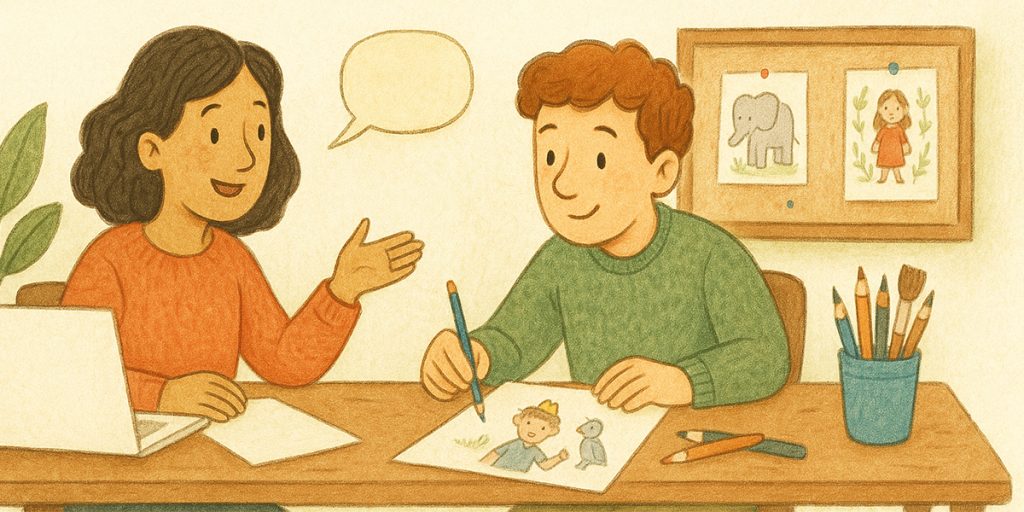
Creating a children’s book is a team effort. Storyboarding makes collaboration smoother by giving everyone a shared vision of the story’s structure.
Authors can see how their words fit within the visual layout, while illustrators understand the pacing and emotional tone the writer intended. Editors and publishers also find it easier to provide feedback early in the process — saving time and effort later.
This teamwork leads to stronger, more cohesive stories that appeal to both the eyes and the heart.
Encourages Creative Problem-Solving
Sometimes a written scene doesn’t translate well visually maybe too much text, or too little action. Storyboarding helps spot these issues early.
It encourages authors to show rather than tell, replacing long descriptions with imagery. This shift strengthens visual literacy for young readers, teaching them to interpret pictures and understand context clues a vital early learning skill.
Makes the Story More Engaging for Kids
Ultimately, storyboarding ensures that the story is fun to read and watch unfold. Children love turning pages that surprise them, comfort them, or make them laugh.
When pacing, visuals, and emotion work in harmony, reading becomes a full sensory experience. Storyboarding helps strike that balance — turning every page into a moment of discovery.
Conclusion:
For young readers, a story isn’t just about what happens — it’s about how it feels. At The Rainbow Stories, storyboarding gives authors and illustrators the power to craft those feelings with precision and purpose.
It’s where imagination meets structure, where every sketch builds anticipation, and where stories transform into unforgettable visual journeys.
At The Rainbow Stories, we believe a well-planned storyboard doesn’t limit creativity — it unlocks it, guiding young readers through a world they can see, feel, and believe in.