Educational Illustration for Classrooms and Learning Material

Artwork for the material children learn from: worksheets, readers, classroom displays, spot art for textbooks, and the recurring cast that holds a learning series together. Drawn by hand by the same three illustrators who draw our picture books, for children aged 2 to 12.

Who this is for

  • Teachers and schools producing their own material
  • Curriculum writers and educational publishers
  • Edtech and learning-app teams who need art that is not stock
  • Authors whose book needs a teaching companion or activity pack

What we draw

Worksheets and activity sheets

Drawn around the task, with the space the exercise needs left deliberately empty.

Readers and early literacy

Spreads for decodable readers and first chapter books, pitched at the reading level rather than the age on the box.

Classroom display material

Alphabet charts, routine cards, posters and wall material built to stay readable from the back of a room.

Textbook and workbook spot art

Small illustrations that sit alongside text without competing with it.

A cast for a series

Characters designed once with turnarounds and expressions, then reused across every unit and every year.

Step-by-step sequences

Simple visual sequences for instructions, routines and processes, boarded the same way we board a book.

Classroom work from the studio

Every piece below was drawn here, by Amna, Noor or Ayesha.
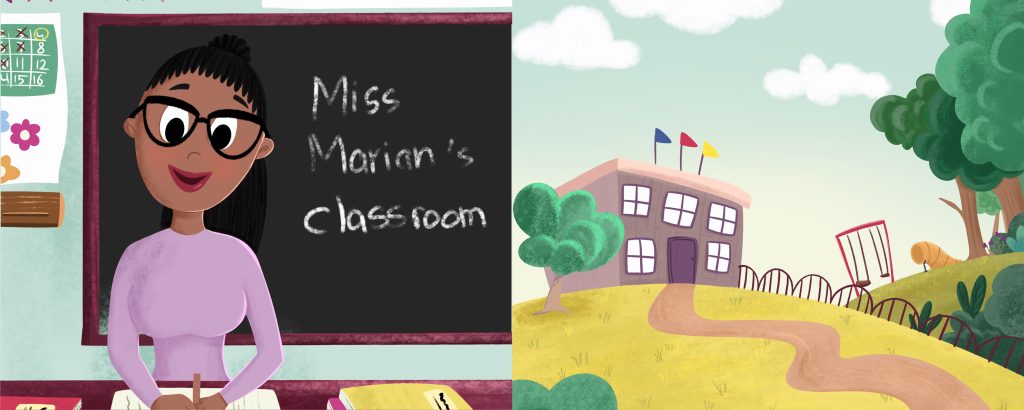
Children’s book spread of a teacher at a blackboard in Miss Marian’s classroom, with the schoolhouse and path outside
Miss Marian’s Classroom — Teacher at the Blackboard
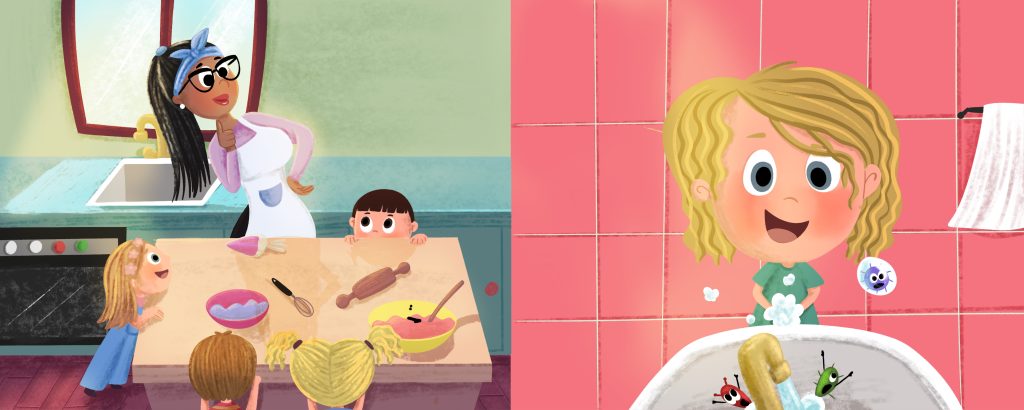
Two-panel children’s book illustration of a mother serving breakfast and a child washing hands at the bathroom sink
Getting Ready for School — Breakfast and Washing Up
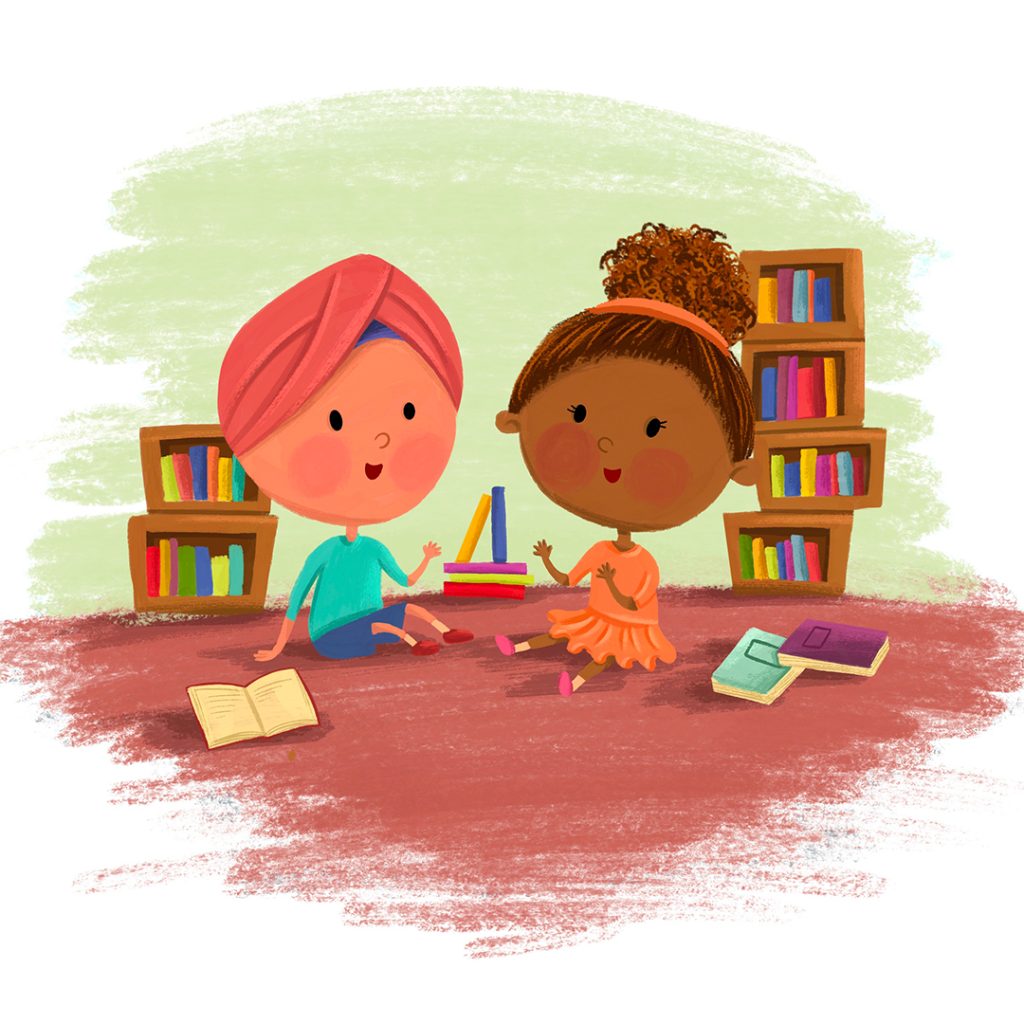
Textured children’s book illustration of two children playing with a toy boat and crayons among low bookshelves
Two Children Playing in the Reading Corner
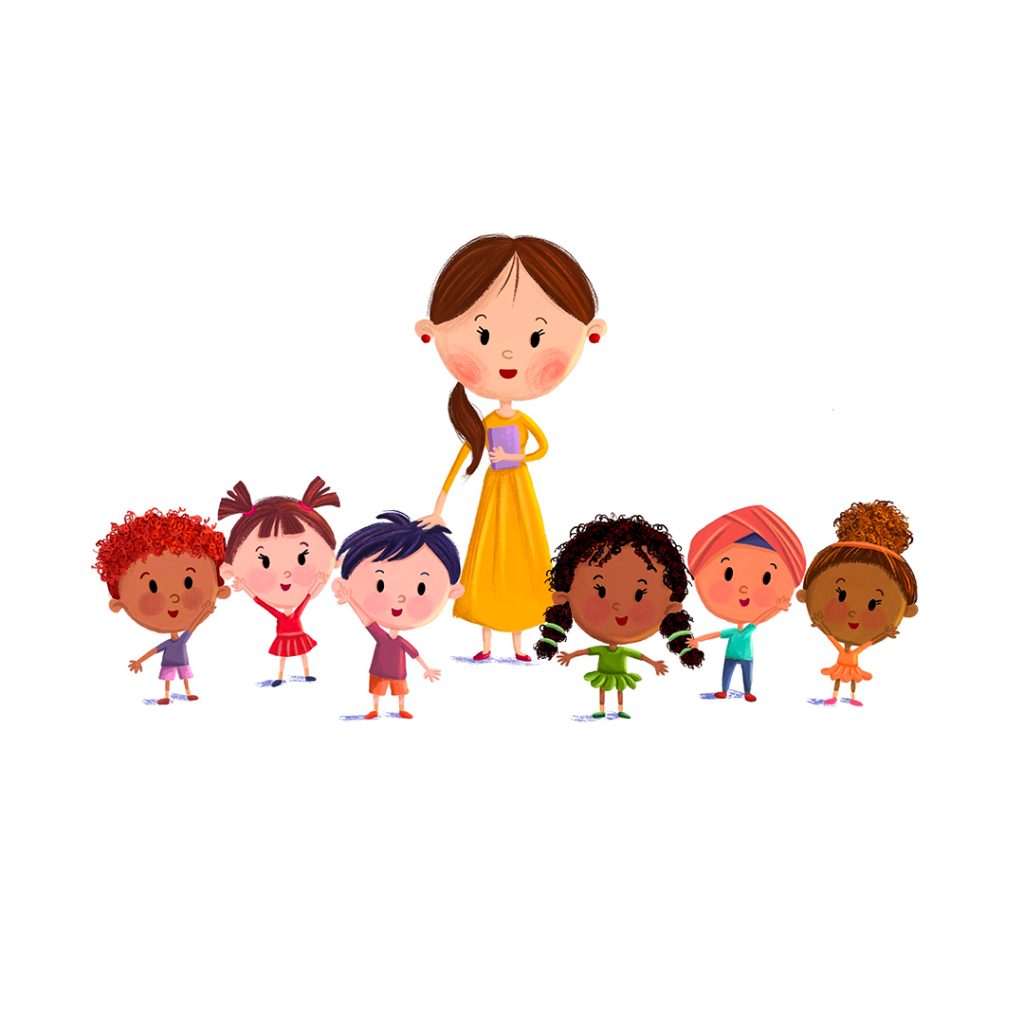
Character line-up for a children’s book showing a teacher and seven children of different backgrounds together
Teacher and Class — Character Line-Up
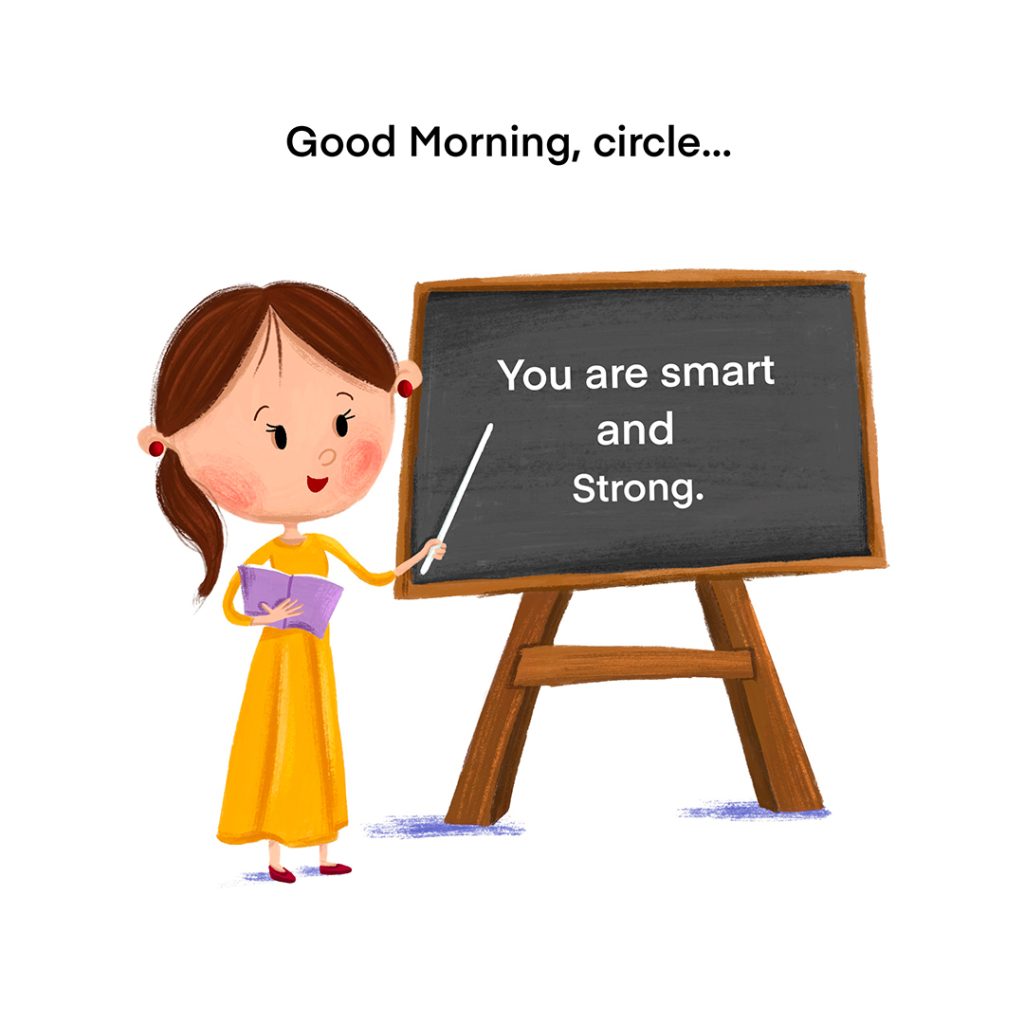
Children’s book illustration of a teacher at an easel blackboard reading You are smart and strong during circle time
“You Are Smart and Strong” — Morning Circle Time
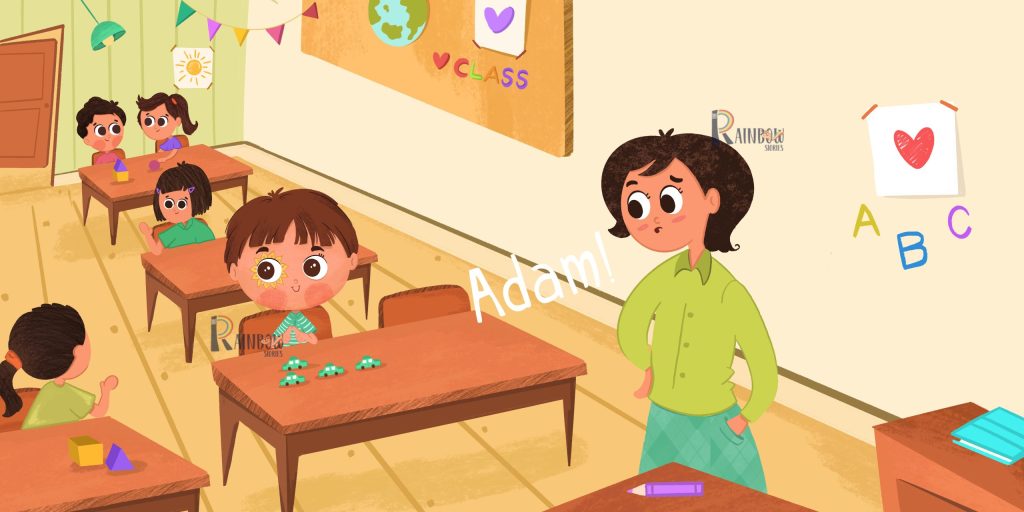
Children’s book spread of a classroom with children working at their desks and a teacher walking between them
Inside the Classroom
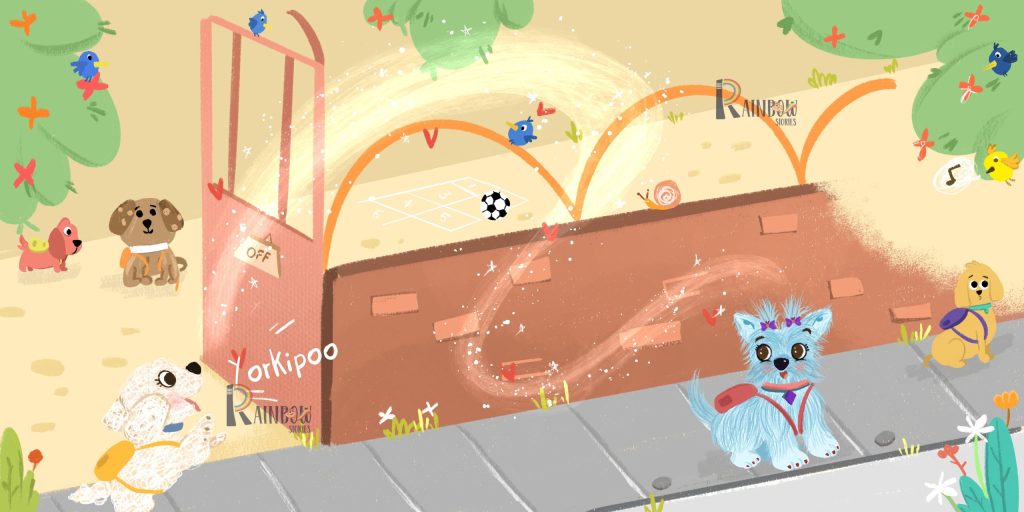
Children’s book spread of a school playground with arches and a small dog wandering across it
The Schoolyard and the Little Dog
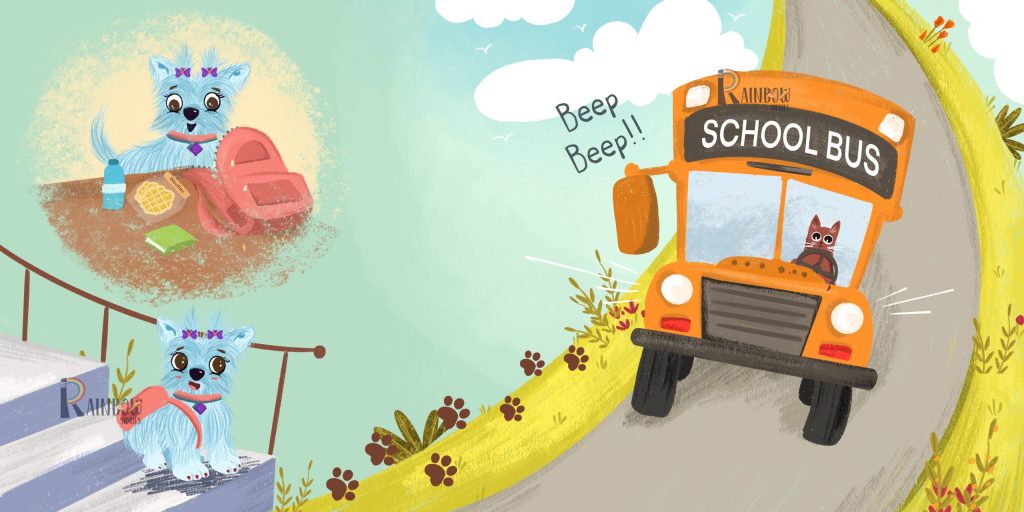
Children’s book spread of a yellow school bus pulling up to the kerb while a small dog watches
The School Bus Arrives
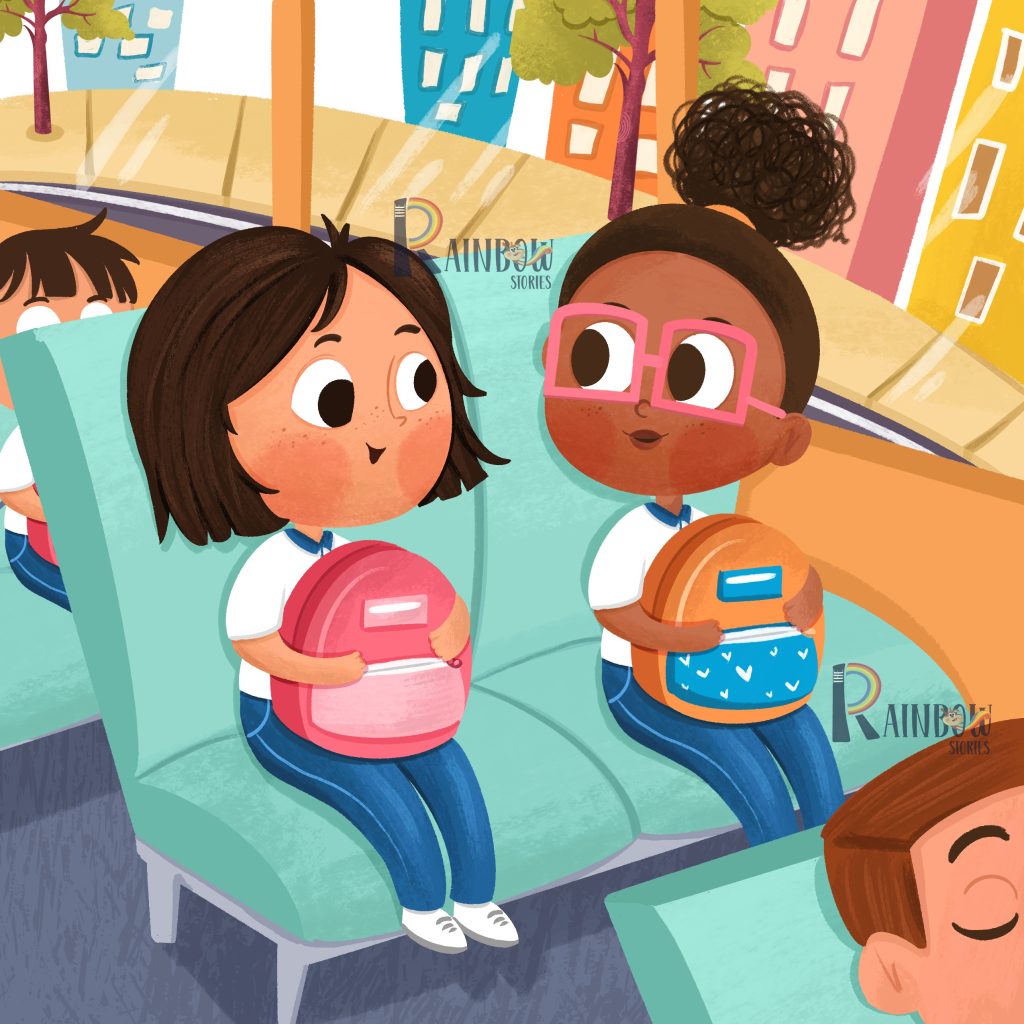
Children’s book illustration of two girls sitting together on a school bus with their backpacks on their laps
Two Girls on the School Bus

What makes educational work different

It is not picture-book illustration with a school setting. Four things change:

  • The cast has to survive repetition. A character that appears in one spread can be drawn once. A character that appears in forty worksheets across three terms needs turnarounds, expressions and a style sheet, or it drifts.
  • The page belongs to the task. Illustration on a worksheet is there to support an exercise, not to fill the page. Composition starts from where the child writes.
  • Visual complexity follows reading level. The same scene is drawn differently for a four-year-old and a nine-year-old, and it is the detail density that changes, not the subject.
  • Classrooms are drawn as classrooms are. Mixed, varied and specific, as standard rather than on request.

How it runs

  1. Tell us what the material isThe subject, the age group, how many pieces, and where it will be printed or displayed.
  2. Characters first, if there is a castSettled before any page art, so the same faces carry the whole series.
  3. Rough sketches for approvalChanges are quick while a page is a rough and expensive once it is painted, so the revision rounds sit here.
  4. Final artwork in the format you needSized for print, projection or screen — tell us which at the quote stage.

Quoted per project, like everything else here. What moves the price: how many pieces, how many recurring characters, how detailed the backgrounds are, and whether the material needs a style guide written or already has one. Send what you have and we will come back with a firm quote and a timeline within one business day.

If the material is also a book

Plenty of educational projects end up as a printed book. If yours does, the same studio handles the illustration and the print-ready files for Amazon KDP, IngramSpark, Barnes & Noble or EPUB, so the artwork and the specification are never two separate conversations.

Questions about educational work

Can you work to our curriculum or house style guide?

Yes. Send the style guide, a sample of existing material, or both, and we work inside it. If something in the guide will not survive contact with the age group — type too small behind a busy illustration, say — we will tell you before we draw it rather than after.

Do you illustrate worksheets as well as books?

Yes. Worksheets, activity sheets, readers, classroom displays and spot art for textbooks and workbooks. The drawing is the same; what changes is how much of the page has to stay empty for the task.

Can you keep the same characters across a whole series?

That is the usual reason to start with character design. Once a cast has turnarounds and expression sheets, the same children, teacher or mascot can appear across every worksheet and every unit without drifting.

Who owns the artwork?

You do, in full, on final payment, including commercial use. If the material is reprinted, translated or extended into another year group, nothing further is owed to us.

Is any of it AI-generated?

No, at no stage. Every piece is drawn by hand by one of our three illustrators, sketched digitally in Procreate.

Get a quote for your book