Illustrations play a crucial role in shaping a child’s reading experience, especially between the ages of 3 and 8. The right Children’s Book Illustration Styles can help young readers connect with the story, understand emotions, and stay engaged from page to page. With so many styles to choose from, it’s important to match the right artwork to a child’s age and developmental stage.
Children process stories visually before they fully grasp written words. That’s why the illustration styles used in picture books are more than decorative—they’re essential tools for visual storytelling. Clear, expressive, and age-appropriate illustrations support comprehension, imagination, and emotional connection to the story.
For kids aged 3–8, imagery should be easy to follow and filled with color and movement. These elements help capture short attention spans and build visual literacy early on.
When choosing children’s book illustration styles, keep in mind what resonates most with young readers. Simplicity, clarity, and expression are key. Colorful illustrations for kids are particularly effective at keeping their focus while also reinforcing story elements.
Characters should be relatable and visually expressive. Scenes should be easy to interpret, using clean lines and recognizable shapes. A strong whimsical art style or a charming, gentle tone can help establish emotional warmth in storytelling.
This is one of the most popular illustration styles for toddlers and preschoolers. With exaggerated facial expressions and soft, rounded features, cartoon-style illustration brings a playful, engaging energy to every page. It helps communicate emotions clearly, even without text. These illustrations are often used in board books and early learning stories where fun and repetition are key.
Books for young children often rely on a flat illustration style, featuring bright, solid colors and minimal detail. This visual clarity supports concept learning—like colors, numbers, or animals—and encourages kids to focus on key visual elements. Flat art is often used in concept books because it simplifies the message while keeping visuals sharp and clean.
Inspired by handmade crafts, cut-paper illustrations offer a rich texture that feels tangible. This different illustration style encourages sensory connection and mimics the hands-on experiences young kids enjoy, like cutting and pasting in art class. Books using collage art styles—like those by Eric Carle—remain favorites among parents and educators.
As children begin reading more complex stories, they’re ready for artwork with more depth and nuance. Watercolor illustrations use soft gradients and gentle washes of color to add emotional depth and detail. This children’s book illustration style is ideal for picture books with heartfelt themes or gentle messages.
Watercolor art helps create calming atmospheres, perfect for bedtime stories or reflective narratives.
Early readers love the dynamic and interactive feel of graphic-style art. Comic-inspired visuals use panels, speech bubbles, and action-focused drawings that help bring energy and movement into the story.
This illustration art style is especially effective for kids transitioning into independent reading, making longer books feel more accessible and fun.
Whimsical art styles combine multiple mediums—ink, pencil, digital, or texture overlays—to create imaginative, dreamlike worlds. They suit magical stories, fairy tales, or quirky characters. This picture book art style often features exaggerated perspectives and unexpected color palettes, making stories feel alive and unique.
Watercolor children’s book illustrations come in several styles, each creating a different mood, visual tone, and storytelling experience. Here are the most popular styles authors choose for modern picture books:
A gentle, dreamy look created with light washes and soft gradients. Perfect for bedtime stories, animal characters, and warm, comforting themes. This style is known for its soothing colors and minimal outlines.
Uses high-contrast colors, expressive strokes, and energetic textures. Ideal for adventure stories, fantasy settings, and books meant to excite young readers. Characters often have strong outlines and dynamic movements.
Features playful, imperfect brushstrokes with a sketchy feel. Great for humorous stories, quirky characters, and imaginative worlds. This style feels spontaneous and child-friendly.
More refined and lifelike while still offering the fluid beauty of watercolor. Often used for nature-themed books, wildlife stories, or educational children’s books where accuracy matters.
Combines watercolor with ink, digital textures, or colored pencils. This style creates a layered, modern visual effect and is popular for contemporary children’s books with artistic flair.
Clean, simple shapes with limited colors. Works best for early-age board books, alphabet books, and stories that rely on visual clarity for learning.
Pick a watercolor style based on:
Your story’s mood (soft, adventurous, emotional, funny)
Target age group (toddlers, early readers, middle-grade picture books)
Level of detail required (simple vs. realistic)
The overall brand identity of your book
If you want custom watercolor illustrations tailored to your story, The Rainbow Stories offers soft, whimsical, and mixed-media watercolor styles created specifically for children’s books.
Children’s book illustrations come in many styles, each shaping the story’s mood and helping young readers connect with the characters. Here are the most popular styles used in modern children’s books:
Soft washes, gentle colors, and a dreamy, hand-painted feel. Ideal for emotional, magical, or nature-themed stories.
Bold outlines, expressive characters, and simple shapes. Perfect for humorous stories, early readers, and high-energy scenes.
Created using tools like Procreate or Photoshop. Offers clean lines, vibrant colors, and flexible editing—popular for modern picture books.
Sketchy lines, textured shading, and a warm, traditional feel. Often used for adventure, fantasy, or chapter books.
Combines watercolor, ink, textures, paper cutouts, or digital elements. Great for creative, layered, and artistic stories.
Uses paper textures, cut-out shapes, and layered compositions. Works well for playful stories and visually rich storytelling.
Detailed characters and lifelike environments. Best for educational, wildlife, and nature-themed books.
Simple shapes, limited colors, and clean layouts. Ideal for board books, concept books, and stories for toddlers.
Highly imaginative characters, magical worlds, and glowing colors. Perfect for fairy tales and fantasy adventures.
Muted colors, textured shading, and nostalgic design. Often used for classic-themed stories or timeless messages.
Not all illustration styles fit every story. Authors and illustrators must consider the genre and tone of the book. Is it playful, gentle, adventurous, or educational? A fairy tale might suit a whimsical art style, while a counting book may benefit from a clean flat illustration style.
Authors should explore a range of different illustration styles to see which best supports their story’s message. Test samples with actual children from your target age group whenever possible—it’s a great way to confirm what works visually.
Different children’s book illustration styles vary in technique, mood, and audience appeal. Popular styles include:
Choosing the right style depends on your story’s theme, target age group, and visual tone.
Children book illustration is evolving quickly, with publishers focusing on styles that feel modern, diverse, and emotionally engaging. Here are the top illustration trends dominating the industry today:
| Trend Style | Description |
|---|---|
| Soft Watercolor + Digital Hybrid | A blend of traditional watercolor textures with digital enhancements. Creates warm, dreamy visuals with crisp, print-ready colors. |
| Bold, Graphic, and Minimalist Styles | Features simple shapes, high contrast, and clean compositions. Popular for board books and early readers to support visual learning. |
| Inclusive & Diverse Character Designs | Focuses on representing different cultures, skin tones, family structures, and abilities. Emphasizes authenticity and inclusion. |
| Whimsical, Loose Sketch Styles | Light, imperfect hand-drawn lines with playful textures. Ideal for humorous and imaginative stories. |
| Retro & Vintage Revival | Uses muted palettes, grainy textures, and classic mid-century influences. Nostalgic styles reappearing in many picture books. |
| High-Detail Fantasy Art | Richly illustrated, magical worlds with glowing effects and intricate details. Popular for fairy tales and epic adventures. |
| Mixed-Media Art (Collage + Texture Layers) | Combines watercolor, cut-paper, fabric textures, and digital elements. Great for artistic, layered storytelling. |
| Character-Driven Illustrations | Highlights expressive faces and strong emotions to help young readers form deeper connections with characters. |
| Eco-Inspired Nature Illustration | Features botanical themes, earthy tones, and wildlife elements. Increasingly used in books about nature and sustainability. |
| Interactive Visual Layouts | Uses guided movement, hidden elements, and playful page designs to encourage exploration and engagement. |
When working on children’s book illustration styles, consistency is key. A unified look across all pages helps young readers stay immersed in the story. Consider using an illustrator style guide to ensure the visual tone and elements remain cohesive.
Look for illustrators with a portfolio that aligns with your story’s tone and audience. A good illustrator understands how to balance creative flair with readability and emotional clarity. Keep the focus on clean design, storytelling support, and engaging characters.
To help bring your unique story characters to life with consistency and creativity, explore our professional Character Design services.
From cartoon-style illustrations to gentle watercolor art, the best Children’s Book Illustration Styles for kids aged 3–8 are those that engage the senses, support the narrative, and speak directly to a child’s imagination. Choosing the right illustration art style is a crucial decision in creating a meaningful reading experience.
Whether you’re an author or publisher, understanding the power of visual storytelling helps you connect with young readers more effectively. Explore different children’s book illustration styles to find the perfect match for your next project.
Whether you’re an author or illustrator exploring styles for your next book, find inspiration and practical advice at The Rainbow Stories where creativity meets storytelling.
Soft watercolor, bold graphic, whimsical sketches, and character-driven illustrations work best for engaging kids in this age group.
High-contrast colors and clear shapes grab attention, help visual learning, and make storytelling more exciting for early readers.
Yes, but they should be simplified and colorful. Detailed realism works best for educational books about animals, nature, or science.
Playful, imperfect lines spark imagination, encourage humor, and make characters feel more relatable for young readers.
Absolutely. Combining watercolor, digital textures, and collage creates layered, visually rich stories that capture attention and curiosity.
In children’s book illustrations, visual consistency is essential—not just for aesthetics, but for guiding and comforting young readers. A unified illustration style helps children easily recognize characters, follow the storyline, and stay emotionally connected from page to page.
Art directors and publishers often look for portfolios that showcase consistent art style, stable color palettes, and repeatable character traits. These elements reflect professionalism, reliability, and attention to storytelling.
Defined illustration guidelines, like consistent backgrounds and character proportions, ensure each picture book delivers a smooth, engaging reading experience. By maintaining visual harmony, illustrators can strengthen narrative clarity and deepen emotional engagement with young readers.
In this blog, we’ll explore practical tips to keep your children’s book illustrations consistent and why it matters for your storytelling success.
A children’s book illustrations project with a coherent approach to tone, character shapes, and color palette feels polished and immersive. Using an illustrator style guide—a set of simple illustration guidelines for kids’ books—ensures visuals flow seamlessly, reinforcing the narrative and emotional tone while helping readers navigate the story.
Little readers latch onto recurring character traits. Character design consistency matching proportions, hairstyles, expression styles—helps children identify protagonists across scenes. A solid illustration style guide often includes reference sheets detailing character traits to maintain uniformity page by page.Need help crafting consistent, engaging characters? Check out our Character Design services at The Rainbow Stories.
A unified color palette in children’s illustrations—whether warm and muted or bright and vibrant—establishes emotional continuity across the book. Purposeful color decisions help signal mood shifts and story pacing, reinforcing visual consistency in picture books.
Strong storytelling through visuals depends on clear visual cues and consistent framing. Maintaining similar character appearances, background details, and lighting from scene to scene allows narrative tension to build naturally. This page-by-page illustration flow ensures children aren’t distracted by sudden shifts in visual language.
Consistency conveys care. When art directors and publishers see a portfolio with unified line style, shading, and character types, it signals professionalism. Likewise, young readers feel anchored in a stable world, enhancing their reader experience in picture books and fostering repeated readings.
Creating simple illustration guidelines for kids’ books defining line weight, color tones, sizing, and recurring visual elements—makes the process smoother. These guidelines help when you switch between spreads or formats, ensuring children’s book illustrations feel cohesive and intentional.
Studies show consistency enhances story comprehension and emotional bonding. Inconsistency—such as varied character eye color or mismatched proportions—can break immersion. The “Importance of Consistency in Picture Books” stresses how consistent tone, style, and pacing anchor young readers.
Use thumbnail storyboards to track visual flow before creating final art. Keep a character turnaround sheet and swatch palette handy. Mark recurring motifs—like a backyard setting or a signature toy—to weave visual threads across scenes. This page-by-page illustration flow helps build unified story arcs.
Whether using traditional pencils or digital tools, consistency is achievable. In hand-drawn vs digital art, the core principle remains the same: replicate character proportions, line weight, and coloring. Many illustrators produce initial sketches by hand and refine them digitally—with careful reference to previous frames.
A unified cheerfully illustrated bunny series or whimsical woodland animal narrative establishes author/illustrator branding. Consistency in all elements—from font and use of symbols to design flourishes—helps imprint a memorable style on both publishers and readers.
Inconsistent art can disorient young readers. Sudden changes in character appearance, background detail, or palette break the flow, distract attention, and sap emotional engagement. Publishers and agents flag inconsistency as unprofessional—so maintaining uniform style is not just artistic; it’s career-critical.
At The Rainbow Stories, we understand that visual consistency isn’t just about style—it’s about creating a magical reading journey that keeps children engaged from the first page to the last.
Consistency in children’s book illustrations isn’t a nice extra—it’s a foundational requirement. From character design consistency to color harmony, from a written illustration guidelines for kids’ books to careful storyboarding, every element supports clear page-by-page illustration flow. With a deliberate approach, your illustrations will delight children, impress publishers, and create memorable reading experiences that keep kids turning pages.
Creating a self-published picture book depends greatly on strong illustration techniques. This article shares essential tips for self-publishing illustrators, beginner-friendly advice, and key design strategies to help produce engaging, professional children’s books.
Effective children’s book illustration tips begin with storytelling through art and visual flow in illustrated books. Planning the narrative pacing and composition early helps ensure the story connects with young readers.
Use thumbnail storyboards to plan the pacing and visual transitions of your book. Alternating full-page spreads with spot illustrations enhances visual flow and strengthens storytelling through art.
Tailor your artwork to the target age group: toddlers respond best to clear shapes and bold colors, while older children can appreciate subtle textures and finer details. Matching the illustration style to the reader’s level is a key design tip for children’s book illustrators.
Create character sheets showing multiple angles and expressions to maintain consistency throughout the story. This helps ensure visual continuity and supports cohesive storytelling through art.
Need drawings for your storybook? The Rainbow Stories creates charming kids’ book illustrations.
Choose a limited color palette to create visual unity, and add complementary accents for contrast. Ensure the text placement enhances the artwork without overcrowding it an essential tip in children’s book illustration.
Leave ample whitespace around text to enhance readability and support emotional pacing. Avoid overcrowding pages—effective storytelling through art needs breathing room between words and images.
Use composition to guide the reader’s eye—through character placement, diagonal movement, and color contrast. A strong visual flow keeps young readers engaged and eager to turn the page.
For beginner illustrators, exploring different illustration styles—such as watercolor, digital art, or collage—can be valuable. Experiment until you find the medium that best supports your story’s vision.
Self-published authors must manage file specs. Export at 300 DPI, embed fonts, and add bleed margins. These illustration tips for self-publishing help avoid poor print quality or layout errors.
Determine your page count and spread format early. Standard picture books are often 32 pages. Use that to calculate your storybook composition and event pacing.
Share drafts with peers, teachers, or parents to test audience reactions. This is core advice in children’s book illustration tips young readers reveal confusion or delight, helping you refine pacing and visuals.
Create an illustration timeline with clear milestones for thumbnails, color work, and final art. This aligns with top tips for beginner illustrators—helping prevent burnout and ensuring consistent progress.
Provide CMYK PDFs with embedded images, the correct DPI (usually 300), and proper print bleeds. These essential design tips for children’s book illustrators ensure smooth, professional results with print-on-demand or offset printing.
After finalizing artwork, choose a platform like Amazon KDP or Ingram Spark. Format cover and spine correctly, calculate ISBN, and keep consistent typography and layout throughout—essential illustration tips for self-publishing.
By applying these children’s book illustration tips, you ensure that both your visuals and story shine. From storyboarding and character sheets to file prep and self-publishing workflows, every step reinforces your book’s impact and durability.
Whether you’re just starting out or refining your craft, strategic focus on design tips for kids’ book illustrators, storytelling through art, and visual flow in illustrated books positions your work for success in the competitive world of picture books.
The debate between digital and traditional illustration remains central to children’s picture book creation. This post explores the key differences between the two styles, explains the role of traditional illustration, highlights the importance of digital techniques, and examines how illustrators make creative choices in today’s increasingly blended digital-analog world.
Understanding the difference between digital illustration and traditional illustration involves comparing hands-on, tactile mediums with screen-based artistic tools. Traditional illustration typically includes techniques like watercolor, pencil, ink, acrylic, or collage applied directly to paper. Whether hand-drawn or computer-generated, the chosen medium significantly affects the style, texture, and workflow of the final artwork.
Traditional illustration involves hands-on techniques such as brush pressure, blending, and interacting with paper textures like grain and tooth. These methods bring a sense of warmth, human imperfection, and authenticity that many readers connect with on an emotional level.
Digital illustration is important because it offers unmatched flexibility—allowing artists to use layers, experiment with colors, and easily undo mistakes. These features streamline collaboration, speed up revisions, and support faster publisher feedback, all of which are essential in today’s fast-paced book production process.
Discover how illustration shapes storytelling in our full guide on children’s book illustration perfect for authors, artists, and publishers starting out.
Exploring the advantages and disadvantages of digital drawing reveals key insights for modern illustrators.
Pros: Include easy revisions, a clean and organized workspace, unlimited color options, and the ability to create digital backups.
Cons: Involve the high cost of hardware, a steeper learning curve for beginners, and concerns around digital art theft or confusion with AI-generated content.
Also Read: The Role of Color in Children’s Book Illustrations
When considering the pros and cons of traditional art, several unique characteristics stand out.
Pros: Include a tactile, hands-on experience and the creation of one-of-a-kind original pieces with authentic texture and presence.
Cons: Involve limited ability to revise, time-consuming cleanup, the need for physical storage space, and ongoing material costs.
The cost of traditional versus digital illustrations depends on the tools and scope of the project. Traditional illustration often involves ongoing expenses for materials such as paints, paper, and physical storage. In contrast, digital illustration requires a higher initial investment—like a tablet, stylus, and software but tends to have lower per-spread costs over time.
Essential tools for digital illustration include drawing tablets, stylus pens, and creative software such as Procreate, Photoshop, and Illustrator. These tools support advanced techniques like layering, custom texture brushes, and effortless color adjustments. Mastering them enhances workflow, transforming ideas into finished illustrations with speed and precision.
Traditional drawing techniques continue to play a vital role in storytelling, offering a sense of warmth and authenticity. Methods such as watercolor blending, pencil shading, and printmaking add organic texture and charm qualities that digital tools often struggle to replicate.
Illustrators choose between digital and traditional methods based on project requirements, personal style, budget, and publisher expectations. Digital tools are ideal for projects that demand frequent revisions and fast turnarounds, while traditional techniques are preferred for creating one-of-a-kind, gallery-quality originals. In many cases, artists adopt hybrid workflows to combine the strengths of both approaches.
When it comes to choosing between digital and traditional illustration, the answer depends on context. Neither method is inherently better—each offers unique strengths. Many picture book illustrators use both, selecting the approach that best suits the story’s tone, the client’s needs, and their own creative style.
Hand-drawn and computer-generated art engage young readers in distinct ways. Hand-drawn illustrations offer a sense of warmth and individuality that fosters emotional connection, while digital art provides clarity, consistency, and precision—ideal for educational content and structured, sequential storytelling.
The ongoing debate between digital and traditional illustration continues to shape the world of children’s books. Understanding the differences between these two approaches—along with their unique advantages and challenges empowers illustrators to make informed, creative decisions. As digital and traditional techniques evolve, the future of picture book art is increasingly hybrid, dynamic, and full of imaginative possibilities. We believe great stories deserve great visuals. At The Rainbow Stories, we use both traditional and digital art to turn imagination into vibrant storytelling.
Children Book Illustration is about more than charming drawings it’s a powerful narrative tool. This article explores how to choose colors for a children’s book, explains why bright colors work so well in kids’ illustrations, and reveals how color can enhance storytelling. You’ll also find practical illustrator tips for using color effectively to craft emotionally engaging, visually cohesive picture books.
Children Book Illustration uses color deliberately to shape tone, focus, and emotional engagement. The use of color in storytelling is critical for young readers’ comprehension and emotional journey.
Warm hues like red, orange, and yellow can create joy, playfulness, or energy, while cool tones such as blue, green, and purple foster calm, contemplation, or mystery. The emotional impact of colors supports mood arcs and plot clarity. Studies confirm children respond more strongly to saturated, warm colors in upbeat scenes and cooler tones during calmer moments.
Bright, vibrant colors are vital in colorful images for young readers. Research shows that vivid tones help young eyes detect and remember visuals better, boosting attention and memory retention. This explains why bright colors work in kids’ illustrations so effectively.
Purposeful using color to enhance storytelling for children is about more than aesthetics—it uses palette shifts to signal narrative turns. For example, a transition from warm sunrise tones to cool twilight visuals marks climactic shifts. A study of picture book color transitions confirmed that palette changes highlight plot development. Similarly, recurring visual cues—like a red balloon during happy peaks or cooling shadows in quiet scenes—reinforce story beats and emotional pacing.
Want to learn how color choices shape a story’s emotion and pacing? Explore our in-depth guide on Children Book Illustration for expert tips on visual storytelling, styles, and illustration techniques.
A consistent color palette across spreads creates cohesion and helps guide pacing and mood. Effective color schemes in picture books often include a base of neutral or muted tones accented with bold hues to ensure readability and focus. This combination aids accessibility and prevents visual overload.
The strategic use of warm and cool colors in illustrations enables natural mood shifts. Warm tones bring characters forward; cool shades recede backgrounds, establishing visual hierarchy and emotional flow. Studies also confirm that warm hues stimulate excitement, while cool shades calm and soothe.
Illustrations serve as visual cues that support comprehension and vocabulary acquisition. When children engage with colorful illustrations for young readers, they remember story details more effectively thanks to high-saturation visuals enhancing memory performance.
Even simplified pages benefit from strategic bright accents. In minimal layouts, a bold red balloon on a neutral background draws focus, conveying narrative beats without clutter. This proves why bright colors work in kids’ illustrations, even in sparse designs.
Inclusive Children Book Illustration considers diverse cultures in palette choices. The Snowy Day by Ezra Jack Keats used color and setting to foreground an African American protagonist, influencing representation norms in picture books. Thoughtful palettes help modern authors reflect cultural authenticity and inclusion.
Children Book Illustration thrives when color becomes a storytelling partner. By understanding how to choose colors for a children’s book, why bright colors work in kids’ illustrations, using color to enhance storytelling for children, and applying illustrator tips for effective color use, creators elevate their narrative. With well-planned color schemes in picture books, balanced color palettes, and thoughtful warm and cool colors in illustrations, picture books transform from decorative to deeply engaging. At The Rainbow Stories, we believe colorful illustrations help young readers connect through mood, memory, and emotion.
Children’s book illustration is a magical fusion of visual art and storytelling that sparks young imaginations. This guide explores styles, techniques, tools, and expert tips to help you master the craft. Whether you’re an illustrator or an author, you’ll discover practical insights to elevate your work.
Illustrating a children’s book requires clarity, consistency, and an understanding of young readers. Follow these essential steps to create illustrations that support the story and engage children.
Read the manuscript carefully. Identify the target age group, tone, and emotions. Younger children need simple visuals, while older kids can handle more detail.
Create character sketches early. Keep proportions, expressions, and colors consistent throughout the book. Choose an illustration style that matches the story’s mood.
Decide what happens on each page or spread. Use storyboards to plan composition, pacing, and page turns. Make sure illustrations leave space for text.
Start with rough sketches to test poses, backgrounds, and storytelling flow. This helps avoid mistakes before final coloring and detailing.
Use a limited, child-friendly color palette. Colors should guide emotions and focus attention without overwhelming the page.
Refine details, clean lines, and ensure high resolution (usually 300 DPI). Check bleed, margins, and file formats required by the publisher or printer.
Tip: Great children’s book illustrations don’t just decorate the story—they help tell it visually, even without words.
Children’s book illustration plays a vital role in shaping the visual narrative of a picture book. It brings character design and storyboard elements to life, guiding young readers through each scene with clarity and imagination.
The right illustration style complements the text, enhancing emotional depth and storytelling impact. Crafting compelling character design often begins with simple shapes and expressive features. For young audiences, exaggerated eyes or gestures are especially effective in conveying emotion. A distinctive visual personality strengthens the emotional bond between child and character.
When planning a storyboard, think of it as a visual script. Each panel represents a story beat, helping to map out pacing and flow. A well-designed storyboard ensures a smooth visual journey from cover to back—keeping readers engaged and immersed in the story.
Great picture books begin with strong storyboards.Our Storyboarding Services help plan visuals that kids love.
Consider a range of children’s book illustration styles—from cartoonish to realistic to whimsical. Styles like watercolor washes, sketchy line art, and bold vector graphics each offer distinct moods and storytelling effects.
Choosing a cohesive style keeps the picture book visually unified and engaging for young readers. Popular styles include vintage, fantasy, and abstract—each bringing its own strengths to the narrative.
Photorealistic illustration works well for educational books, while whimsical art enhances fairy-tale charm. Matching the style to the target age group and story tone makes the visual narrative more immersive and age-appropriate.
A thoughtful children’s book illustration color palette sets the tone and emotional resonance of a story. Soft pastels soothe in bedtime stories, while bold primary colors energize adventure tales.
The color palette guides readers’ eyes and supports mood throughout each spread. It also enhances visual hierarchy and improves storytelling clarity.
Complementary contrasts help highlight characters against backgrounds for stronger narrative focus. Consistent use of hues strengthens visual unity across the entire picture book.
The choice between digital illustration vs. traditional methods shapes both workflow and texture. Traditional art offers tactile imperfections—like smudges or visible brushstrokes—that add organic charm.
Digital artwork, powered by illustration software, enables easy edits, layer control, and faster revisions. Smart children’s book illustrators often combine both: hand-drawn textures scanned and then refined digitally. This hybrid approach enriches texture while allowing flexibility during revisions. Knowing when to use each medium is a key part of mastering modern illustration styles.
Strong children’s book illustration tips include clarity, consistency, and emotive impact. Ensure character design remains recognizable across all pages even from different angles.
The visual narrative should smoothly support plot development without confusing young readers. Include small interactive details—like hidden objects to encourage repeated readings.
Use storyboard planning to refine pacing and visual economy before creating final art. Gather feedback from real young readers to test comprehension and engagement.
Illustration software like Procreate, Photoshop, or Illustrator are staples for today’s illustrators. Traditional tools—such as watercolors, pencils, and ink—remain beloved for their texture and organic feel. Print-on-demand services like Amazon KDP or Blurb support self-publishing efforts with ease.
Platforms such as online portfolios or social media help build visibility. Tools and platforms offering print mockups or e-book conversion streamline the publishing process. Combining digital polish with physical artwork maximizes the overall aesthetic appeal.
A career as a children’s book illustrator is a balance of creativity and craft. Learn to adapt your illustration style to fit client briefs or personal projects.
Follow a workflow: concept → storyboard → character design → color palette selection → final art.
Creating a cohesive visual narrative helps build a strong brand as a children’s book illustrator. Networking in communities and attending workshops keeps you updated on industry shifts.
Developing a unique style and a consistent process supports long-term success.
Identify your target age group board books, early readers, or middle-grade storybooks.Younger readers benefit from bold lines, clear shapes, and minimal visual clutter, while older kids appreciate nuanced textures, detailed backgrounds, and richer color palettes.
Selecting styles—whether whimsical watercolor or clean vector—greatly impacts reader engagement.Visual narrative choices like pacing, scene transitions, and focal points are essential for comprehension.Parents and educators also value artwork that balances fun with readability.
Always start with a storyboard to map out your visual narrative structure. This step ensures the pacing aligns with the target age group and suits the overall tone of the story before you commit to final artwork. Using thumbnail sketches at this stage helps refine composition, plan scene transitions, and spot any layout issues early in the process.
Once the storyboard is complete, move on to creating character design sheets. These should include a range of expressions, poses, and scale references to ensure consistency throughout the book. Consistent character design helps maintain visual continuity and makes each scene feel seamless. After finalizing the design direction, proceed with the artwork in your chosen medium.
Apply a thoughtful color palette and finish the illustrations with clean linework or digital enhancements to bring your children’s book to life with clarity and charm.
Ready to turn your story into something magical? At The Rainbow Stories, we bring imagination to life with charming illustrations and heartwarming narratives for children’s books.
Digital illustration tools streamline many tasks such as layer management, undo options, and experimenting with colors. These tools offer efficiency and flexibility that make the creative process more manageable. On the other hand, traditional tools like pencils, watercolors, and ink bring a tactile, organic texture that adds warmth and authenticity to children’s books.
Many illustrators today prefer a hybrid approach, combining the charm of traditional media with the control and versatility of digital workflows. This method allows artists to retain texture while enjoying the ease of revisions and edits.
Moreover, digital tools support multi-format output, making it easier to adapt illustrations for print, eBooks, or app-based formats. To fully leverage these benefits, it’s important to become proficient in key illustration software like Procreate, Adobe Photoshop, or Illustrator.
Understanding technical aspects such as file formats, color profiles, and DPI settings is also essential to ensure your illustrations meet the quality standards for publishing and look great across all platforms.
Self-publishing empowers illustrators to take full control over the design, format, and distribution of their picture books. With the rise of print-on-demand platforms, it’s now easier than ever to publish both digital and printed versions without large upfront costs. However, to ensure a professional result, it’s crucial to prepare your files correctly—this includes proper layout formatting, embedding fonts, and using a print-ready color palette.
Marketing also plays a vital role in the success of a self-published book. Eye-catching visuals such as detailed covers, character posters, and teaser illustrations can significantly boost appeal. To further engage your audience, consider offering downloadable content or interactive previews that give young readers a taste of the story. By aligning your illustration style with consistent marketing visuals, you create a strong, cohesive brand that leaves a lasting impression.
Becoming skilled takes practice in character design, color theory, and visual storytelling. Explore diverse children’s book illustration styles to find your unique voice. Attend online workshops, follow illustration challenges, and study classics by Pinkney or Sendak.
Study legendary illustrators like Isabelle Arsenault or Melissa Sweet—to understand minimalist or collage techniques. Research historical figures like Walter Crane or Arthur Rackham for classic composition and linework. Let these inspirations inform your illustration style and visual narrative
Children’s book illustration blends storytelling, design, tools, and publishing into a powerful art form. Mastering character design, storyboard flow, and color palette creates engaging picture books. Whether you choose digital or traditional illustration, the goal is to inspire and educate young readers.
With the right illustration tools and self-publishing platforms, your artwork can reach a global audience. By balancing texture, style, and narrative pacing, you craft unforgettable visual journeys. This guide empowers you to become a children’s book illustrator whose stories truly connect with young hearts.
What is book illustration refers to the visual artwork created to support and enhance a written story. In children’s books, illustrations help young readers understand characters, emotions, and events, especially when reading skills are still developing.
Children’s book illustration services provide professional artwork that matches the story’s tone, age group, and publishing standards. These services help authors turn ideas into engaging visuals that attract readers and meet market expectations.
To make a picture book, start with a simple story, define the target age group, and plan each page visually. Storyboarding, character design, and page layout are key steps before final illustrations are created.
Techniques to create unique storytelling illustrations include expressive character poses, consistent color palettes, visual pacing, and thoughtful use of perspective. These techniques guide the reader’s eye and strengthen the story flow.
Yes, professional illustration improves readability, emotional connection, and visual appeal. High-quality artwork helps a children’s book stand out, supports storytelling, and increases its chances of engaging both kids and parents.
Creating a successful children’s book is a team effort. While the author crafts the story, the book illustrator brings it to life visually. Effective collaboration between author and illustrator is essential for producing a captivating and cohesive final product. Whether you’re self-publishing or working with a traditional publisher, knowing how to work well with your illustrator ensures a smooth and creative journey from manuscript to finished book.
The right book illustrator can transform a simple story into a rich, immersive experience for young readers. But it’s not just about hiring someone who can draw well. It’s about finding a creative partner who understands your story, shares your artistic vision, and can contribute to powerful visual storytelling that enhances the emotional and narrative impact of your text.
One of the most important book illustrator collaboration tips is to start with clear communication. Be upfront about your expectations, timelines, and the level of creative freedom the illustrator will have. Provide a well-polished manuscript and any initial ideas you might have about characters, settings, or tone.
Mutual respect is vital. While you know your story best, the illustrator knows how to visually interpret it. Trusting their expertise in character design and development will help you both create something beautiful and balanced.
Every great children’s book begins with a spark—and stunning visuals to match. Let our Book Illustration Services turn your spark into storytelling magic.
Before starting the creative collaboration process, clearly define who is responsible for what. Will you give detailed direction for each page, or let the illustrator interpret the manuscript freely? Will you be involved in every stage of development, or only review final drafts?
These decisions affect workflow and deadlines. Having clarity early on prevents confusion later and helps align your goals. For children’s books illustrated to the highest standard, both parties must be on the same page from the outset.
One of the crucial stages in children’s publishing is translating the manuscript to storyboard. This phase outlines how text and imagery will flow across pages. It also helps in planning pacing, page turns, and where to create emotional or comedic moments.
Share your thoughts on which scenes are most important and allow your book illustrator to suggest visual pacing. Their understanding of layout and composition is essential for making the story visually engaging.
During early discussions, talk openly about your visual inspirations. Do you envision a whimsical watercolor style or a bold, cartoonish look? Clarify the tone and mood you want to achieve. This step ensures artistic vision alignment, reducing the chances of miscommunication and revision.
It’s also helpful to share examples of other children’s books illustrated in styles you admire. This gives the illustrator a visual reference and helps guide the development of your unique illustration style.
Effective book illustrator collaboration tips include being flexible. While it’s tempting to hold tightly to your original vision, be open to your illustrator’s suggestions. They may propose layout changes or visual cues that elevate the narrative.
The creative collaboration process thrives on mutual feedback. Approaching each stage thumbnails, sketches, and final artwork—with a willingness to adjust will create stronger illustrations that better serve the story.
Consistency is key in any children’s books illustrated project. From the first page to the last, the illustration style should remain uniform. That includes line weight, color palette, character proportions, and background treatment.
Discuss this from the beginning and revisit it during reviews. A professional book illustrator will know how to maintain visual cohesion, but it’s still worth checking as the book develops.
To keep the project organized, use collaboration tools like shared folders, cloud-based feedback platforms, or visual mood boards. These support the creative collaboration process and make it easier to exchange feedback, reference images, and updates in real time.
Regular check-ins are also useful. Even a 15-minute video call can help resolve issues faster than lengthy emails. Keeping communication channels open ensures both author and book illustrator stay aligned throughout the project.
Illustrating a book is a creative process that combines artistic skill with storytelling. Whether you’re creating a children’s book, graphic novel, or illustrated guide, your illustrations help bring the text to life and engage readers visually. Here’s a step-by-step guide on how to illustrate a book effectively.
Before drawing anything, you need to fully understand the story. Read the manuscript carefully, noting the tone, key events, characters, and settings. Identify moments that would benefit most from visual emphasis.
Tip: Create a list of scenes that need illustrations to ensure you capture all important parts of the story.
Your illustration style sets the mood for the book. Decide whether your artwork will be realistic, cartoonish, whimsical, or abstract. Consider the target audience and the emotional tone of the story when choosing colors, line styles, and character designs.
Tip: Look at other books in your genre for inspiration but keep your style unique.
Develop consistent character designs before starting the illustrations. Draw multiple versions of the main characters to finalize their look, expressions, and outfits. This ensures continuity throughout the book.
Tip: Keep a reference sheet for characters, including their colors, proportions, and distinctive features.
A storyboard maps out how illustrations will flow with the text. Sketch rough layouts for each page or spread, showing where images, text, and whitespace will appear. This helps with pacing, page turns, and storytelling impact.
Tip: Focus on visual storytelling and how illustrations can highlight important emotions or actions.
Start with rough sketches for each illustration. Focus on composition, perspective, and movement. Don’t worry about details yet; this stage is about capturing the main idea for each scene.
Tip: Use thumbnails to explore multiple composition options before finalizing.
Once sketches are approved or finalized, move on to the detailed illustrations. Add colors, shading, textures, and finishing touches. Ensure your style remains consistent across all pages.
Tip: Work digitally or traditionally, depending on your preferred medium, but maintain high resolution for printing.
Combine your illustrations with the book’s text, ensuring readability and balance. Adjust illustrations to fit text placement and vice versa. Make sure the visuals enhance the story rather than distract from it.
Tip: Use mock-ups or digital layouts to preview pages before final printing.
Review all illustrations for accuracy, consistency, and impact. Seek feedback from peers or editors. Make adjustments as needed to improve clarity, composition, and overall visual appeal.
Working with a book illustrator on a children’s book is a rewarding and enriching experience when approached with care and creativity. Effective communication, respect for each other’s roles, and alignment of artistic goals are key to producing a book that resonates with young readers. AtThe Rainbow Stories, we turn your ideas into magical, illustrated children’s books with expert book illustrator.
By following these book illustrator collaboration tips, from initial character design and development to final layout, you’ll ensure that the visuals complement the story beautifully. The combination of strong storytelling and compelling visual storytelling can turn a simple manuscript into a memorable masterpiece.
So, whether you’re preparing your manuscript or already seeking an illustrator, remember: great children’s books illustrated with thought and teamwork leave lasting impressions—not just on the page, but in the hearts of readers.
The right illustrator brings your story to life visually and ensures that the illustrations match the tone, mood, and style of your book.
Share a polished manuscript, your creative ideas, and clearly outline expectations, deadlines, and the level of creative freedom.
A storyboard maps how text and visuals flow across pages, helping plan pacing, page turns, and highlight emotional or comedic moments.
Discuss style preferences, color palettes, character designs, and revisit these elements during reviews to maintain uniformity from start to finish.
Use cloud storage, shared folders, mood boards, and collaboration platforms for feedback, and schedule regular check-ins to stay aligned.
When developing a children’s book, one important topic is constantly raised: How Long Does It Take to Illustrate a Book? Whether you’re self-publishing or dealing with a traditional publisher, knowing how much time drawings take is critical for managing expectations and fulfilling deadlines. Because pictures bring stories to life, especially in children’s books, their development requires careful consideration and patience.
The answer depends on several factors: book length, illustration style, artist availability, and complexity of visuals. For a standard children’s picture book, which typically contains 24 to 32 pages, the illustration process can take anywhere from two to six months. However, this timeline may extend depending on revisions, communication speed, and how detailed each page needs to be.
Understanding how to illustrate a children’s book involves more than drawing pretty pictures. It’s about storytelling through visuals, character consistency, scene planning, and often, working with an author’s manuscript to ensure cohesion between text and imagery. Each of these elements adds time to the overall schedule.
Choosing the right illustrator can truly make or break your story’s impact. If you’re looking for a trusted partner, explore our Book Illustration Services to see how we transform ideas into captivating, child-friendly visuals that bring stories to life.
To fully grasp the time required to illustrate a book, it helps to break down the illustration process into manageable stages:
So, how long does it take to illustrate a book? For most children’s picture books, you’re looking at three to six months, but flexibility is key.
When figuring out how to do book illustrations, it’s important to understand what influences the timeline:
The time required to illustrate a book is therefore not one-size-fits-all. You should plan with a buffer and communicate clearly with your illustrator.
If you’re learning how to illustrate a children’s book yourself or hiring someone to do it, here are tips to stay on schedule:
Whether you’re illustrating yourself or hiring someone, understanding how to do book illustrations includes respecting the timeline and process.
Children’s books are often more visually driven than adult books. Young readers engage more with imagery, which means every picture must tell a story. That’s why the illustrations in a book targeted at children require meticulous planning, composition, and creativity. Rushing this part risks compromising the book’s overall appeal.
Also, don’t underestimate the value of illustration in children’s books. It often becomes the first connection a child makes with reading. A well-illustrated book can captivate imaginations, build emotional bonds, and become a childhood favorite.
So, how long does it take to illustrate a book? For most children’s picture books, expect between three to six months depending on complexity and collaboration. Understanding the full illustration process from initial sketches to final artwork—will help you better plan your publishing timeline.
Whether you’re a writer exploring how to illustrate a children’s book or an illustrator preparing your workflow, respecting the time and effort involved is essential. A beautifully illustrated book is worth every minute it takes, especially when it’s destined to delight young readers and leave a lasting impression.
In the world of children’s books, illustration isn’t just decoration it’s storytelling. So take your time, trust the process, and create something magical.
Hiring an illustrator for a book is a crucial step that can make or break a children’s story. A strong visual partner helps breathe life into characters, create immersive worlds, and build kid‑friendly illustrations that resonate deeply with young readers.
Hiring an illustrator for a book requires careful planning and intentionality. Overlooking steps in this process can result in mismatched art style, wasted time, and unexpected costs.
Many authors fall into the trap of hiring an illustrator too quickly often before finalizing word count, pacing, or target age group. This mismatch in timing often leads to a misalignment between the text and the artwork down the line.
Skipping a thorough portfolio review is a major oversight. Always examine previous children’s book illustrators’ work to assess consistency, pacing, and storytelling flow. Not reviewing portfolios can lead to selecting illustrators whose style doesn’t match your vision.
A key mistake authors make with illustrators is choosing an art style that doesn’t align with their story’s tone. A whimsical tale might suffer under overly realistic art, while a serious story may not suit overly cartoonish visuals. Investing in alignment early prevents this issue from undermining narrative integrity.
Authors often misjudge illustration costs, especially for full-page spreads or professionally color-corrected artwork. Self-publishing research shows average costs roughly range from $1,600 to $5,000 for a 24-page picture book. Budgeting properly up front avoids mid-project financial stress.
Skipping a formal contract is risky. Your agreement should outline fees, deliverables, revisions, timelines, and usage rights. Without a contract, authors may find themselves in disputes over artwork use or timeline delays—easily avoidable with clear terms.
Effective illustration thrives on collaboration. Setting expectations, providing mood boards and story notes, and giving timely feedback are essential. Without it, authors often find narratives aren’t fully captured, and the illustration book lacks cohesion.
Not specifying in advance if your work needs an illustration book format—portrait, landscape, number of spreads—can derail production. Changes mid-project often incurs additional fees and delays, destabilizing the creative process.
Authors sometimes pick general illustrators due to cost or convenience. However, hiring children’s book illustrators with genre experience helps ensure pacing, character consistency, and audience-appropriate design.
Low prices might be tempting, but often result in hidden revisions, inconsistent style, or quality issues. Remember: experienced illustrators charge more but deliver professional, polished work worthy of bookstores and libraries.
Illustration projects need multiple feedback stages—sketches, layouts, and color refinement. Skipping revision stages can lead to final artwork that fails to align with story tone or character traits, costing more in late-stage fixes.
Knowing typical illustration styles, spreads, and pricing in your genre is important. Not doing this research leads to mismatched expectations or unfair comparison with published books.
Artistic compatibility matters. Working with someone whose style or communication clashes with your own hamper’s smooth collaboration. Prioritize candidates who show openness and enthusiasm for children’s storytelling.
The illustration book process involves multiple stages—concept, thumbnails, sketches, feedback loops, final art, and print prep. Misjudging the time or resources needed at each step causes misalignment, stress, and missed deadlines.
Choosing the right illustrator can make or break your story’s impact.Explore our Book Illustration Services to see how we turn your vision into captivating, child-friendly visuals.
Following current trends—such as overly hand-lettered or stylized art—without considering story fit often leads to content that feels fashionable but forced. Both author and illustrator should prioritize story integrity over trendiness.
Start with candidates who specialize in children’s book illustration. Examine their pacing across pages—do visuals flow? Do characters remain consistent? Ask about their familiarity with the illustration book process and project management. A good illustrator will not only draw but also enhance the story through visual storytelling.
Looking for someone who truly understands how to capture a child’s imagination? At The Rainbow Stories, we specialize in creating custom illustrations that reflect your story’s heart. Our team ensures your characters stay consistent, your visuals align with tone, and each page feels magical and meaningful.
Hiring an illustrator for a book is a collaborative journey that succeeds through clarity, due diligence, and realistic expectations. Avoid common mistakes—rushed hiring, portfolio gaps, mismatched art style, underestimated costs, missing feedback, and undervalued contracts. With smart book illustrator hiring tips—from choosing experienced children’s book illustrators to acknowledging the full illustration book process you’ll set the stage for a compelling, engaging, kid-ready story. When the visuals align with your narrative vision, both author and illustrator craft something truly magical—creating images that echo long after the final page is turned.
Book Illustrators play a magical role in children’s storytelling, transforming words into vivid characters and worlds that captivate young readers. From the first sketch to the final artwork, they use the book illustration process to craft expressive, kid‑friendly illustrations that feel personal and immersive. Through visual storytelling, these artists convey emotion, mood, and narrative arcs that resonate even before children learn to read.
Children’s book illustrators collaborate closely with authors and editors to ensure every illustration enhances the text. By blending creativity with educational illustrations for kids, they enrich the reading experience and turn simple narratives into enchanting illustration book adventures.
Book Illustrators begin by fully immersing themselves in the manuscript, closely examining character traits, settings, and emotional arcs to inform their visual approach. They sketch initial concepts and thumbnails, refining facial expressions and body language until the characters feel natural and relatable. This careful design phase uses visual storytelling to maintain consistency in character appearance and emotional tone across spreads.
By aligning sketches with narrative intent and iterating based on feedback, illustrators build early attachments with young readers. The result is a cohesive book illustration process that turns text into living, engaging characters for kids.
Children’s book illustrators collaborate closely with authors and editors, beginning with mood board discussions and thumbnail sketches to capture the story’s tone and visual narrative. These rough layouts allow both writer and illustrator to align on mood, pacing, and character placement before finalizing the art.
By integrating feedback early, illustrators ensure the images do more than embellish they enhance emotional beats and narrative flow. This collaborative stage of the book illustration process transforms text into cohesive, engaging visuals that support the story’s intent, ultimately elevating each page into a richer, more immersive reading experience for young audiences. . Want to stay ahead of the curve? Discover the top Book Illustration Trends authors should watch in 2025 and see how innovation is shaping the future of storytelling.
Designing kid‑friendly illustrations means using bold colors, approachable forms, and clear emotions. Illustrators draw inspiration from everyday life, nature, or even their own childhood (as in Jane Massey’s Little Knight sketches) to create relatable characters who feel real and safe for early readers.
Explore our professional Character Design Services to bring your story’s characters to life with expressive, kid-friendly illustrations.
Through visual storytelling, illustrators convey mood, pacing, and subtext. Body language, composition, and palette work reveal character journeys and emotional beats—sometimes even without words. This is especially powerful in educational illustrations for kids, where visuals can make lessons memorable and engaging.
The book illustration process typically involves:
(a) rough concept sketches
(b) layout thumbnails/storyboards aligning text and image
(c) intermediate painted drafts for feedback
(d) final artwork cleanup, coloring
(e) color correction for publishing.
Each step refines the character’s visual personality so they feel consistent and alive.
Explore our in-depth blog on Book Illustration Services for authors and publishers
In books designed to teach like alphabet or counting stories illustrations double as learning tools. Icons, diagrams, labeled objects and friendly characters create approachable lessons. These educational illustrations for kids introduce concepts simply and joyfully, blending learning with storytelling.
Child readers connect emotionally through facial expressions, gestures, and eye contact. Book Illustrators infuse characters with nuance—joy, fear, surprise—so readers empathize. The illustrator’s thoughtful design invites children to project themselves into characters, enhancing engagement and recall.
Feedback drives refinement. Authors and art directors review drafts to fine-tune character expressions, color harmony, and pacing. Illustrators iterate through layers—sketch, color, shade—until every page resonates both visually and narratively. This iterative book illustration process builds trust and creativity in the collaboration.
In finalization, illustrators tidy lines, calibrate palettes for print, and ensure the artwork fits within trim and bleed guidelines. They separate characters from backgrounds, add type-safe zones, and prepare print‑ready files so their creations appear vibrant and polished in the finished book.
Classic book illustrators like Garth Williams and contemporary award-winners such as Michaela Goade have shaped how children perceive stories. Their images leave lasting impressions and inspire curiosity and creativity in young minds. Through their visual storytelling, they carry characters across generations.
Book Illustrators truly are the essential architects of a child’s imaginative landscape. By guiding readers through emotional highs and subtle lessons, they transform simple narratives into immersive worlds. Their journey—from initial sketches to polished final art—reflects a masterful book illustration process, carefully blending expressive, kid‑friendly illustrations with purposeful educational visuals for children.
Through visual storytelling, they deepen narrative impact, ensuring that each spread not only entertains but also enlightens. In weaving educational illustrations for kids seamlessly into charming scenes, illustrators invite young readers to learn and feel alongside characters.
This fusion of artistry and pedagogy makes reading a joyful, enriching journey, fostering emotional connection and lifelong literary curiosity. Ultimately, these artists bring characters to life, sparking wonder and creativity on every page—proving that illustrations in children’s books are far more than decoration; they’re essential conduits for learning, empathy, and imagination.
Book illustration trends are fast changing to match the needs of today’s visually focused readers, particularly youngsters. Staying up to date on these developments is critical for authors aiming to publish in 2025 in order to remain relevant, interesting, and competitive. Children’s books are no longer only about stories; they are visual experiences, and readers demand more innovation, diversity, and style than ever before.
In this article, we’ll explore the key children’s book illustration trends for 2025, the factors driving them, and how authors can incorporate these trends into their upcoming projects.
The year 2025 marks a turning point in how readers especially children engage with visual content. The rise of digital platforms, interactive storytelling, and a growing focus on diversity have made illustration trends more vibrant and meaningful than ever.
Understanding these shifts is essential for creating visuals that resonate with today’s readers, whether you’re a first-time author or a seasoned professional. These changes are redefining not only the look of children’s books but also their emotional impact and educational value.
At The Rainbow Stories, we turn every page into a visual journey with unique, heartfelt illustrations for kids’ books.
Children’s book illustrations are changing fast. In 2025, pictures in books are not just for decoration—they help tell the story, connect with kids, and even teach important lessons. If you are an author or illustrator, here are the top trends to follow this year.
Many new books now use clean, simple designs with fun and playful details. Instead of busy backgrounds, the focus is on characters and emotions. This helps kids understand feelings and actions while still enjoying creative story worlds. It’s great for keeping things clear but exciting.
Illustrators are mixing different art styles like drawing, collage, photography, and digital painting. These pictures have texture and look more interesting.
Even in digital books, this style feels warm and real. It helps make stories feel more alive and fun to look at.
Books in 2025 are using bold, bright colors that catch the eye and create strong feelings. These colors also help children remember what they see and learn new words.
At the same time, more books show characters of different races, abilities, and family types. This makes stories more relatable and fair for all kids.
Illustrators are now mixing text and pictures in creative ways. Words are not just at the bottom of the page—they may float in the sky, follow a character, or curve around shapes.This makes reading more fun and helps children connect pictures with words as they learn to read.
Many books are using art that shows nature—like forests, animals, and the environment. These stories teach kids to love and care for the planet. The colors are often soft and natural, and the pictures feel calm and peaceful.
Some book illustrations now look like they are moving, even though they are still pictures. Artists use lines, angles, and blur effects to show action.This makes the book more exciting and keeps kids interested—just like cartoons or games they already enjoy.
New tools like AI (artificial intelligence) and AR (augmented reality) are helping artists create books faster and in new ways. Some books even come alive with apps, sounds, or movement on screens.These tools help make learning more fun, especially in educational books. But traditional drawing is still important too.
Some books let kids choose how characters look or pick different story paths. This makes reading more personal and fun.Children feel more involved in the story and want to read it again and again. These books use smart layouts and pictures that can change with the reader’s choice.
Looking for expert tips before hiring an illustrator? Don’t miss our complete guide on how to choose a book illustration service perfect for first-time authors and publishers.
How Authors Can Stay Ahead of Illustration Trends
To remain relevant in this changing landscape, authors must stay updated on the illustration style evolution 2025. Here are some tips:
Understanding illustration trends in publishing 2025 ensures your book won’t feel outdated by the time it hits shelves.
The world of children’s literature is fast changing, and book illustration trends in 2025 will show a greater emphasis on variety, interaction, and emotional connection. Whether you’re producing a picture book or an early reader chapter series, images will be critical to the effect of your work.
By staying current with children’s book illustration trends 2025, you are not just following a fad; you are answering the demands of a new generation of readers via visual storytelling in children’s books that is original, bold, and unforgettable.
A great story deserves an eye-catching cover that draws readers in at first glance. Check out our Book Cover Design Services to give your children’s book a professional, creative edge
Illustration is an important part of a child’s early reading experience. Visuals in children’s books do more than just garnish the page; they bring stories to life, excite the imagination, and help young readers connect with characters and events. Many children would struggle to interact with or comprehend written content in the absence of visuals. This blog looks at the significance and impact of drawings in children’s books.
The role of illustration in children’s literature extends far beyond visual appeal. For early readers who do not yet recognize all words, visuals serve as a guide, providing clues and context. They assist comprehend the story, express emotions, and set the tone in ways that text cannot. Illustrations enable young readers to “read” the book even if they are unable to read the words.
This visual tool is especially useful in early childhood education since it promotes memory, language development, and comprehension of story structure.
There are various benefits to children’s book illustration that promote learning and growth. First, pictures improve comprehension by making abstract concepts concrete. For example, seeing people physically share toys or snacks makes a story about sharing more real to children.
Second, they foster empathy by visually depicting character expressions and emotions. Seeing a character cry or laugh teaches youngsters to recognize and relate to those emotions, which promotes emotional intelligence and compassion from a young age.
The role of illustration in kids books stems from their capacity to help storytelling, particularly for visual learners. Children have a natural attraction to colorful, active visuals that keep them engaged and attentive. These illustrations may symbolize the difference between a child putting down a book and reading it from cover to cover.
In addition, well-crafted illustrations help kids anticipate what comes next in a story, boosting prediction skills and critical thinking. These reading habits set the stage for lifelong literacy and study.
At The Rainbow Stories, we bring children’s stories to life through custom illustrations and personalized storytelling.If you’re looking to create a book with meaning, explore our custom storybooks for children that blend imagination with heart.
Understanding how pictures influence early reading is critical to recognizing their educational value. When children look at pictures, they begin to associate them with words and concepts. This word-image relationship aids vocabulary development and sentence production.
Illustrations also assist children understand the concept of sequencing—the idea that stories have a beginning, middle, and end. This understanding is critical in building good narrative and writing skills later on.
Visual storytelling for children’s books is an art form in and of itself. The graphics complement the text, helping the reader grasp more deeply. In some cases, they recount aspects of the story that were not included in the written version. A youngster may notice a subtle element in the corner of an image that foreshadows an upcoming occurrence, teaching them to pay attention and comprehend visual clues.
This layered storytelling style engages young minds and makes rereading the book more pleasant because youngsters find new components each time.
Illustration is also an effective means of showing inclusiveness and diversity in children’s books. Children witness images of people from various cultures, abilities, and family systems. This illustration fosters flexibility and friendliness.
When kids see characters which look like them or present their own experiences, they gain confidence and a sense of belonging. On the other hand, exposure to varied stories teaches children about the world outside of their immediate area.
Illustrations fuel creativity and imagination. The importance of illustrations in kids’ books also lies in their ability to expand a child’s world. A magical castle in the sky or a talking animal opens doors to endless possibilities and dreams.
These visuals allow children to explore unfamiliar places, magical settings, and historical eras in a way that feels real and exciting. This mental engagement builds curiosity, creativity, and a love for storytelling.
When designing or choosing children’s books, it is vital to choose ones with smart, age-appropriate illustrations. Consider how the images relate to the story’s theme, how they convey emotions, and whether they correspond to the reading level.
Understanding the function of illustration in children’s literature can help parents, teachers, and authors provide the greatest reading material for growing minds.
If you’re planning to create a children’s book, it’s important to know how to choose the right book illustration service that fits your story and audience.
Illustration is more than just a visual accessory it is a fundamental part of children’s literature. From enhancing understanding to sparking creativity and teaching empathy, illustrations serve multiple critical roles in young readers’ lives.
Whether you’re an author, parent, or educator, recognizing the importance of illustrations in kids’ books can help you make better choices in reading materials. Through visual storytelling in kids’ books, children don’t just learn to read—they learn to think, feel, and dream.
Hiring an illustrator is a crucial phase in the publication process for your children’s book. The appropriate illustrator could bring your characters and tale to life, making the book attractive, memorable, and emotionally effective for young readers. But before finalizing a contract, it is essential to ask some suitable questions to ensure that the relationship is effective.
Hiring an illustrator entails more than simply reading a portfolio. You must grasp their approach, communication style, experience with children’s literature, and pricing. Addressing certain queries during illustrator interviews enable you to choose anyone whose artistic style matches your objectives and who can meet deadlines, handle changes, and develop the children’s book market profitable.
Asking smart questions before hiring an illustrator helps avoid delays, overspending, and frustration—especially if you’re self-publishing or with a small press
Here are essential interview questions for illustrators to help you choose the right creative partner:
These questions for illustrator interviews help clarify expectations early, reducing potential conflict later in the project.
A popular question among authors is how much an illustrator should charge for a book cover. The response varies according to experience, intricacy, and licensing. Children’s book covers can range from $200 to $1,500. Full interior artwork can increase the overall cost of a book from $1,000 to more than $10,000.
Discussing the budget upfront is part of the necessary tips for hiring an illustrator. Ensure that you’re not only aligned on pricing but also on what deliverables are included—cover, page illustrations, endpapers, and promotional assets.
If you’re still exploring options, don’t miss our detailed post on how to choose the right Illustrator for Hire.
In addition to interview questions, consider logistical queries:
These considerations go beyond artistic compatibility and address legal, technological, and scheduling issues that might make or break your project.
Here are some key tips for hiring an illustrator that are especially useful for children’s book authors:
These tips for hiring an illustrator can help you make a more informed, confident choice.
Understanding how to choose an illustrator comes down to alignment on several fronts:
Looking at their portfolio is a great first step, but the real test is how well they understand and share your vision. When hiring an Illustrator, you want a creative partner—not just a service provider.
To choose the right illustrator, it’s helpful to know the tools they use explore the top tools professional illustrators rely on.
A successful children’s book is the product of a close partnership between the author and illustrator. Clear communication, mutual respect, and established expectations go a long way. Make sure to revisit your question for illustrator interview during talks and even after hiring to keep everything on track.
Some illustrators may offer layout or tempo modifications that improve the book; remain receptive to their suggestions. Trust in the illustrator’s visual storytelling, but don’t be afraid to express your non-negotiables.
Hiring an illustrator represents a creative investment. By asking the proper questions, creating clear expectations, and taking into account important elements such as cost, experience, and style, you can ensure that your children’s book turns out just as you planned.
Proper preparation is key when determining how much to pay an illustrator for a children’s book cover and choosing the right artist for your story. By taking a thoughtful approach asking the right questions, understanding the costs, and aligning on vision—you’re more likely to find not just a skilled illustrator, but a true creative partner who brings your characters to life and captures the hearts of young readers
Hiring illustrators to hire a children’s book is one of the most significant aspects of the publication process. Great images might bring your story to life, get involved in a child’s imagination, and identify your book from others. But, with so many illustrators available, how do you choose the best one?
Employing illustrators for hire ensures that your children’s book has the visual appeal it deserves. Youngsters normally connect with images before spoken language, so the illustrator’s work must be both attractive and appropriate for their age. A talented children’s book illustrator for hire may help to improve the story, develop unique characters, and add emotional depth.
If you’re wondering how you can find book illustrators for hire, look into services like Behance, Fiverr, Upwork and also you can check The Rainbow Stories professional illustrator . Many superb artists post their portfolios on these kinds of sites. Instagram and LinkedIn can also help you contact a book illustrator for hire who specializes in children’s stories.
Look for illustrators with experience in children’s literature. Their portfolios should show a consistent style, strong storytelling ability, and illustrations that match the tone of children’s books.
Also Read:Top 8 Tools & Software Used by Professional Illustrators
Before reaching out, it’s critical to understand the illustrator for hire cost. Prices vary widely based on the artist’s experience, style, and the amount of illustrations required. A comprehensive children’s book can cost anything from $500 to $5,000 or more.
Many book illustrators for hire provide package offers or charge per page or illustration. Always address pricing up front, and specify whether changes, copyright transfer, and formatting are included in the price.
A popular question is, “Can I trust book illustrators for hire?” The answer is yes, assuming you take the proper safeguards. Check their client evaluations, get references, and confirm their previous work. Reputable illustrators for hire will also include a contract that clearly states deadlines, rights, and responsibilities.
Always use safe payment methods, and avoid paying the full fee upfront. Consider starting with a short sample illustration to see whether their style matches your expectations.
Yes, illustrators are very much in demand, and their role continues to evolve in today’s digital world. With businesses, authors, and content creators needing visual storytelling more than ever, skilled illustrators have plenty of opportunities.
From social media graphics to website visuals, marketing campaigns, and educational content, the demand for engaging illustrations is increasing. Brands and creators need visuals that capture attention and convey messages quickly.
Illustrated books remain popular, especially for children. Authors frequently hire illustrators to bring stories to life, making this a strong niche with consistent opportunities.
Illustrators skilled in character design, concept art, and animation are highly sought after in the gaming and entertainment industries. As these sectors expand, demand continues to grow.
With freelance platforms and digital marketplaces, illustrators can work with clients worldwide. This flexibility opens more doors than ever for creative professionals.
Businesses increasingly value unique and custom illustrations over generic stock images. Illustrators who can develop a distinctive style or brand-specific visuals are especially in demand.
Not every artist is suitable for children’s literature. An excellent children’s book illustrator for hire understands how to captivate a child’s attention with vibrant, whimsical, and emotive images. They should be able to draw emotions, action scenes, and fascinating environments that assist in communicating your tale graphically.
When interviewing illustrators for work, inquire about their interpretation of a situation. A skilled illustrator should be able to bring your ideas to life with creative flair and storytelling aspects.
Selecting the right illustrator is key to bringing your vision to life. The right artist can translate your ideas into compelling visuals that resonate with your audience. Here are some tips to help you make the best choice:
Before looking for an illustrator, outline your project requirements. Include details like style preference, target audience, number of illustrations, deadlines, and budget. A clear scope helps you find someone who matches your needs.
An illustrator’s portfolio is the best way to understand their style and expertise. Look for consistency, versatility, and projects similar to yours. This will give you confidence that they can handle your project effectively.
Some illustrators specialize in children’s books, while others focus on editorial, digital, or product illustrations. Choose someone whose experience aligns with your project type.
A good illustrator should be easy to communicate with and responsive to feedback. This ensures your ideas are accurately translated into the illustrations.
Clarify how they work, what file formats you’ll receive, and timelines for drafts and revisions. Knowing this upfront avoids misunderstandings later.
While cost is important, don’t compromise on quality. Balance your budget with the illustrator’s skill and the value their work brings to your project.
Previous clients’ feedback can give you insight into reliability, professionalism, and how they handle deadlines.
Hiring a book illustrator can turn your story into a visually engaging experience. Understanding how they work can make the process smoother. Here’s what you need to know:
Most illustrators start with a discussion about your project. You’ll talk about the book’s theme, target audience, preferred style, number of illustrations, and timeline. This ensures both sides are aligned.
After understanding your needs, the illustrator usually provides a proposal. This includes project scope, cost, deadlines, and deliverables. Once agreed, a contract is often signed to formalize the work.
The illustrator creates rough sketches or concept art. This stage is for feedback and adjustments before moving to the final illustrations. Collaboration here ensures your vision is captured.
Once sketches are approved, the illustrator produces the final artwork. This may include digital files, print-ready formats, or any specific file type you require.
Most illustrators allow a certain number of revisions. Feedback is incorporated to ensure the illustrations match your expectations.
The final step involves delivering the artwork along with usage rights. Some illustrators transfer full copyright, while others may retain certain rights—this should be clarified beforehand.
Working with illustrators for hire is a team effort. Please ensure your expectations are clearly communicated, provide a complete manuscript, and offer visual references or mood boards. Communication is key—schedule regular updates to stay aligned.
Most book illustrators for hire will provide initial sketches before proceeding with final illustrations. Use this stage to provide feedback and ensure the tone and character design match your vision.
With the rise of AI-generated art, many people wonder if illustrators will lose their jobs. While AI can create images quickly, skilled human illustrators are still irreplaceable for many reasons.
AI can generate visuals based on patterns and existing data, but it cannot fully replicate human creativity, intuition, or unique artistic vision. Illustrators bring personal style, storytelling, and emotion to their work, which AI cannot truly mimic.
Illustrators consider the audience, project goals, and cultural context when creating visuals. AI may produce generic or inaccurate results without nuanced understanding, making human expertise essential.
Working with clients involves discussion, brainstorming, and iterative revisions. Human illustrators excel in communication and collaboration, ensuring the final artwork matches the project’s vision.
Children’s books, editorial illustrations, brand mascots, and other specialized projects often require highly tailored visuals. AI can assist but cannot fully replace the personalized touch of a professional illustrator.
Many illustrators are now using AI to speed up processes or explore ideas, treating it as a helpful tool rather than a competitor. This hybrid approach enhances creativity while keeping human artistry central.
One mistake many authors make is rushing the hiring process. Take your time reviewing portfolios and comparing different illustrators for hire. Hiring someone just because they’re affordable may lead to unsatisfactory results.
Another mistake is not having a contract. A written agreement protects both parties and should cover timelines, pricing, revisions, and usage rights. Most professional book illustrators for hire will expect and appreciate this level of professionalism.
Choosing the right illustrators for hire for your children’s book is all about matching your story with the right artistic talent. Be open to collaboration, but also stand firm on the vision you have for your book.
If you’re still unclear how to find book illustrators for hire, focus on artists who specialize in children’s stories. Their knowledge will guarantee that your book is appealing to your intended audience. Whether you choose a cheerful cartoon style or a more fanciful watercolor design, the proper children’s book artist for hire may take your book to the next level.
In summary, working with professional illustrators for hire can transform your manuscript into a visually stunning children’s book. With careful research, smart budgeting, and clear communication, you can find a trustworthy, talented illustrator who understands your vision and delivers high-quality illustrations that delight young readers.
Fiverr is a freelance marketplace where illustrators and many other types of freelancers publish “gigs” at set prices. You can browse, pick a gig that matches your needs, pay upfront, and the platform handles payment escrow and delivery.
Behance is primarily a portfolio‑and‑showcase platform owned by Adobe: illustrators display their past work for you to review. You can contact artists directly and negotiate projects, but Behance itself doesn’t manage payments or guarantee delivery.
For high-quality, professional illustrators, The Rainbow Stories is a great place to start. They specialize in children’s book illustrations and connect you with artists who understand how to create engaging, age-appropriate visuals. Their illustrators have consistent styles, strong storytelling abilities, and experience bringing stories to life, making it easier to find the perfect match for your book.
Costs vary based on experience, style, and number of illustrations. A full children’s book can range from $500 to $5,000 or more. Many illustrators offer packages, per-page pricing, or custom quotes, so clarify all details, including revisions and copyright transfer, before starting.
Yes. Every illustrator on The Rainbow Stories is vetted and experienced. The platform provides portfolios, client reviews, and clear contracts to ensure deadlines, rights, and deliverables are respected. You can also request a sample illustration before committing.
Creating interesting illustrations for children’s books necessitates a combination of creativity and the correct tools. For a professional illustrator, choosing the right tools is critical to bringing stories to life and effectively engaging young readers. This article analyzes the finest tools and software for children’s book artwork, assisting illustrators in selecting the greatest fit for their creative needs.
Procreate has become a go-to software for many artists, particularly those working in children’s literature. Its simple interface and huge brush library make it excellent for creating colorful and appealing graphics. Many pros believe it to be the best software for illustrating children’s books because of its low cost and powerful capabilities.
A professional illustrator creating children’s books needs software that balances creativity and functionality. Essential tools should have easy-to-use interfaces, wide brush libraries, and storytelling capabilities. Illustrators like programs like Procreate and Adobe Photoshop because of their variety and depth, which allow them to create bright, fascinating artwork. Furthermore, applications like Clip Studio Paint and Krita offer powerful possibilities for creating detailed graphics.
Choosing the correct software not only improves the creative process, but it also ensures that the finished illustrations connect with young readers, making the storytelling experience more immersive and enjoyable.
The Rainbow Stories is the best illustration company for children’s books, offering talented illustrators who expertly use these tools to bring characters and stories to life.
Many artists, particularly those working in children’s literature, now rely on Procreate as their primary app. Its user-friendly interface and huge brush library make it excellent for generating vivid and interesting graphics. Many pros see it as the best software available for illustrating children’s books because of its low cost and powerful capabilities.

Also Read:Illustration vs. Graphic Design: What’s the Difference in Children’s Books?
Adobe Photoshop is still widely used in the illustration community. Its comprehensive toolset enables complex and textured artwork, making it suited for a wide range of illustration styles. While it has a higher learning curve, many professional illustrators rely on it due to its versatility and interaction with other Adobe products.

Clip Studio Paint is well-known for its ability to create comic and manga art, but it’s also great for children’s book illustration. Its vector tools and pen pressure sensitivity allow for a natural drawing experience. Illustrators providing custom illustration services frequently use it to create intricate and emotive artwork.

CorelDRAW provides accuracy and control, making it ideal for illustrators who prefer vector-based imagery. Its user-friendly interface and extensive toolset enable the creation of beautiful, scalable illustrations. For those wondering what software illustrators use, CorelDRAW is a worthwhile option.

Krita is a free, open-source painting application with a variety of features ideal for children’s book artwork. Its brush engines and stabilizers aid in the creation of clean, uniform lines. Many professional illustrators advocate it as a low-cost option for those entering the business.

Book Builder is an all-in-one platform for authors and illustrators who want to streamline the book development process. It enables users to write, illustrate, and format children’s books online, making it accessible to individuals with limited design knowledge. It is especially handy for custom illustration services that strive to provide comprehensive book solutions.
Affinity Designer provides a cost-effective alternative to Adobe Illustrator, offering robust vector illustration tools. Its smooth performance and one-time purchase model make it appealing to professional illustrators seeking budget-friendly options without compromising on quality. It’s often cited when discussing what is the best illustration software.

Because of its reputation for simplicity and usability, Canva is a good choice for novices starting out in children’s book artwork. It might not have as many features as professional illustration programs, but it’s still a useful tool for making layouts and basic graphics. For those experimenting with Illustrator tools, it’s a good place to start.

The tools that a professional illustrator uses to create engaging children’s books are crucial. The sophisticated capabilities of Procreate and Photoshop or the ease of use of Krita and Canva—each program has its own merits. Illustrators can select the best program that fits their project specifications and creative vision by being aware of the advantages of these applications.
There are many various types of illustration software available to suit a range of demands and ability levels. Options like Procreate and Adobe Photoshop provide strong capabilities and user-friendly interfaces for people looking for the best software for illustrating children’s books.
In the meanwhile, Krita and similar tools offer an economical alternative without sacrificing quality. The particular needs of your project, your financial situation, and your level of tool skill must all be taken into account when deciding what software illustrators use.
By using custom illustration services, you can also get solutions that are specifically designed to make sure the illustrations appeal to the target audience. The software selection should ultimately improve the storytelling experience by captivating young readers by bringing characters and stories to life.
Illustrations play a crucial role in children’s literature by turning stories into vivid, captivating experiences for young readers. Professional illustration services are essential to this change, painstakingly creating images that improve and complement the text. Initial consultations to comprehend the story’s themes, concept development through sketches, storyboarding to map out visual flow, character design to bring personalities to life, final illustration creation, revisions based on feedback, and publishing preparation represent a few of the crucial steps in the illustration services. This meticulous and cooperative process guarantees that every artwork fits the author’s vision and enthralls the target audience, enhancing the story’s impact and memorability.
A children’s book’s success depends on striking a delicate balance between interesting text and eye-catching illustrations. Creating artwork that enhances the narrative experience while also enhancing the written information is the goal of professional illustration services. To guarantee that every illustration complements the tone, themes, and message of the text, these services need careful coordination between authors and artists. Professional illustrators assist in creating books that are both emotionally and artistically compelling, successfully grabbing young readers’ interest and imagination by fusing narrative flow with artistic vision.
Also Read:Illustration vs. Graphic Design: What’s the Difference in Children’s Books?
Embarking on the journey of illustrating a children’s book involves several meticulous steps:
The distinctiveness of each children’s story is accommodated by custom illustration services. These services guarantee that graphics accurately depict the story’s unique themes and characters by providing customized artwork. This customized method improves the reader’s experience by increasing the story’s immersion and remembrance.
The process of illustration design involves more than just producing pictures; it also involves developing a visual story that goes well with the text. This procedure entails meticulous preparation, imagination, and teamwork to guarantee that every illustration successfully contributes to the narrative. Understanding what the illustration process is? helps writers understand how much work and effort goes into making their story come to life graphically.
Also Read:How Custom Illustrations Can Boost Your Brand Identity
The book illustration process is a journey from idea to final result. Understanding the basis of the story is the first step, and the result is artwork that strengthens the narrative. This method is essential for children’s books, as the images frequently tell stories just as effectively as the text.
Authors can have access to professional knowledge and creative talent by using illustration services. These services guarantee that the finished illustration satisfies the author’s vision and appeals to young readers by offering direction at every stage of the process.
Professional illustration services are crucial for making stories into lasting memories in the creative world of children’s books. The illustration service is a thorough, team-based procedure that uses striking visuals to bring the written word to life, starting with the first consultation and ending with the final publishing stage. Every stage, from character development to scenario planning to final artwork refinement, adds to a cohesive storytelling experience that appeals strongly to young readers.
By personalizing services to reflect the different tone, topics, and style of every single story, custom illustration services further enhance this process. This guarantees that illustrations are in line with the author’s vision and have an emotional impact in addition to being aesthetically pleasing. Authors might gain a greater appreciation for the talent and commitment required to bring their ideas to life through understanding the illustration process.
In the end, spending money on illustration services strengthens children’s books’ narrative and aesthetic appeal while assisting in capturing the audience’s attention, inspiring them, and producing a lasting impression on them.
Visuals are as essential as words in the ever-changing world of children’s reading. Together, illustration and graphic design are two crucial elements that help young readers find stories interesting, memorable, and pleasurable. Even though they can seem similar at first, each is unique and crucial to the writing of a book. Knowing the difference between graphic design and illustration enables publishers and authors to create books that are both more visually appealing and more effective.
This blog examines the ways in which both fields influence children’s literature and explains how using expert illustration services may enhance narrative to new creative levels.
Basically, graphic design is a combination of visually appealing elements, including colors, images, and typography, to communicate a specific idea. Graphic design in children’s books makes sure that the reader is led through the story in an enjoyable manner by images as well as text.
On the other hand, illustration is the art of producing visuals that communicate a narrative or add to it. Illustrations are more than just decorations in children’s books; they are an essential component of the narrative and frequently express thoughts and occurrences that words cannot.
Graphic design and illustration possess distinct goals. While graphic design focuses on readability and overall layout, illustration uses detailed artwork to bring characters and scenes to life.
Children’s books are primarily illustrated, providing visual narratives that enhance and supplement the text. They make the story easier for young readers to understand, particularly when their language abilities are still developing. By using custom illustration services, authors can make sure that the artwork exactly reflects the tone and meaning of their story.
Interesting pictures can pique readers’ interest, simplify difficult concepts, and offer visual signals that facilitate understanding. Whether it’s a quirky figure or an intricate environment, pictures add significance and memorability to stories.
Also Read:How Custom Illustrations Can Boost Your Brand Identity
The visual identity of children’s books is greatly influenced by graphic design illustrations. There are numerous illustration styles that are each specifically appropriate for a variety of audiences and story genres.
Cartoon style is characterized by strong lines, exaggerated characters, and vibrant, lively hues. This approach works particularly well for drawing in young readers and is ideal for humorous, lighter stories.
Characters and scenes are depicted in a realistic way in realistic illustration. It helps kids make the connection between pictures and concepts from the real world and is frequently utilized in educational books or stories based on actual occurrences.
Soft hues, fantastical themes, and dreamy, imaginative pictures are characteristics of whimsical illustration. A child’s imagination and feeling of wonder are stimulated by fairy tales and fantastic adventures.
Clean, simple outlines are the main goal of line drawing. This style, which is frequently found in coloring and activity books, promotes creativity and interaction.
Layering different materials, such as paper, cloth, or textures, to produce rich, complex images is known as collage and mixed media. This gives the illustrations more nuance and individuality.
The emotional tone and intelligibility of a book are improved by selecting the appropriate illustration style.Working with talented experts who provide illustration services ensures that the images accurately reflect the tone and meaning of the narrative.
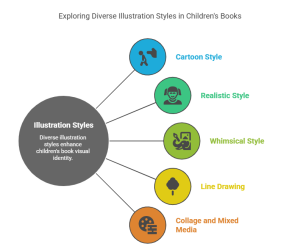
Graphic design ensures that the book is readable and visually unifying, even as visuals draw the reader in. It involves picking color schemes that are attractive to the target age group, arranging written and visual content, and picking suitable fonts.
By effortlessly directing the eye over the page, good graphic design improves the reading experience. It strikes a balance between visual components, making sure that text and illustrations enhance rather than contradict one another. A well-organized arrangement with captivating illustrations enhances the story’s readability and appeal.
Consulting with specialists who provide custom illustration services can be vital for authors coming into the children’s book market. These professionals use unique art that embodies the plot’s energy to bring stories to life.
Illustrators coordinate closely with authors from the initial drafts to the final designs in order to be sure that each image reflects the story’s thoughts. Their proficiency in a range of artistic methods develops adaptability and originality, producing a distinctive and captivating book.
Illustration and graphic design are two sides of the same coin in children’s books. Illustration adds depth and emotion, helping to make stories bond with young readers, while graphic design organizes and structures content for clarity and appeal.
Producing appealing children’s books requires an understanding of the difference between illustration and graphic design. Authors may produce books that not only convey a tale but also leave a lasting impression by utilizing expert illustration services and careful design.
Whether you’re a seasoned publisher or an aspiring writer, understanding the different but complementary functions of art and graphic design will improve your storytelling and captivate children’s imaginations everywhere.
In the world of children’s books, standing out is more important than ever. One of the most effective ways to create a lasting impression is through custom illustrations. These unique visuals do more than decorate a page—they build a strong, recognizable brand identity that connects with both kids and parents alike.
Your custom illustrations significantly influence young readers’ thoughts on your stories. Custom artwork has been produced to precisely fit your characters, themes, and tone, in contrast to generic artwork.
This customized approach enhances your book’s overall message and brand image, in addition to making it visually appealing.
When readers know your artwork immediately, you’ve established a strong brand. Consistent usage of custom illustrations in your books and marketing materials will help you achieve this.
Whether it’s a particular character style or a specific color palette, organized visuals help your brand stand out in a competitive market.
Authors are able to find talented illustrators who are aware of the dynamics of children’s storytelling by working with custom illustration services. These professionals work with you to realize your idea, making sure the finished piece of art perfectly complements your story.
You’re investing in a visual identity that speaks directly to your audience when you use illustration services, not just acquiring artwork.
Selecting professional illustration services guarantees that your book illustrations are superb, imaginative, and suitable for the target audience’s age. These artists create captivating stories for young viewers by reaching a balance between imagination and clarity of thought.
Expert creators add their experience, which helps you steer clear of typical problems like cluttered settings or ambiguous visual storytelling.
Every remarkable children’s book combines both words and illustrations to tell a story to kids. By giving the text additional complexity, dedication, and context, a custom illustration boosts the story.
Illustrators are able to express personality, motion, and mood via techniques that words cannot. This visual layer enhances the reader’s experience and supports literacy development.
The best illustration services offer more than just providing an illustration; they further collaborate, listen, and adjust to the needs of your company’s customers. They are conscious of publication standards, sensitivity to culture, and their target age group.
Having the best partners means that your artwork will help grow your brand across a series or publishing career, not just in a single book.
The book cover is a single component of your brand. Posts on social media, offerings, posters, and author websites may all benefit from illustration design services. A cohesive and skilled image may be generated by using the same creative method of drawing on all of these platforms.
An engaging and visually consistent brand has a greater likelihood of being recognized and suggested by parents and educators.
Although there is a lot of great imagery in children’s books, most of it has been taken from stock libraries or overused templates. Custom illustration enables you to really stand out.
Original visuals, whether they feature distinct characters, magical landscapes, or charming creatures, give your book a distinctive identity.
A consistent brand identity can be built by establishing a relationship with illustration services all throughout many different kinds of projects. Having the same artist or studio for follow-ups or advertising guarantees that readers will instantly recognize your characters and aesthetic.
Promotional art, web assets, and other elements are included in package services or branding bundles available from numerous custom illustration services.
Youngsters develop close relationships with the illustrations in their favorite books. A well-drawn character might serve as a role model, a companion, or a hero. Loyalty to the author’s brand as well as to the book is increased by that emotional bond.
You can establish that connection on your own terms using custom illustration, which reflects the topics and values that are most important to you.
Ready to elevate your children’s book brand? Start with custom illustrations from The Rainbow Stories because nothing tells your story better than art made just for you.
Evaluate portfolios that concentrate on children’s content while acquiring custom illustration services. Analyze how effectively they are able to portray charm, movement, and emotion in their creation.
The ideal collaborator will ask questions about the objectives, audience, and story—indications that they are as invested in your brand as you are in the artwork.
Although it may be tempting to skimp on quality, sales, and trustworthiness, it is worthwhile to invest in the best illustration services. Books with strong illustrations are more likely to be stocked by libraries and retailers, receive favorable reviews, and be recommended.
A one-time expenditure on powerful imagery can support a brand’s long-term success.
Pictures are equally as crucial to children’s literature as text. Custom illustrations improve storytelling, establish your brand, and foster emotional bonds with your audience in addition to serving as decoration.
By partnering with custom illustration services and investing in professional illustration services, you set yourself up for long-term success in a crowded market. Add to that the benefits of consistent illustration design services, and your brand will shine across books, media, and merchandise.
Today, pictures are just as important as words especially in children’s books. Illustration services help bring stories to life by adding bright, fun, and emotional pictures. These drawings show the characters, places, and scenes that help kids understand and enjoy the story more.
Whether you are a writer, teacher, or parent with a story to share, learning about illustration services can help you turn your ideas into a beautiful book that children will love to read and look at.
Keep reading to find out why illustrations are important, the different kinds of pictures used in children’s books, and how to pick the best illustrator for your story.
Illustration services mean creating special pictures that help tell a story or explain an idea. These pictures can be made by hand or on a computer. In children’s books, illustrations are very important because they help kids understand the story and enjoy it more.
Some pictures are colorful and fun. Others are soft and sweet. Artists use different styles depending on what the story needs.
Today, many people want unique and beautiful pictures in their books. That’s why custom illustration services are so helpful they make drawings that match your story, your characters, and your style. This helps your book feel special and one-of-a-kind.
There are different types of illustration services, depending on what your story needs. Here are some common ones:
These are made using a computer and special software. They look clean, bright, and colorful. Digital illustrations are great for modern children’s books, especially if you want to print them or share them online.
These are made just for you! The artist draws pictures that match your story, characters, and style. This makes your book special and different from others.
Some artists draw by hand with pencils, paints, or markers. These illustrations give a soft, artistic feel that many people love in children’s books.
These services include many types of drawings, like:
Children’s book illustrations (for storybooks and picture books)
Character designs (to show how your hero or animal friend looks)
Scene illustrations (like forests, schools, or magical lands)

Also Read: Benefits of Book Illustration Services
If you want your children’s book to look amazing and tell the story in a fun way, it’s best to work with a professional illustrator. These artists know how to make beautiful, creative, and original pictures that match your story.
Professional illustrators help your book:
Show emotions (like happy, sad, or excited)
Tell the story clearly
Look special and different from other books
They take your ideas and turn them into pictures that children will love.
Many illustrators use computers to draw. This is called digital illustration. It’s fast, neat, and easy to change if needed. Digital pictures also look great in:
Printed books
E-books
Story apps or websites
Using digital illustrations also means your book can have the same style and colors on every page, which makes it look more professional.Unlike simple clipart or stock photos, custom illustrations made by professionals help your book stand out and feel more magical.
Custom illustration services mean that an artist makes drawings made just for your story. These pictures are not copied from anywhere else they are special and made to match your book’s style, message, and feelings.
When you’re making a children’s book, custom illustrations help you:
Show your characters in a unique way
Make every page look fun and full of life
Tell your story with pictures that fit perfectly
These drawings give your book its own personality and make it stand out from others. No one else will have the same images, because they are made just for you!
The best illustration services also help you choose the right colors, drawing style, and layout—so your story becomes even more exciting for kids.
When picking an illustrator for your children’s book, make sure to:
Check their style – Do you like how they draw? Is it fun and colorful for kids?
Look at their past work – Have they made drawings for other books?
Make sure they finish on time – Meeting deadlines is very important.
It’s also good to talk clearly with the illustrator so they understand your story and how you want the pictures to feel.
Try to find an illustrator or a team who can do both:
Custom drawings just for your story
Digital artwork that works well in printed books, e-books, and apps
Many good illustrators now offer full help from rough sketches to the final, polished pictures. This way, you get everything you need for your children’s book in one place.
Illustration services are used in many ways, but in children’s books, they are very important.
They make stories easier to understand by adding fun and colorful pictures.
They help show feelings and actions, so kids enjoy reading more.
Illustrations create characters that children remember and love.
Just like mascots or logos help brands stand out, pictures in children’s books help make the story special and unique.Teachers also use illustrations to help kids learn new ideas in a simple way.
Good illustrations help books get noticed and loved by kids and parents. That’s why using professional illustration services is a smart choice to make your children’s book fun, clear, and memorable.
Good illustrations can sometimes be expensive, but today there are many places where you can find artists who work at different prices.
Depending on how big your book is and how much money you want to spend. You can start looking on websites where artists show their work, like freelancer sites or creative agencies like The Rainbow Stories who can offer Custom Children Book Illustration services.
Always check if the illustrator has experience making pictures for children’s books. This helps avoid problems with the quality or style of the drawings. Working with a creative team or artist can also bring new ideas and help make your story even better.
Illustrations are very important because pictures help us understand stories better, especially for kids. They turn tricky ideas into fun and easy-to-understand images.
No matter what kind of children’s book you want to make, there is an illustration service that can help—whether you need special custom drawings or digital pictures for ebooks.
Choosing the right illustrator is not just about making your book look nice. It’s a smart way to make your story exciting and memorable for kids.
The power of imagination is obvious in this world. An author’s well-written book has the ability to inspire in children and gain popularity in a market that moves quickly.
Custom illustrations Services play a significant role in turning written text into a stunning, visually appealing experience, even if you’re a seasonal author rather than a talented writer.
Young children cannot understand all the words in a story. That’s why pictures help them understand better. Graphics are very important in helping kids follow the story. Custom illustration services give you pictures that match your story, characters, and theme.
When kids see pictures made just for them, they connect with the characters and enjoy the story more. This helps them love reading and use their imagination. So, spending time and money on custom illustrations is not just about making things look nice it’s a smart way to make stories more fun and meaningful.
The Rainbow Stories offers professional custom illustration services that transform children’s books into magical reading experiences.
Before starting your project, it’s important to understand the different types of illustration services. Each type is used for different styles and purposes.
Hand-drawn pictures make people feel warm and close to nature. Digital tools try to copy this look, but real drawings with ink, paint, or pencil feel more alive. Artists use these tools to turn ideas into pictures. These drawings are the best way to mix words and pictures. The texture of real drawings adds strong feelings to the story.
With new technology, digital illustration Services has become very popular. It helps make high-quality pictures quickly and easily. You can fix mistakes fast, and the files are simple to save for both print and ebooks. From bright colors to clear details, digital art gives you many creative options.
Some illustrators mix hand-drawn pictures with computer coloring. This is a good way that is becoming more popular in modern children’s book illustrations.
Not all illustration services are the same. Here are the main things that make the best custom illustration services stand out:

Choosing the right Children book illustrator can feel hard, but it gets easier when you break it down into clear steps.
Decide on your illustration style. Are you searching for hand-drawn illustrations or computer generated art? How many illustrations does your book require? What’s your budget and timeline?
Some online platforms, agencies, and freelance marketplaces offer these services. Websites like Behance, Dribbble, and Upwork can help you find qualified illustrators.
Look for a portfolio that connects with your perspective. Listen up to narrative skills, visual color themes, character design, and aesthetic style.
Express directly with up-and-coming illustrators. Ask about their creative process, completing time, number of modifications included, and ownership rights.
Some artists offer a paid sample to help you comprehend their contextualization of your story. This step can be critical in making your final decision.
Ensure everything is documented such as scope of work, payment terms, deadlines, copyright ownership, and usage rights.
Children’s books have improved a lot in both story and pictures. Here are some popular trends in custom book illustrations:
Diverse Representation: today’s books often showcase multicultural characters and diverse plotlines. Custom illustration services help authors to make characters relatable with life.
Minimalist Art: Clear, eye-catching designs are gaining popularity for their effectiveness and ability to evoke emotions.
Engaging Design: Some illustrations include secret elements or embedded puzzles that engage the reader beyond the words.
The price of illustration design services can be very different depending on the artist’s experience, how detailed the work is, and how many pictures you need Here’s a rough breakdown:
While money is important, remember that custom illustrations are an investment in your book’s success. The right pictures can make your book go from good to amazing.
Children’s books are about pictures as much as they are about words. Using custom illustration services helps your story look special, connect with readers, and last a long time. Whether you choose hand-drawn pictures or digital drawings, make sure the art fits your story and talks to your readers.
From the first idea to the finished book, making a children’s book is full of creativity and care. With the help of good custom illustration services, your story can come alive in the minds and hearts of kids everywhere.