“Curly hair” is not a brief. It is the most common line in an illustration brief for a Black character, and it is the reason so many authors open the first character design and feel something is slightly off without being able to say what.
The short answer: braids, locs, afro puffs, cornrows, bantu knots, a twist-out and loose curls are not one hair type at different settings. They are different structures: built differently, catching light differently, sitting on the head differently. Name the one you mean and you will almost never need a revision round for it. Write “curly” and you have left the decision to someone who has never met your character.
Why this is the detail that gets noticed
Hair is the first thing a child looks at in a picture book character, and the first thing a parent notices when it is wrong. It is also the part most often treated as a shape rather than a structure: one silhouette, filled dark, repeated on every page.
Here is the same girl from our portfolio, drawn twice. Two hairstyles, not one shape recoloured.
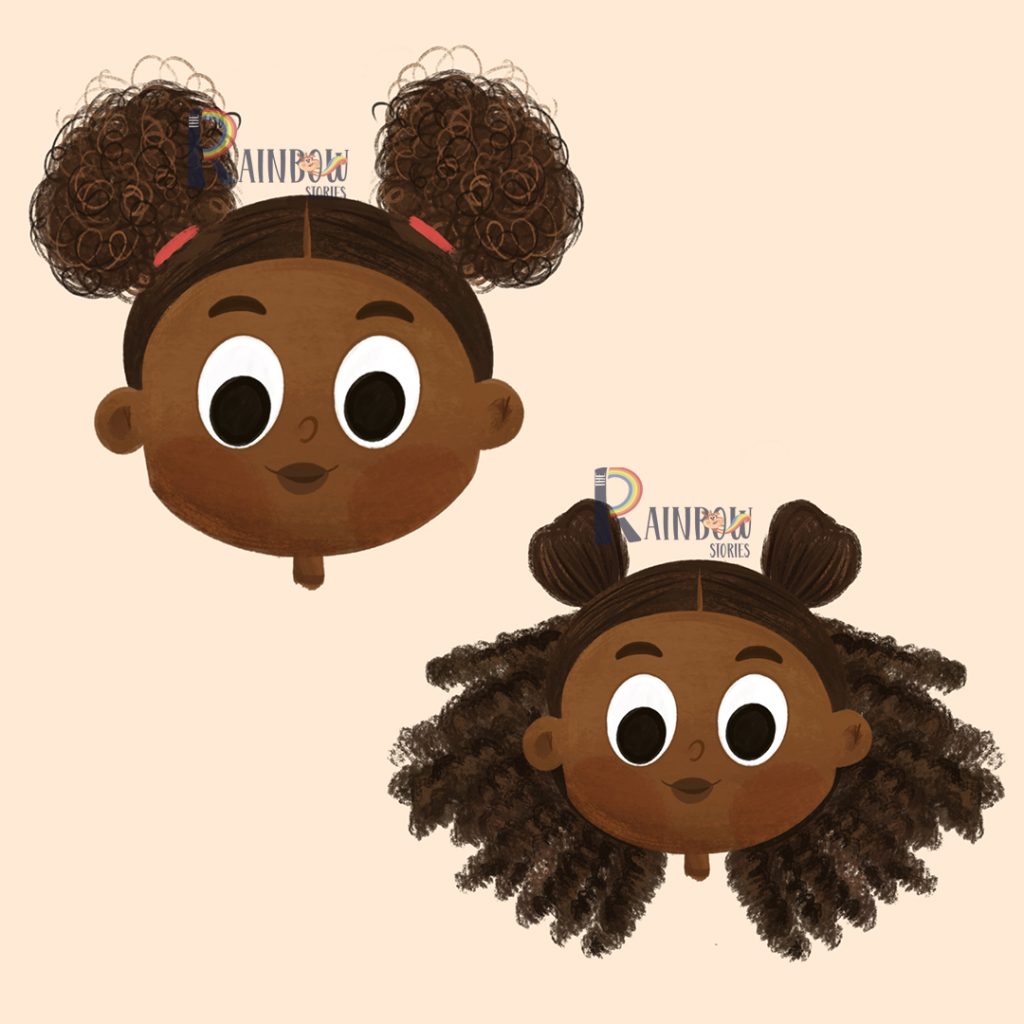
That study exists because the choice is not cosmetic. It changes the silhouette, and silhouette is how a young reader recognises a character from across the page.
Name the style, not the texture
These are the terms worth using in a brief, and what each one actually asks an illustrator to draw.
- Afro puffs: one or two rounded sections gathered at the crown or sides. Soft outer edge, visible volume. Say whether you want baby hairs at the hairline.
- Cornrows: braided flat to the scalp in rows. The parting pattern is the design: straight back, curved, zigzag. Say roughly how many rows and where they end.
- Box braids: individual braids hanging loose, square-ish partings visible at the scalp. Say the length, and whether they are beaded.
- Locs: rope-like sections, thicker and more solid than braids, with their own weight and fall. Say the length and whether they are tied back.
- Bantu knots: small coiled buns across the head. A strong, instantly recognisable silhouette.
- Twist-out: defined, springy curls with more volume than a wash-and-go. Soft, full outline.
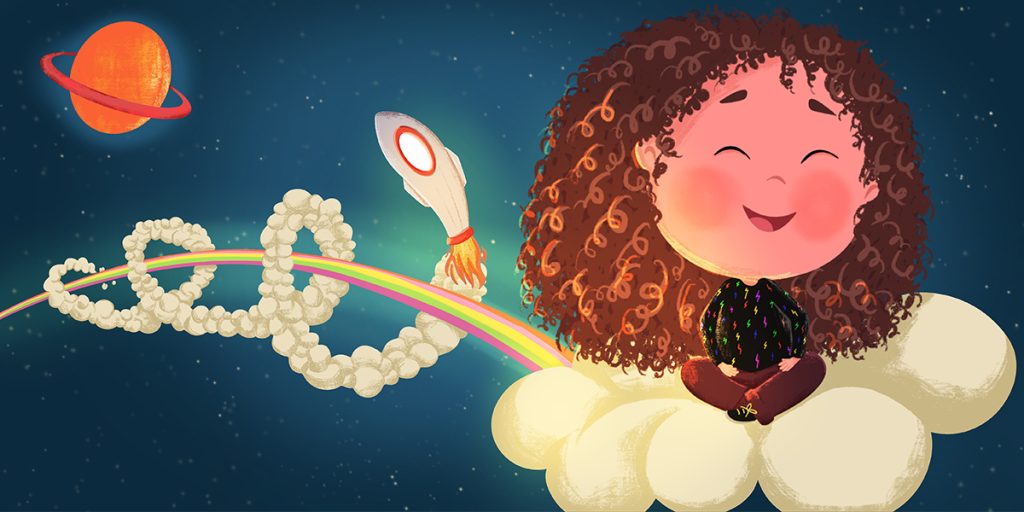
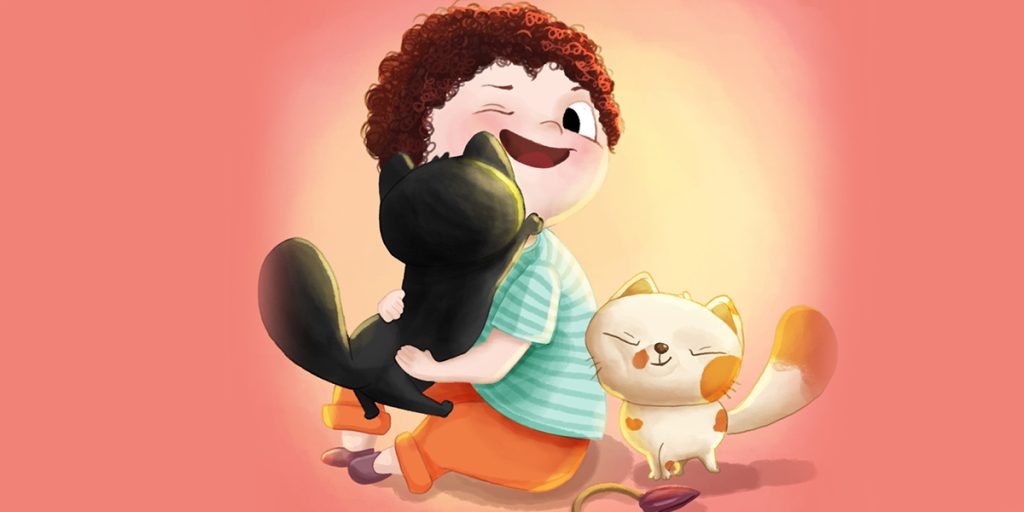
- Loose curls or coils: if this is genuinely what you want, say the volume you picture: close to the head, shoulder-width, or wider.
You do not need the right technical word. If you can describe it, or send a photograph, that is enough, and photographs beat adjectives every single time.
Say whether it changes
Hair changes in real life and it should be allowed to change in a book, but on purpose. If your character wears puffs at school and has her hair braided for her grandmother’s birthday on page 19, that belongs in the brief before the character sheet is drawn, not discovered at the spread stage.
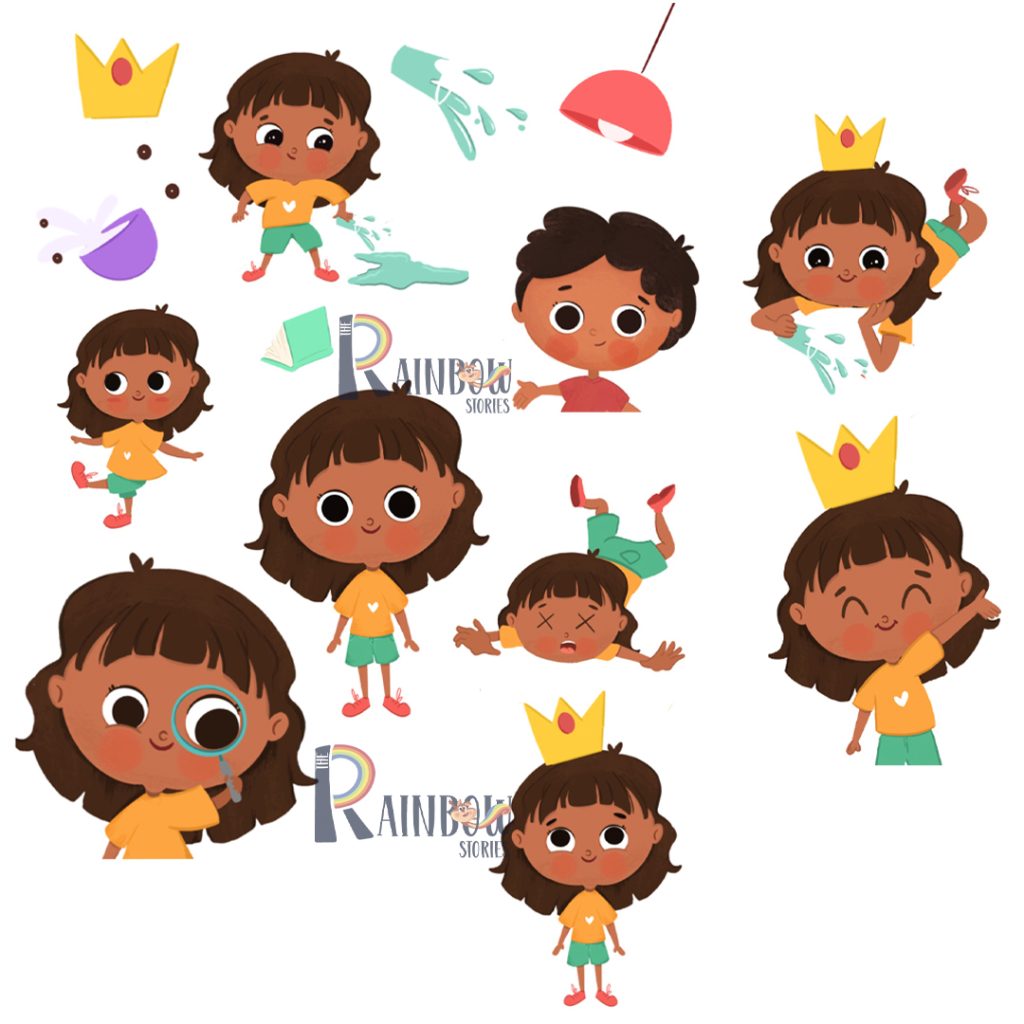
An unplanned change halfway through a book is one of the more expensive revisions there is, because it affects every page after it.
What to put in your brief
- The style, by name or by description.
- Length, and volume: close to the head, or full.
- Accessories: beads, ribbons, a headband, baby hairs at the edge.
- Whether it changes during the story, and on which page.
- One or two reference photographs, if you have them.
Five lines. It is the cheapest insurance in the whole project.
What to look for before you hire
Ask to see a hairstyle like your character’s, drawn by the person who will actually draw your book. Not a style like it. That one. If they have not drawn it before, a quick sketch before contracts is a reasonable thing to ask for, and a reasonable thing for them to agree to.
The wider question of getting a Black character drawn well, covering skin, features, consistency and the caricature line, is covered in our main guide: African American children’s book illustration: how to get your characters drawn right. The work itself is collected in the African American illustration portfolio.
Frequently asked questions
How do I describe my character’s hair to an illustrator?
Name the style if you know it: afro puffs, cornrows, box braids, locs, bantu knots, a twist-out, and add length, volume and any accessories. If you do not know the term, send a photograph.
Is “curly hair” enough for a brief?
No. Curly covers a very wide range of structures, and leaving it open means the illustrator picks for you. It is the most common cause of a first-round character revision on books with Black characters.
Can my character’s hairstyle change during the book?
Yes, and it often should. Plan it before the character sheet is drawn, with the page numbers noted, because changing it later affects every spread that follows.
Should I send reference photographs?
Always, if you have them. Photographs carry volume, edge and light in a way adjectives cannot.
Working on a book like this?
Tell us the page count, who your character is and your deadline, and we will come back with a firm quote and a timeline, usually within one business day.
Ready to Bring Your Children's Book to Life?
Don't leave your story as just a draft. Led by an illustrator with more than fifty children’s books behind her, we handle character turnarounds, full-spread interior art, and print-ready publishing files for Amazon KDP, IngramSpark, EPUB and Barnes & Noble.
We do character design, storyboarding, book covers and complete books.