If you have written a picture book with a Black child at its centre, the worry is not whether the artwork will be pretty. It is whether the child on the page will look like the child in your head, or like a generic brown figure who could be anybody.
The short answer: that outcome is decided by four things. How skin tone is mixed, how hair is built, whether the face is drawn or defaulted, and whether your character survives unchanged from page to page. All four are visible in an illustrator’s existing work before you pay anyone a deposit. This post shows you what to look for, and what to put in your brief.
Why so much of this falls to self-publishing authors
The Cooperative Children’s Book Center at the University of Wisconsin–Madison counts every children’s and teen book it receives each year. Of the 3,619 books published in 2024, 37% had a BIPOC primary character, down from 40% the year before. Around 16% carried Black representation. Significant BIPOC content rose slightly, to 51%.
Read that again: the share of books with a BIPOC main character went down. Which is why so many of the books that do this well are now made outside the trade houses, by authors who decided not to wait. If that is you, the illustration brief is where your book is won or lost.
Skin tone is a range, not a colour
The quickest tell of lazy work is one flat brown, filled edge to edge, the same value in shadow as in sunlight. Real skin does not behave that way. It shifts undertone across a face, picks up colour from whatever the child is standing next to, and goes warmer where the light lands.
It matters more when there is more than one person in the frame. Families are not one colour. A grandmother, a mother and a daughter in the same scene should read as related and as individuals: different depths, different undertones, the same family.
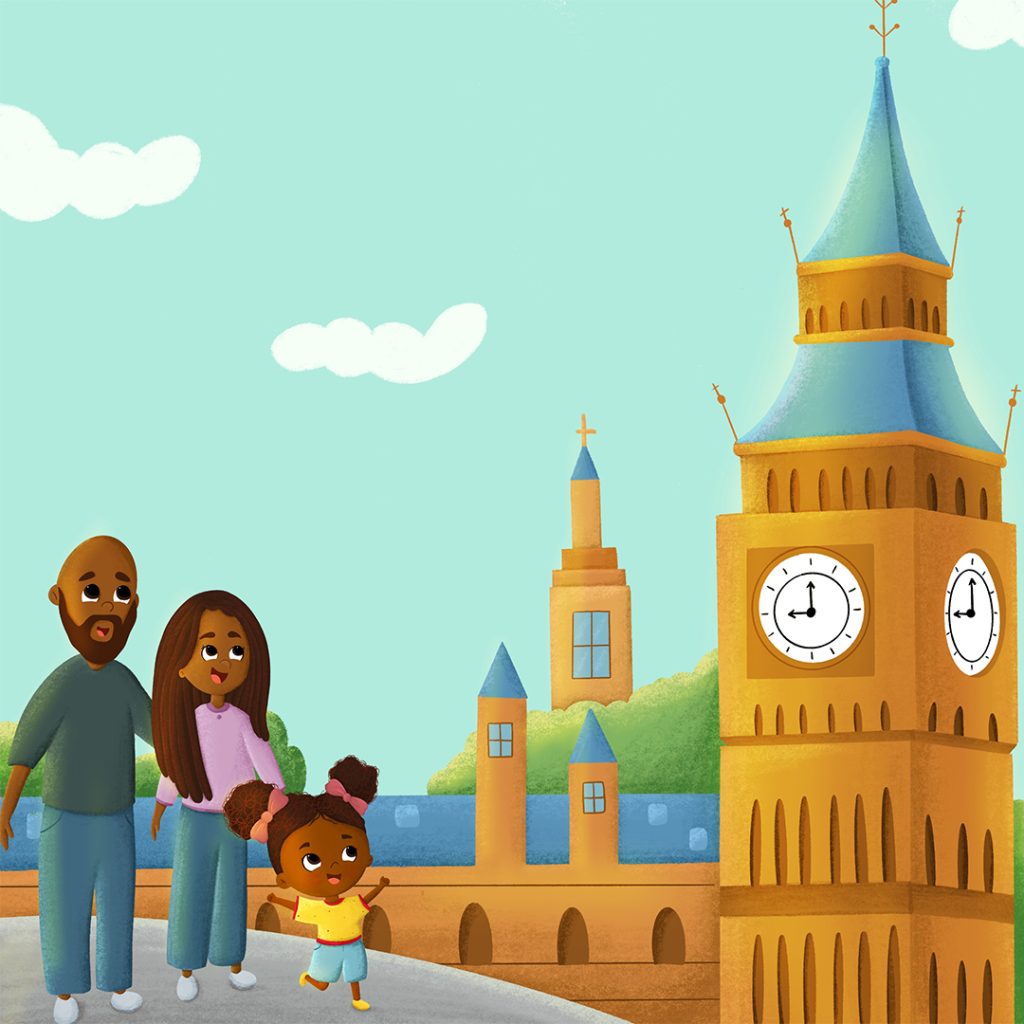
What to ask for: a sample showing two characters of different complexions in the same light. If an illustrator only ever shows you one character at a time, you have not seen them solve this.
Skin also behaves differently once it is printed rather than viewed on a screen, which is worth understanding before you approve a proof. See why skin tones look different in print.
Hair is a structure, not a texture laid on top
This is the one that gets noticed, and the one that gets rushed. Afro puffs, locs, box braids, cornrows, a twist-out and loose curls are not one hair type with a filter applied. They are different structures, built differently, catching light differently, and they sit differently on the head.
Below is a study from our portfolio. It is the same girl, drawn twice, with two hairstyles. It exists because the choice is not cosmetic. It is the detail that decides whether a child keeps recognising herself on page after page.
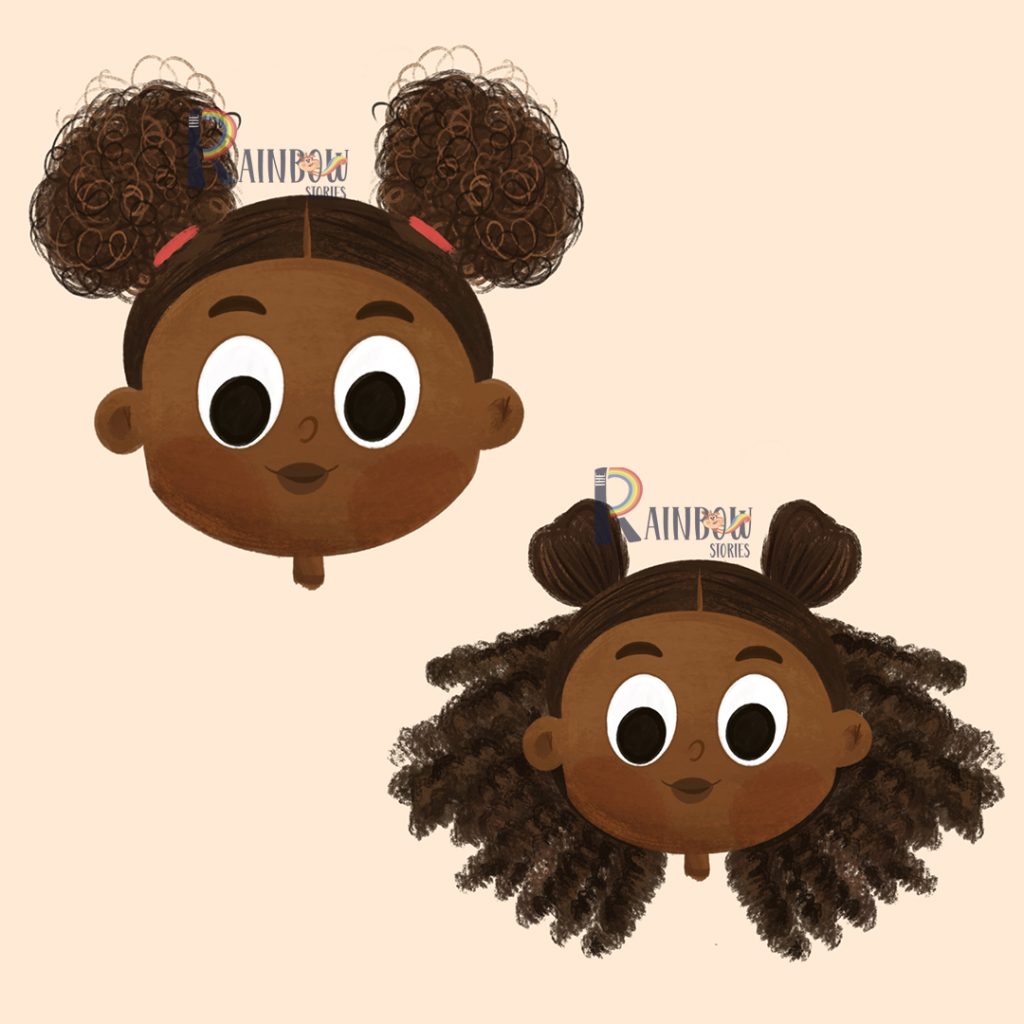
What to ask for: name the hairstyle in your brief, and ask to see it drawn before you sign. “Curly hair” is not a brief. “Two afro puffs with baby hairs at the edge” is.
The styles worth naming, and what each one asks an illustrator to draw, are set out in drawing Black hair in children’s books.
Features drawn, not defaulted
Plenty of illustrators carry a house face: one set of proportions reused across every character and recoloured as needed. That is where “generic” comes from. It is rarely malicious. It is a shortcut, and it shows.
There is a line underneath this that deserves saying plainly. Exaggeration is the native language of picture books: every child in every one of them has eyes too big for their head. The line is not exaggeration itself. It is whether the exaggeration is applied to your character or to a category, whether the features belong to a specific child you invented, or are borrowed from a shorthand with an ugly history.
On that question, your judgement as the author outranks ours as illustrators, and a sensitivity reader’s outranks both. Say so early, say so bluntly, and expect an illustrator to take the note without defensiveness. Any who bristles is telling you something useful.
The same child on every page
A 32-page picture book will show your main character twenty or more times, at different sizes, angles and moods. Holding one face steady across all of them is a production problem, and it is solved before the spreads start, with a character sheet.
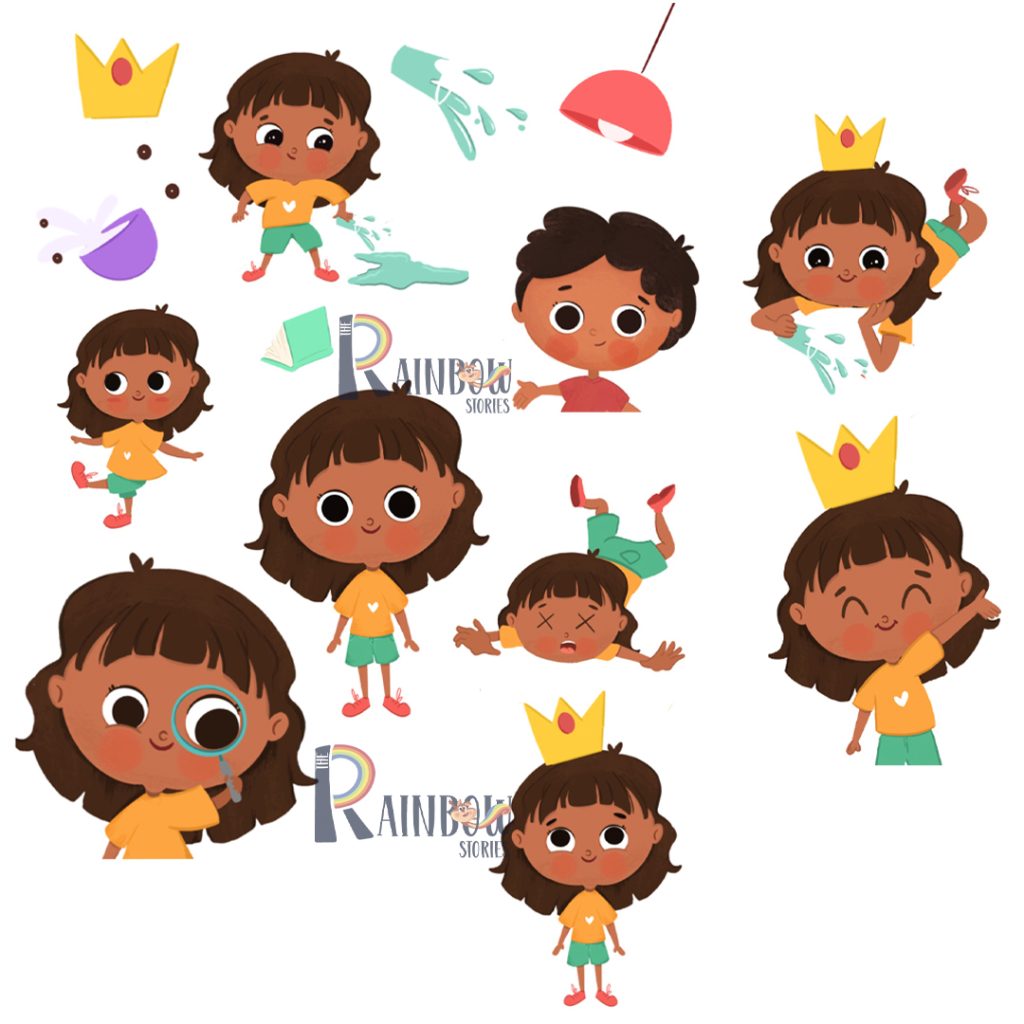
If an illustrator proposes going straight to finished pages without one, that is a real risk to you. Inconsistency is usually discovered at page 20, and fixing it there costs far more than the sheet would have.
Specific beats representative
A Black family in a story is not a statement. It is a family, somewhere, doing something: a day out, a reading corner, a walk past a shop they always pass. Culture lives in particulars: what is on the wall, what is cooking, how hair gets done on a school morning, which auntie is always late.
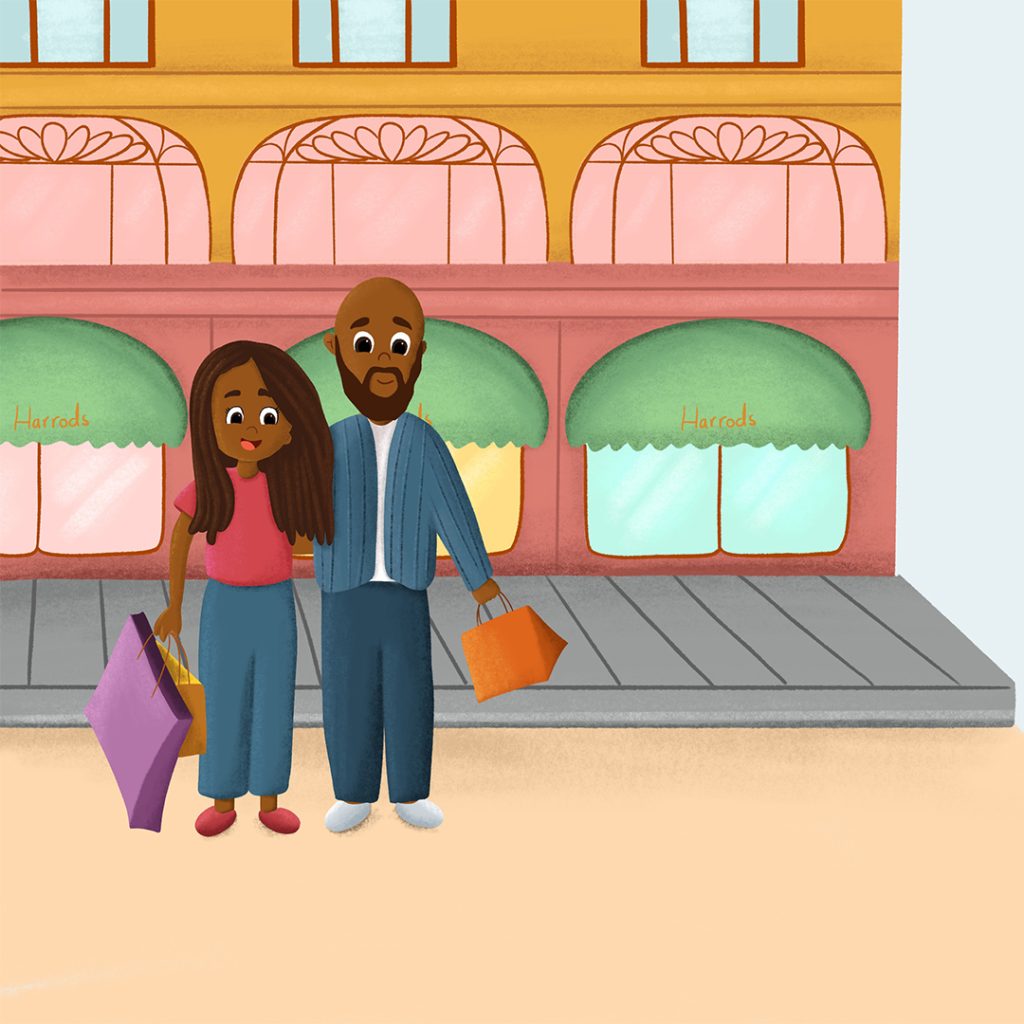
Those details are yours. An illustrator cannot invent them, and the ones worth hiring will ask you for them rather than reaching for something generic.
What to put in your brief
- Age, and what the child wants. Motivation changes posture and face more than any physical description.
- Skin, described in your own words, and a reference photo or two if you have them. Photographs beat adjectives.
- The hairstyle, by name, plus whether it changes during the story. A braid-out on page 4 and a puff on page 19 needs saying.
- Clothes that belong to this child, not to the age bracket. One repeated item helps young readers track a character.
- Family and setting detail. Where they live, who is in the house, what is on the kitchen wall.
- Anything that would be wrong. The fastest way to avoid a problem is to name it in writing at the start.
Questions worth asking before you hire
- Can I see two characters of different complexions in one of your existing scenes?
- Can I see a hairstyle like my character’s, drawn by you?
- Do you produce a character sheet before the spreads, and is it included?
- How many rounds of changes does the character design include?
- Who owns the artwork when it is finished, and do I get print-ready files for KDP or IngramSpark?
Honest answers to those five will tell you more than any portfolio thumbnail.
A published example: Sage Sails The World
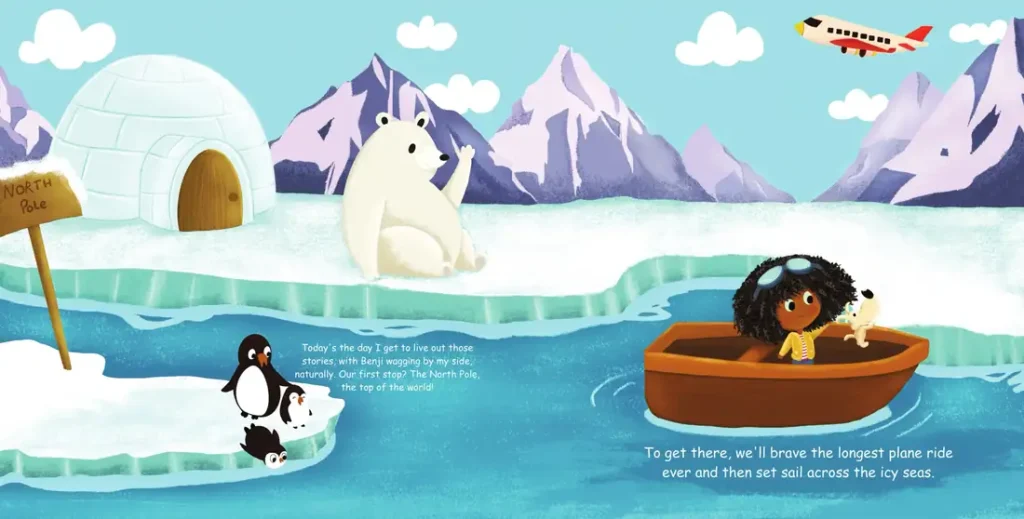
Sage Sails The World is a climate-adventure picture book written by Diamond Spratling, founder of Girl Plus Environment and a first-time children’s author. Sage is seven, Black, and sets off with her dog Benji to see the world her grandmother described, starting at the North Pole, where the polar bears turn out not to be. We illustrated it, and the second book in the series, from pencil rough to print-ready files for Amazon KDP.
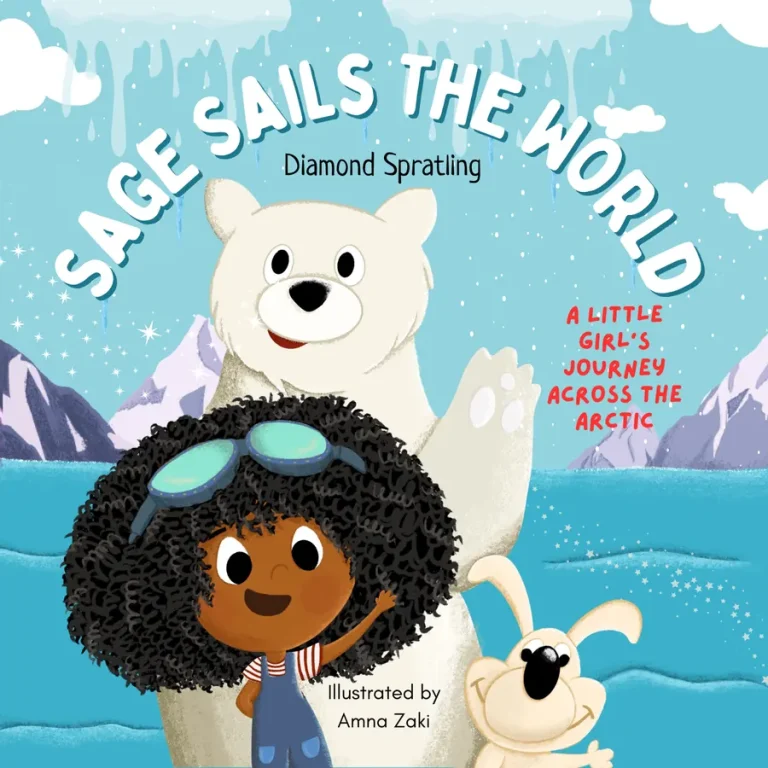
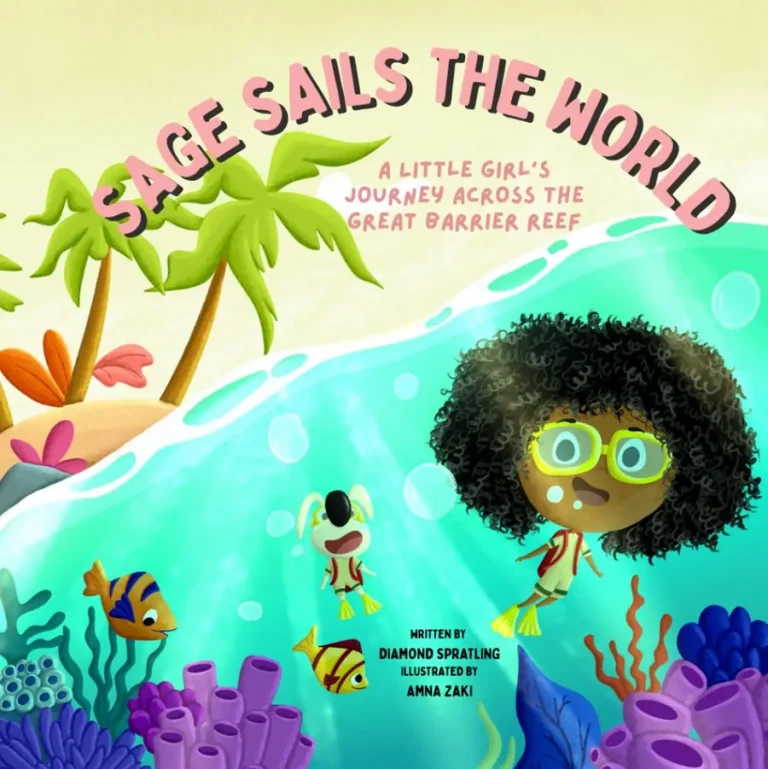
A series is the hardest version of the consistency problem described above. Sage has to stay recognisably herself across two books and eighty pages, in Arctic light and then underwater. That is exactly what the character work at the beginning buys you. The full process, pencil roughs set beside the printed spreads, is on the Sage Sails The World case study.
More of this work
We are a children’s book illustration studio, and a fair amount of what we draw has Black children at its centre: character sheets, covers, and interiors. Every piece is drawn by hand, never generated. You can see that work collected on our African American illustration portfolio, and the character work specifically under character design.
Frequently asked questions
How do I describe my character’s skin tone to an illustrator?
Use your own words and add reference photographs. Photographs carry undertone and light in a way adjectives cannot, and they remove the guesswork that produces a flat fill.
What should an African American children’s book illustrator show me before I hire them?
Two characters of different complexions in the same scene, a hairstyle close to your character’s drawn by them, and at least one character sheet. Those three samples cover the ways this usually goes wrong.
Does my illustrator need to be Black to draw my characters well?
Authors differ on this, and it is a reasonable thing to want. What is not optional is that whoever draws your book takes direction from you on it, researches properly, and shows you the character before the spreads begin. Ask the question openly. The response tells you a great deal.
How much does it cost to illustrate a children’s book with African American characters?
The same as any picture book of the same length: cost follows page count, how many characters appear, and how detailed the backgrounds are, not the characters’ ethnicity. Expect character design to be quoted separately from the spreads.
What is a character sheet and do I need one?
It is one page showing your character from several angles, in a range of expressions, with hair and clothing locked down. It is what keeps the same child on all thirty-two pages, and yes, for any book with a recurring character, you need one.
If you are working on one of these books
Tell us the page count, who your character is, and your deadline, and we will come back with a firm quote and a timeline, usually within one business day. Every book is quoted individually, and you will speak to the people drawing it.
Ready to Bring Your Children's Book to Life?
Don't leave your story as just a draft. Led by an illustrator with more than fifty children’s books behind her, we handle character turnarounds, full-spread interior art, and print-ready publishing files for Amazon KDP, IngramSpark, EPUB and Barnes & Noble.
We do character design, storyboarding, book covers and complete books.